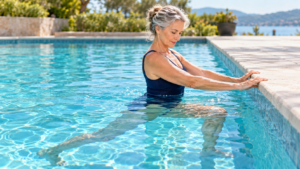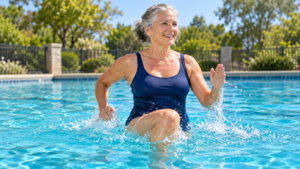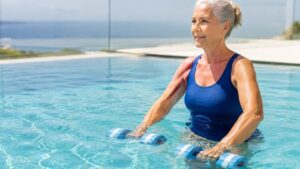
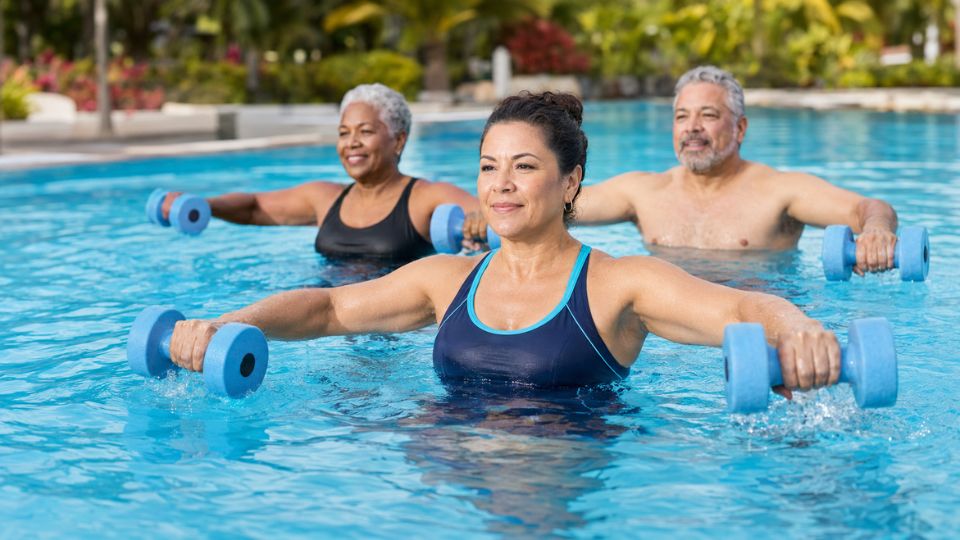
Water aerobics can engage muscles throughout your entire body, including your arms, shoulders, chest, back, core, hips, glutes, and legs.
Exactly which muscles work the hardest depends on the movements you perform. Chest presses emphasize different muscles than arm pulls, while squats and lunges challenge your lower body differently from knee raises or side kicks.
Water also provides resistance in multiple directions. When you press your arms forward, the muscles responsible for pushing work against the water. When you pull your arms back, the muscles on the opposite side of your body become more involved.
This makes it possible to create a balanced full-body workout using the resistance of the water alone.
The Mayo Clinic explains that aquatic exercise can help improve muscular strength and endurance. It may also provide a comfortable way for beginners and older adults to remain physically active.
Related Reading: The Science Behind Water Resistance Training: Why It Works
What Muscle Groups Can Water Aerobics Work?
A well-designed water-aerobics workout can engage all the major muscle groups.
| Area of the body | Main muscles | Example water exercises |
|---|---|---|
| Chest | Pectoral muscles | Chest presses, chest fly movements |
| Back | Latissimus dorsi, rhomboids and upper-back muscles | Arm pulls, rows and resistance sweeps |
| Shoulders | Deltoids and stabilizing muscles | Arm raises, circles and presses |
| Arms | Biceps, triceps and forearms | Curls, pushdowns and resisted punches |
| Core | Abdominals, obliques and back stabilizers | Knee raises, twists and arm sweeps |
| Glutes | Gluteus maximus and gluteus medius | Squats, lunges and backward kicks |
| Thighs | Quadriceps, hamstrings, adductors and abductors | Squats, kicks, curls and side raises |
| Hips | Hip flexors and hip stabilizers | Knee raises, leg circles and kicks |
| Calves | Gastrocnemius and soleus | Calf raises, jogging and power movements |
Not every water-aerobics exercise works every muscle equally. A balanced routine should include pushing, pulling, squatting, kicking, stabilizing, and cardiovascular movements.
How Does Water Create Muscular Resistance?
When you move through water, your body must push the surrounding water out of the way. This resistance increases when you:
- Move with a larger surface area
- Increase the movement’s speed while maintaining control
- Use resistance gloves or aquatic equipment
- Extend an arm or leg farther from your body
- Change direction
- Move through a larger controlled range
- Work in turbulent water
Water resistance does not feel exactly like lifting a traditional weight. The challenge changes according to the direction and speed of the movement.
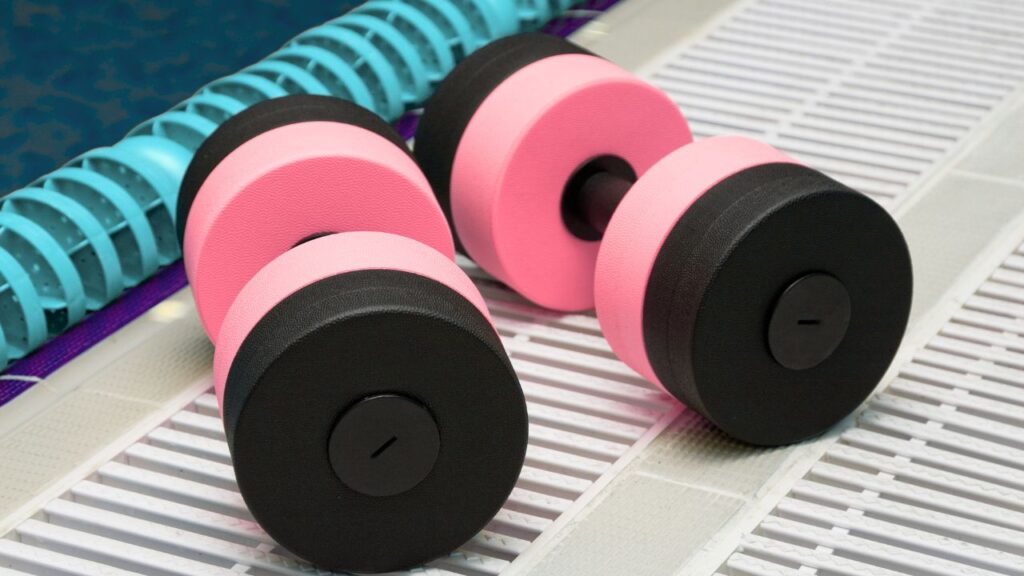
Aquatic dumbbells are also buoyant rather than heavy in the same way as land dumbbells. Pushing them beneath the surface or controlling their upward movement creates the resistance.
Research comparing aquatic and land exercises has found that muscle activation during certain aquatic movements can be similar to corresponding land exercises, although the results depend heavily on the exercise and how it is performed. The study can be reviewed through the National Library of Medicine.
Related Reading: Why Water Exercise Feels Easier Than Land Exercise—But Still Builds Strength
Upper-Body Muscles Worked During Water Aerobics
Upper-body water exercises can engage the chest, back, shoulders, arms, and forearms.
Because water provides resistance as your arms move in different directions, both pushing and pulling exercises should be included.
Chest Muscles
Your pectoral muscles help move your arms forward and inward toward the center of your body.
Water exercises that emphasize the chest include:
- Chest presses
- Chest fly movements
- Forward aquatic dumbbell presses
- Resistance ball presses
- Forward arm sweeps
During a chest press, push the water forward while keeping your shoulders relaxed. Return your arms with control rather than allowing the equipment to move you backward.
Explore the Exercises: Water Aerobics Exercises for Your Upper Body: 10 Effective Moves
Back Muscles
Your back muscles contribute to pulling, posture, shoulder movement, and upper-body stability.
Exercises that engage the back include:
- Single-arm rows
- Double-arm pulls
- Resistance Rolls
- Backward arm sweeps
- Modified swimming strokes
Pull your elbows toward your sides while gently drawing your shoulder blades back. Avoid lifting your shoulders toward your ears.
Shoulder Muscles
Your deltoids help lift and move your arms in several directions. Smaller muscles around the shoulder joint contribute to control and stability.
Water exercises for the shoulders include:
- Lateral arm raises
- Front arm raises
- Arm circles
- Shoulder presses
- Cross Body Arm Swings
- Controlled rotations
The shoulders can become irritated when movements are too large, fast, or repetitive. Begin with a comfortable range and maintain control.
Biceps
The biceps help bend the elbow and assist with certain pulling movements.
Exercises that involve the biceps include:
- Aquatic bicep curls
- Single-arm rows
- Alternating arm pulls
- Resistance tubing curls
Keep your elbows close to your sides during curls. Remember that foam dumbbells resist differently as they move downward and upward.
Triceps
The triceps straighten the elbow and contribute to pressing movements.
Exercises that engage the triceps include:
- Tricep pushdowns
- Forward presses
- Overhead extensions
- Resisted punches
- Straight-arm backward presses
Control both phases of each movement instead of allowing buoyant equipment to rise abruptly.
Forearms and Hands
Your forearms and hands help control aquatic equipment and change the amount of water displaced.
Opening your hands increases the surface area. Turning your hands so they slice through the water reduces resistance.
Resistance gloves and paddles can increase the demand, but they should be introduced gradually.
Core Muscles Worked During Water Aerobics
Your core does more than produce crunching or twisting movements. It helps stabilize your torso while your arms and legs move through the water.
The constant movement of the pool creates small balance challenges, requiring your core to make ongoing adjustments.
Explore the Core: Why Water Exercises Challenge Your Core Differently
Abdominal Muscles
Your abdominal muscles help control your trunk and maintain alignment.
Exercises that emphasize the abdominal area include:
- Hydro Knee Raises
- Floating knee tucks
- Controlled leg raises
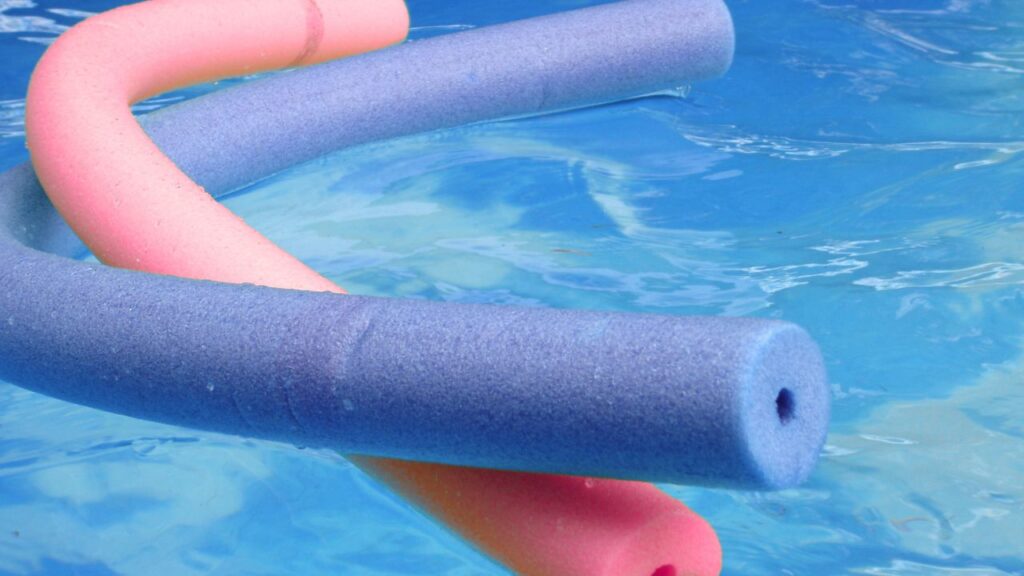
- Pool noodle crunches
- Suspended cycling
- Aqua Jacks
Keep your torso upright during standing knee raises rather than leaning backward.
Obliques
Your obliques are located along the sides of your abdomen and contribute to rotation and side bending.
Exercises that engage the obliques include:
- Cross-body knee raises
- Standing water twists
- Side knee crunches
- Cross Body Arm Swings
- Alternating diagonal pulls
Twisting should remain controlled. Avoid forcing your torso beyond a comfortable range.
Back and Spinal Stabilizers
The muscles surrounding your spine help maintain posture as the water moves around you.
They are involved during:
- Water walking
- Standing balance exercises
- Arm sweeps
- Deep-water jogging
- Suspended cycling
- Alternating leg movements
Maintaining a tall posture can be more effective than making an exercise unnecessarily large.
Deep Core Stabilizers
Some core muscles work primarily to stabilize rather than create visible movement. These muscles help control the pelvis and torso during single-leg exercises, suspended movements, and changes in direction.
Deep-water exercise can create a considerable coordination challenge because the pool floor no longer provides a stable base.
Lower-Body Muscles Worked During Water Aerobics
Lower-body water exercises can engage your glutes, quadriceps, hamstrings, hips, inner and outer thighs, and calves.
Glute Muscles
The glutes help extend and stabilize the hips. They contribute to standing, walking, squatting, climbing, and balance.
Water exercises that emphasize the glutes include:
- Hydro Squats
- Hydro Lunges
- Backward Hydro Kicks
- Glute Squeezes
- Aquatic Power Jumps
- Side leg raises
During backward kicks, keep your torso upright and avoid arching your lower back. A smaller controlled extension may engage the glute more effectively than a large uncontrolled kick.
Quadriceps
The quadriceps are located along the front of your thighs. They straighten the knees and assist during squats, lunges, stepping, and jumping movements.
Exercises that engage the quadriceps include:
- Hydro Squats
- Hydro Lunges
- Forward Hydro Kicks
- Hydro Knee Raises
- Water walking
- Aqua Jacks
Keep your knees aligned with your feet during squats and lunges.
Hamstrings
Your hamstrings are located along the backs of your thighs. They bend the knee and help extend the hip.
Water exercises that emphasize the hamstrings include:
- Standing hamstring curls
- Backward kicks
- Lunges
- Water jogging
- Suspended cycling
Hamstring curls should be controlled in both directions so the water provides resistance as the heel rises and returns.
Hip Flexors
The hip flexors lift your thighs toward your torso.
Exercises that involve the hip flexors include:
- Hydro Knee Raises
- Forward kicks
- Water marching
- Suspended cycling
- Flutter kicks
Avoid leaning backward to lift your knee higher. Keep the range appropriate for your mobility and control.
Inner and Outer Thighs
The adductors along the inner thighs help draw the legs toward the body’s center. The outer hip muscles help move the legs outward and stabilize the pelvis.
Exercises for these areas include:
- Side leg raises
- Aqua Jacks
- Pendulum legs
- Cross-country ski movements
- Side lunges
- Standing leg sweeps
Because water resists movement in both directions, moving the leg outward and drawing it back inward can engage different muscles.
Calves
Your calf muscles contribute to ankle movement, walking, jogging, and pushing away from the pool floor.
Water exercises that engage the calves include:
- Calf raises
- Water walking
- Water jogging
- Aqua Jacks
- Power jumps
- Toe-to-heel movements
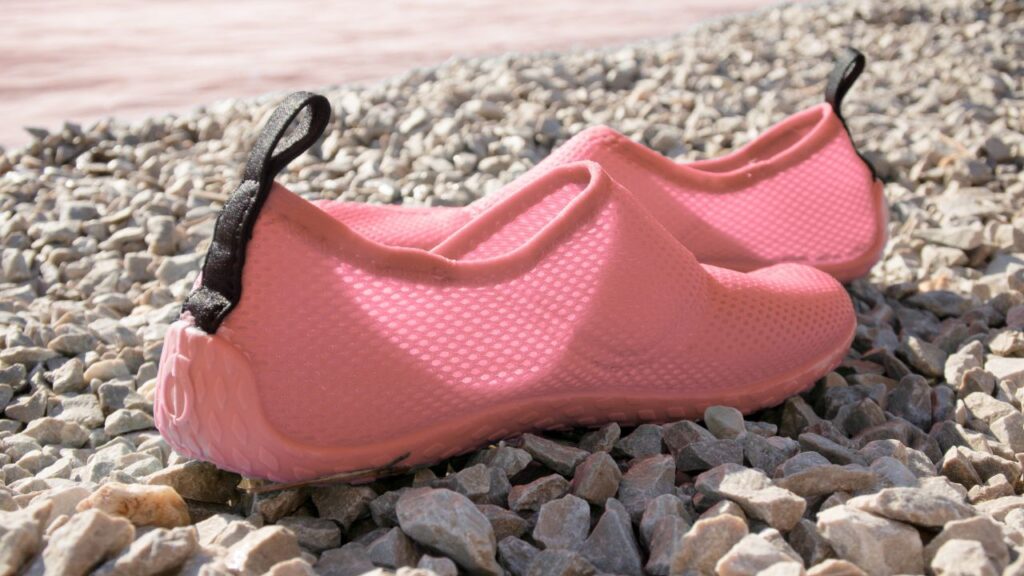
If the pool floor is slippery, use the wall for support and consider appropriate water shoes.
Related Reading: Swimming Kick Strength: How Your Legs and Glutes Improve Propulsion
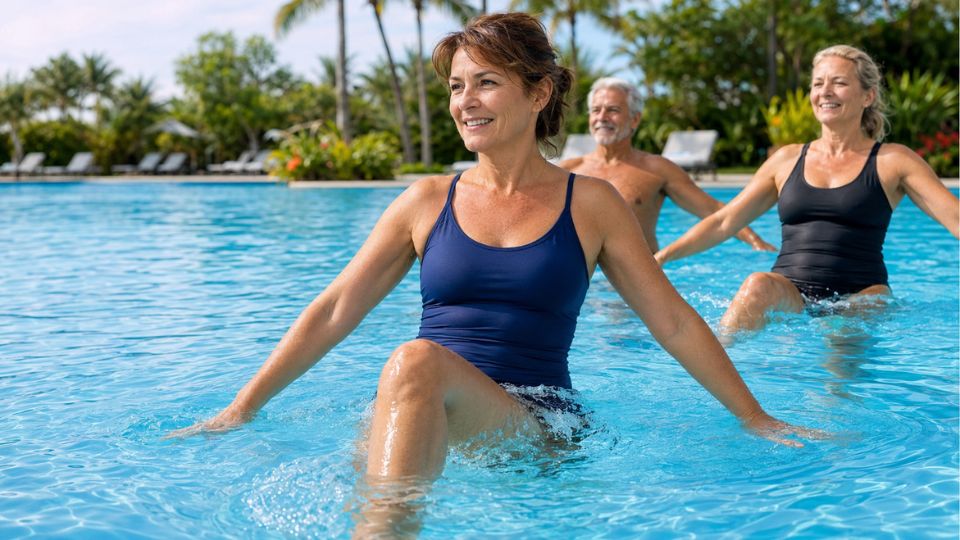
Full-Body Water Aerobics Exercises
Some exercises involve the upper body, lower body, and core at the same time.
Aqua Jacks
Aqua Jacks engage the inner and outer thighs, glutes, calves, shoulders, arms, and core.
A stepping variation is appropriate for people who prefer to keep one foot on the floor.
Water Jogging
Water jogging challenges the legs and hips while the arms contribute to rhythm and forward movement. The core helps maintain upright posture.
Cross-Country Ski Movements
This movement coordinates opposite arms and legs. It can engage the shoulders, back, arms, glutes, thighs, and core.
Hydro Squat With Arm Press
Combining a squat with a forward or downward arm press engages the lower and upper body simultaneously.
Learn the squat and arm press separately before combining them.
Knee Raise With Opposite-Arm Pull
This movement engages the hip flexors, quadriceps, back, arms, and core while challenging coordination.
Deep-Water Cycling
With a properly fitted flotation belt, suspended cycling engages the hips, legs, core, and stabilizing muscles. Your arms may also assist with maintaining position.
Related Reading: Low-Impact Water Aerobics: Boost Fitness With Aquatic Exercises
Does Water Aerobics Count as Strength Training?
Water aerobics can provide muscular resistance, particularly when exercises are performed with control and enough effort to challenge the muscles.
However, not every water-aerobics session automatically provides the same muscular challenge. A gentle mobility class and a structured resistance-focused workout have different purposes.
Factors that affect the strength demand include:
- Exercise selection
- Movement speed
- Surface area
- Range of motion
- Duration
- Equipment
- Water depth
- Individual effort
- Current fitness level
A 12-week water-aerobics study reported improvements in several measures of physical fitness, including aspects of muscular strength. The full study is available through the National Library of Medicine.
The CDC recommends muscle-strengthening activities that work the legs, hips, back, abdomen, chest, shoulders, and arms. A well-planned aquatic program can include exercises for each of these areas.
Whether a specific water workout satisfies an individual’s complete strength-training needs depends on its design, intensity, and the person’s goals.
Related Reading: Water Resistance Training: How Pool Exercises Build Strength Without Heavy Impact
How to Build a Balanced Full-Body Water Workout
A balanced routine can include at least one movement from each category:
Warm-Up
- Water walking
- Gentle arm swings
- Shoulder rolls
- Controlled knee raises
Upper-Body Push
- Chest press
- Forward arm press
- Tricep pushdown
Upper-Body Pull
- Single-arm row
- Double-arm pull
- Resistance Roll
Lower-Body Exercise
- Hydro Squat
- Hydro Lunge
- Forward or backward kick
Core Exercise
- Cross-body knee raise
- Controlled twist
- Floating knee tuck
Cardiovascular Movement
- Aqua Jacks
- Water jogging
- Cross-country ski movements
Cooldown
- Slower water walking
- Gentle leg movements
- Relaxed arm sweeps
- Comfortable stretches
Beginners can perform one short interval of each movement. More experienced participants can add time, coordination, or resistance gradually.
Try a Longer Routine: 30-Minute Pool HIIT Workout for Strength, Fat Loss & Endurance
How to Make Water Exercises More Challenging
You can increase the muscular demand by changing one factor at a time:
- Make the movement slightly larger
- Increase the duration
- Open your hands
- Add resistance gloves
- Use appropriate aquatic dumbbells
- Change direction
- Combine arm and leg patterns
- Reduce reliance on the pool wall
- Increase speed while maintaining control
- Add a deep-water variation with appropriate flotation
More resistance is not helpful if it causes you to lose control or alter your posture.
Equipment Guide: Best Water Workout Equipment for a Stronger Pool Workout
Frequently Asked Questions
Does water aerobics work your entire body?
It can. A balanced workout that includes upper-body, lower-body, core, and cardiovascular exercises can engage muscles throughout the body.
What muscles do Aqua Jacks work?
Aqua Jacks can engage the inner and outer thighs, glutes, calves, shoulders, arms, and core.
Does water walking strengthen your legs?
Water walking engages the quadriceps, hamstrings, glutes, calves, hips, and core. The challenge depends on the water depth, walking speed, movement direction, and resistance used.
Does water aerobics work your abdominal muscles?
Your abdominal muscles help stabilize your torso during most water exercises. Knee raises, twists, suspended movements, and cross-body patterns can provide additional core emphasis.
Can water aerobics strengthen your glutes?
Exercises such as Hydro Squats, Hydro Lunges, backward kicks, side leg raises, and glute squeezes can challenge the glute muscles.
Do I need aquatic equipment to work my muscles?
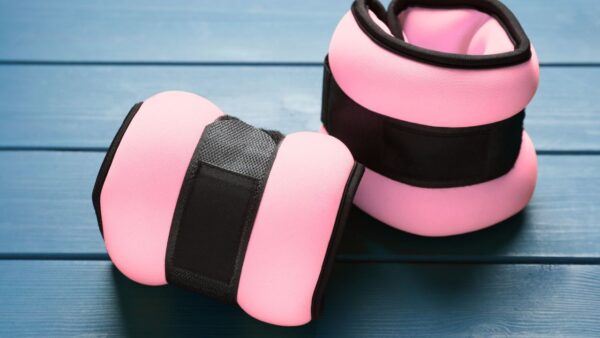
No. The water provides resistance without equipment. Aquatic dumbbells, gloves, cuffs, and kickboards can be added when you can control the exercise properly.
Is moving faster always better?
No. Speed can increase resistance, but only when the movement remains controlled. Slower exercises with a large surface area and purposeful range of motion can also be challenging.
How often should I perform water aerobics?
The right schedule depends on the intensity of your workouts, your overall activity, your recovery, and your health. Begin gradually and allow time for recovery between challenging sessions.
Final Thoughts
Water aerobics can engage nearly every major muscle group when the workout includes a balanced selection of movements.
Arm presses and fly movements emphasize the chest. Rows and pulls engage the back. Squats, lunges, and kicks challenge the legs and glutes. Knee raises, twists, and suspended exercises require core control.
The goal is not to perform every possible exercise in one session. Choose movements that work different areas of the body, perform them with control, and progress gradually as your strength and confidence improve.
References
- Centers for Disease Control and Prevention: Swimming and Your Health
- Centers for Disease Control and Prevention: Physical Activity for Older Adults
- Mayo Clinic: Aquatic Exercises
- National Library of Medicine: Muscle Activity During Aquatic and Land Exercises
- National Library of Medicine: Effects of a 12-Week Water-Aerobics Program
- National Library of Medicine: Systematic Review of Aquatic Exercise Programs