
Stronger in the Water. Stronger in Life.
Water Resistance Training: How Pool Exercises Build Strength Without Heavy Impact
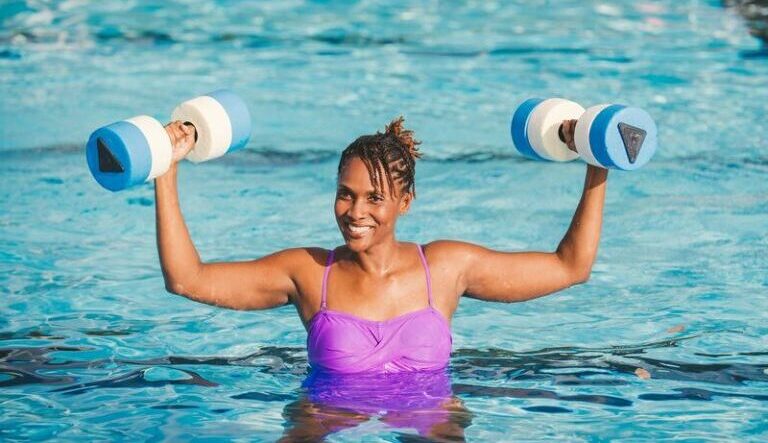
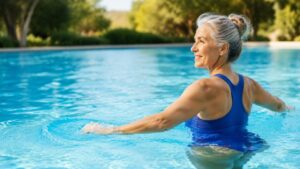
Water resistance training is one of the reasons pool exercises can feel gentle and challenging at the same time.
In the water, your body is supported by buoyancy, which helps reduce pressure on the joints. But at the same time, every movement has to push against the natural resistance of the water.
That combination is what makes pool exercises so powerful.
You are not just moving through water.
You are moving against it.
This means your muscles must work to control, stabilize, push, pull, lift, and balance through every part of the movement.
For many people, water resistance training becomes an effective way to build:
- strength
- muscle endurance
- balance
- coordination
- core stability
- joint-friendly movement
- full-body control
all while reducing the heavy impact often felt during land-based workouts.
That is why water workouts can be especially helpful for beginners, swimmers, active adults, older adults, and anyone looking for a low-impact way to strengthen the body.
Why Water Resistance Training Works
On land, resistance usually comes from weights, machines, bands, or body weight.
In the pool, resistance comes from the water itself.
Every time you move your arms, legs, or torso through the water, your body has to push against drag. The faster you move, the more resistance you create.
This makes water resistance training very adaptable.
You can make the same exercise easier or harder simply by changing:
- speed
- range of motion
- body position
- surface area
- equipment
- direction of movement
- depth of the water
For example, a simple arm press becomes more challenging when performed faster, with a larger range of motion, or with aquatic dumbbells.
A basic pool squat becomes more powerful when you add a jump, knee lift, or resistance tool.
This is what makes aquatic exercises so useful. The water allows you to control intensity without always needing heavy equipment. For more information on the Aquatic Equipment we recommend, check out our guide on Top Water Weights for Pool & Resistance Workouts (2026)
Related Reading:
- How Water Exercises Challenge Your Core Differently
- Why Low-Impact Water Workouts Support Strength & Longevity
How Pool Exercises Build Strength
Pool exercises build strength by requiring the muscles to work against water resistance during each movement.
Unlike some land exercises where resistance may only happen in one direction, water pushes back from multiple angles.
This means your body has to work during both the pushing and returning phases of movement.
For example:
- When you press your arms forward, the water resists the push.
- When you bring your arms back, the water resists the return.
- When you lift your knee, the water resists the lift.
- When you lower your leg, the water still requires control.
This creates continuous muscle engagement.
That is one reason water resistance training can be effective for improving strength, control, and endurance.
The goal is not always to move as fast as possible.
The goal is to move with intention.
When you slow down, maintain posture, and control the movement, your muscles stay active longer.
This helps improve:
- muscle activation
- movement quality
- stability
- posture control
- strength endurance
- body awareness
If you are interested in finding out what the right kind of water exercises are, check out our guide on Water Aerobics Exercises for Your Upper Body: 10 Effective Moves.
Why Water Workouts Are Low Impact
One of the biggest benefits of pool exercises is that water helps support the body.
Buoyancy reduces the amount of weight placed on the joints, which can make movement feel more comfortable for people who struggle with high-impact exercise.
This does not mean the workout is easy.
It means the body can train strength and movement with less pounding on the knees, hips, ankles, and lower back.
That is why water workouts are often used for:
- joint-friendly fitness
- recovery movement
- mobility training
- healthy aging
- arthritis-friendly exercise
- beginner fitness
- low-impact strength training
The pool creates a supportive environment where many people can move more freely, while still challenging the muscles through resistance.
Related Reading:
- Benefits of Pool Walking: Why Water Walking is Great for Your Health
- Swimming for Bone Health: Combat Osteoporosis with Water Exercise
Water Resistance and Muscle Activation
Water resistance training can help activate muscles throughout the entire body.
Because water moves around you, your body has to constantly stabilize and adjust.
This means that even simple pool exercises often involve more than one muscle group at a time.
For example, a hydro squat does not only work the legs.
It may also challenge the:
- glutes
- hamstrings
- quads
- hip flexors
- core stabilizers
- back muscles
- ankles and feet
An arm press does not only work the arms.
It may also challenge the:
- shoulders
- chest
- upper back
- core
- posture muscles
This is one of the reasons aquatic fitness feels different from traditional strength training.
The body is not locked into one fixed position.
It is constantly adjusting against the movement of the water.
That creates a form of strength that is not only muscular, but also functional.
For more information on how water challenges your core, visit our guide on Why Water Exercises Challenge Your Core Differently.
How to Make Water Resistance Training More Challenging
Water resistance training can be adjusted for almost any level.
Beginners can start with slow, controlled bodyweight movements in shallow or chest-deep water.
More advanced participants can increase the challenge by adding speed, equipment, longer sets, or deeper water.
To increase intensity, you can:
- move faster through the water
- increase your range of motion
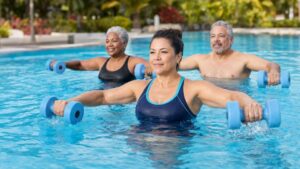
- use aquatic dumbbells
- add resistance gloves
- use ankle cuffs or aqua weights
- change direction more often
- perform exercises in deeper water
- reduce rest time between sets
- combine upper and lower body movements
Even small changes can make a big difference.
For example, pressing the arms through the water with open palms creates more resistance than moving with relaxed hands.
Adding aquatic dumbbells increases surface area, which forces the muscles to work harder against the water.
This is why tools like hydro dumbbells, resistance gloves, and aqua ankle weights can be helpful once your body is ready for more challenge.
Water Weights and Pool Exercise Equipment
Water already provides natural resistance, but aquatic equipment can help increase the intensity of pool exercises.
Common tools include:
- aquatic dumbbells
- resistance gloves
- aqua ankle weights
- pool noodles
- kickboards
- flotation belts
Each tool changes the way your body interacts with the water.
Aquatic dumbbells increase resistance for the arms, shoulders, chest, back, and core.
Resistance gloves increase the surface area of the hands, making pushes and pulls more challenging.
Aqua ankle weights or cuffs can add resistance to lower-body movements such as leg lifts, kicks, and knee raises.
Pool noodles can support balance, assist floating movements, or add resistance depending on how they are used.
The key is to use equipment intentionally.
More resistance is not always better.
Better control is better.
When the body can move with good posture, alignment, and control, equipment can help progress the workout safely and effectively.
Why Pool Exercises Support Functional Strength
Functional strength is the kind of strength that helps you move better in everyday life.
It supports walking, standing, lifting, balancing, turning, reaching, climbing stairs, and maintaining posture.
Water resistance training naturally supports functional strength because it trains the body to stabilize while moving. For more, check out our guide on The Science Behind Water Resistance Training: Why It Works.
Many pool exercises require the body to coordinate multiple areas at once.
- The legs may be working for power.
- The core may be stabilizing posture.
- The arms may be pressing through resistance.
- The hips may be controlling balance.
This full-body coordination helps the body become stronger and more efficient.
For swimmers, this can support better propulsion, body alignment, and control in the water. For swimmers looking for top fitness tips in 30 minutes, check out our guide, Burn Calories Swimming in 30 Minutes: Top Fitness Tips.
For aquatic fitness participants, it can support strength, mobility, confidence, and endurance without the same heavy impact as land-based workouts.
Related Reading:
- How Water Exercises Improve Stability, Coordination & Everyday Movement
- How Aquatic Exercises Boost Blood Circulation Naturally
How Water Resistance Training Fits Into Swim + Sculpt
Swim + Sculpt combines swimming-inspired drills with aquatic strength movements.
This approach works because swimming already requires strength, coordination, posture, and body control.
When you pair swim drills with targeted pool exercises, you can train the body in a more complete way.
For example:
- A vertical kick drill can improve leg endurance, propulsion, and core stability.
- A hydro squat jump can strengthen the glutes, quads, hamstrings, and hip flexors.
- A resistance arm press can support upper-body control and posture.
- A floating core movement can improve balance and stabilization.
Together, these movements help train the body for strength and control in the same environment where swimming happens.
That is what makes water resistance training so valuable.
It does not separate strength from movement.
It combines them.
Final Thoughts
Water resistance training shows that pool exercises can be much more than gentle movement.
They can be a powerful way to build strength, activate muscles, improve coordination, and support joint-friendly fitness.
The water supports the body while also challenging it.
It reduces heavy impact while increasing resistance.
It allows you to move with control while still building strength and endurance.
For many people, this is what makes aquatic exercise feel so sustainable.
You can train hard without feeling like you are punishing your body.
You can build strength without always needing heavy weights.
You can improve movement while protecting your joints.
And most importantly, you can learn how to move with more intention, confidence, and control.
That is the power of water resistance training.
Frequently Asked Questions
Does water resistance training build strength?
Yes. Water resistance training can help build strength because the muscles must push and pull against the natural resistance of the water. Pool exercises can challenge the arms, legs, core, glutes, shoulders, and back while remaining low impact.
Can pool exercises help build lean muscle?
Pool exercises can support muscle endurance, strength, and activation. When movements are performed with control, proper resistance, and progressive intensity, water workouts can help strengthen and tone the muscles over time.
Are water workouts good for low-impact strength training?
Yes. Water workouts are a popular form of low-impact strength training because buoyancy helps reduce stress on the joints while water resistance challenges the muscles.
Do I need equipment for water resistance training?
No. Water itself provides resistance. However, equipment such as aquatic dumbbells, resistance gloves, pool noodles, and aqua ankle weights can increase intensity when you are ready for more challenge.
What muscles do pool exercises work?
Pool exercises can work the entire body, including the glutes, quads, hamstrings, hip flexors, core, shoulders, chest, back, and arms. Many aquatic exercises also challenge posture, balance, and coordination.
Is water resistance training good for beginners?
Yes. Water resistance training can be beginner-friendly because intensity can be adjusted by changing speed, range of motion, depth, equipment, and rest time. Beginners should start with controlled movements and progress gradually.
Why do pool exercises feel harder than they look?
Pool exercises can feel harder than they look because water creates resistance in multiple directions. Even simple movements require the body to stabilize, balance, and control movement against drag and buoyancy.
References
Centers for Disease Control and Prevention (CDC). Swimming and Your Health.
https://www.cdc.gov/healthy-swimming/about/index.html
Centers for Disease Control and Prevention (CDC). Adult Activity: An Overview.
https://www.cdc.gov/physical-activity-basics/guidelines/adults.html
Harvard Health Publishing. Advantages of water-based exercise.
https://www.health.harvard.edu/healthbeat/advantages-of-water-based-exercise
Harvard Health Publishing. What makes water workouts so worthwhile?
https://www.health.harvard.edu/heart-health/what-makes-water-workouts-so-worthwhile
American Council on Exercise (ACE). Make a Splash with Water Fitness.
https://contentcdn.eacefitness.com/assets/education-resources/lifestyle/fitfacts/pdfs/fitfacts/itemid_2548.pdf
American Council on Exercise (ACE). Cardio Exercises for Active Agers.
https://www.acefitness.org/resources/pros/expert-articles/6553/cardio-exercises-for-active-agers/
National Institutes of Health / PubMed. Benefits of aquatic exercise in adults with and without chronic disease.
https://pubmed.ncbi.nlm.nih.gov/34913530/
Arthritis Foundation. Hit the Pool to Relieve Joint Pain.
https://www.arthritis.org/health-wellness/healthy-living/physical-activity/other-activities/hit-the-pool
Arthritis Foundation. Water Exercise Benefits for Arthritis.
https://www.arthritis.org/health-wellness/healthy-living/physical-activity/other-activities/water-exercise-benefits-for-arthritis
Share:
More Posts
Start Training in the Water
Free Resources
Improve your swimming, build strength, or move with less impact using the water as your training space.
Choose a free resource below to get started.
Recommended Equipment
These aquatic fitness tools help increase water resistance, improve stability, and create a more effective low-impact workout experience in the pool.
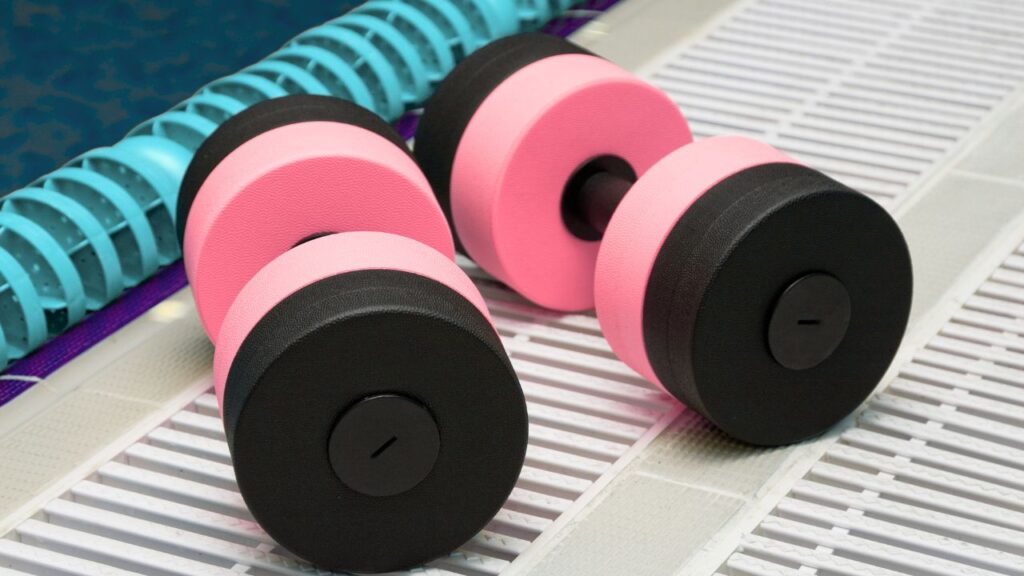
Aqua Dumbbells
Adds upper-body resistance to help improve strength, endurance, and overall workout intensity during aquatic fitness sessions.

Resistance Gloves
Creates additional water resistance for the arms and shoulders while helping improve movement control and muscle engagement.
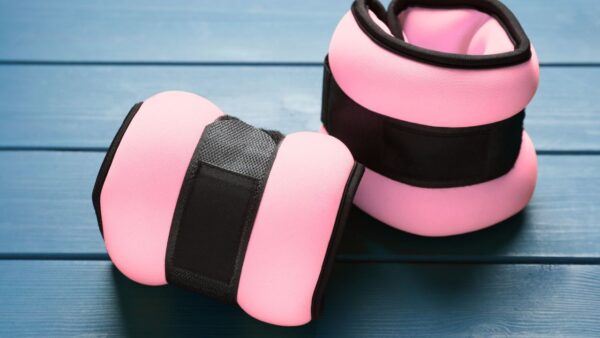
Aquatic Cuffs
Designed to increase resistance on both the arms and legs, helping create more advanced aquatic strength and conditioning workouts.

Flotation Belt
Supports deep-water exercises and helps maintain balance during suspended aquatic workouts without placing stress on the joints.
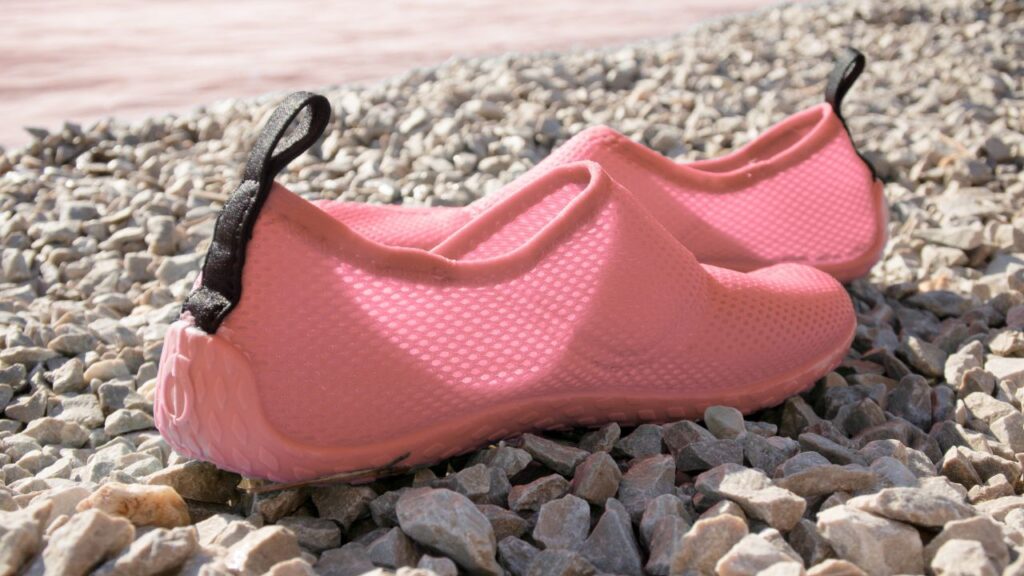
Water Shoes
Provides grip, stability, and foot protection for aquatic fitness classes, pool walking, and water-based exercise routines.
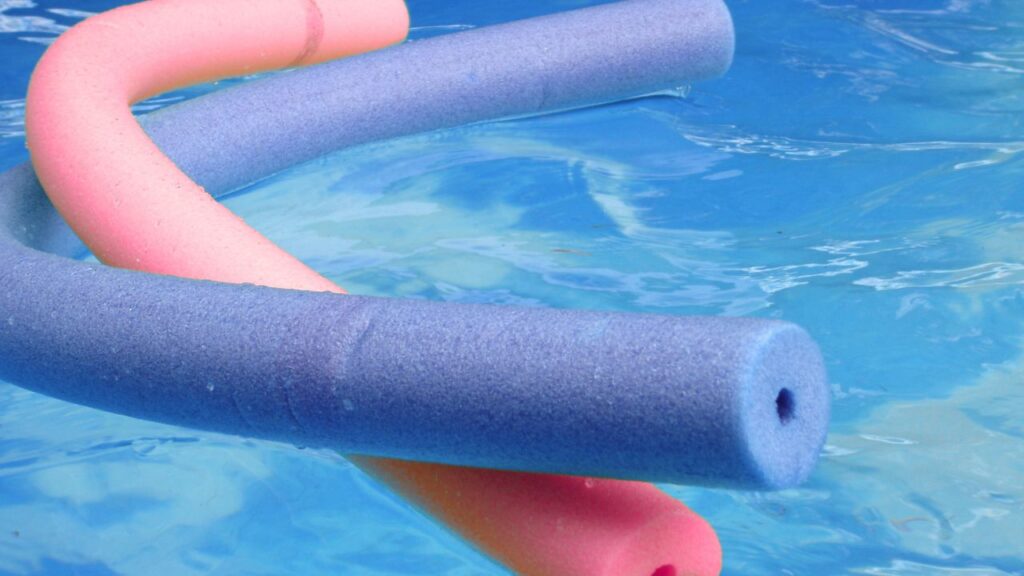
Pool Noodle
Provides flotation support for balance, core training, and low-impact aquatic exercises while helping improve comfort and stability in the water.
Disclosure: Links above are affiliate links, meaning Legendary Swimmers may earn a small commission at no additional cost to you.
Choose How You Prefer to Train in Water
Whether you are here to improve your swimming, build strength, or move with less impact, Legendary Swimmers gives you simple ways to use the water as your training space.
Start with one of our free resources below and choose the path that fits how you want to move in the water.