The end of a pool workout does not have to mean rushing straight out of the water. A gentle pool stretching routine can be a simple way to slow down after a workout.
Taking a few quiet minutes to move through gentle stretches and mobility work can be a simple way to slow your breathing, notice how your body feels, and finish your session with intention.
The water gives you support as you move, and it can make it easier to explore comfortable ranges of motion without forcing a stretch. This routine is not about pushing deeper or proving flexibility. It is about moving slowly, staying relaxed, and choosing ranges that feel good in your body.
Use these pool stretches after an aqua fitness workout, after an easy swim, or on a day when you simply want a few minutes of gentle water movement.
Before You Start
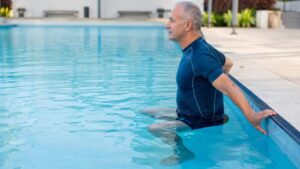
Choose water depth where you feel stable and can stand comfortably. Keep one hand on the pool wall whenever you need extra support.
Move slowly. Do not bounce, force a position, or hold your breath. A stretch should feel mild and comfortable, not sharp, pinching, or painful.
If you have an injury, recent surgery, medical condition, or persistent pain, ask a qualified healthcare professional or physical therapist which movements are appropriate for you.
1. Tall Reach With Gentle Side Bend
Stand tall with your feet comfortably apart. Reach one arm overhead and lean slightly to the opposite side.
Keep your shoulders relaxed and avoid twisting forward. Hold for two or three easy breaths, then switch sides.
This is a gentle way to create space through the sides of your torso after arm-driven water exercises.
2. Chest Opener
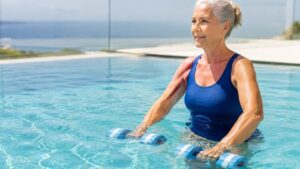
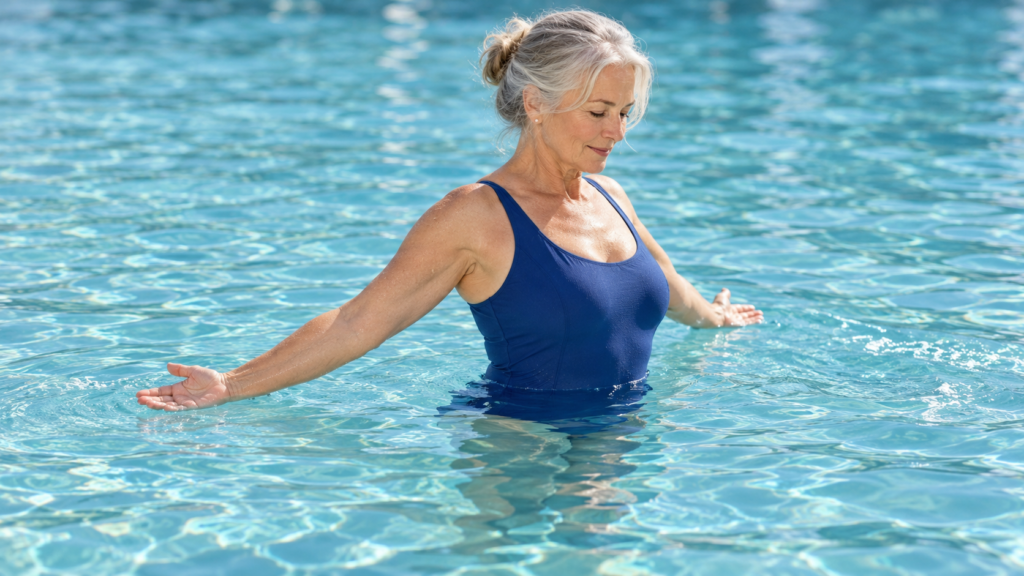
Stand in chest-deep water with your arms slightly behind your body and your palms facing forward.
Gently draw your shoulders back and open across the front of your chest. Keep your ribs relaxed rather than arching your lower back.
Hold for a few breaths, release, and repeat once or twice.
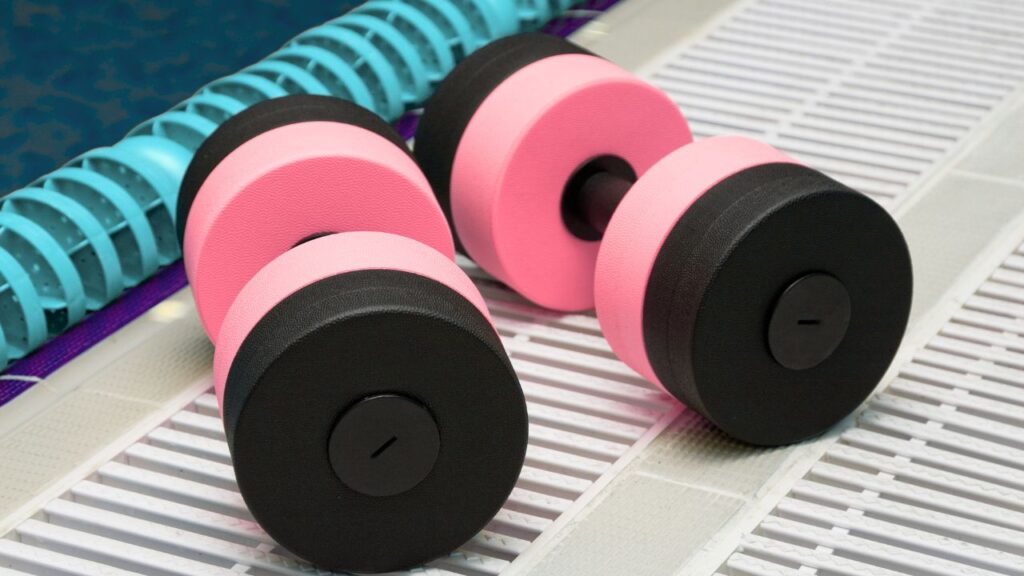
This can feel especially good after pressing movements, swimming, or holding aquatic equipment.
3. Upper-Back Reach
Bring both hands forward at shoulder height and gently reach your arms away from your body, as though you were widening the space between your shoulder blades.
Keep your neck relaxed. You do not need to force your chin down or round your entire back.
Pause for two slow breaths, release, and repeat.
4. Easy Torso Rotations
Stand tall with your arms relaxed in front of you. Slowly rotate your upper body to one side, letting your arms move gently through the water.
Return to center and rotate to the other side.
Keep your hips mostly facing forward and make the movement smaller if it feels uncomfortable. Complete six to eight relaxed rotations per side.
5. Hip Flexor Lunge Stretch
Face the pool wall and rest your hands lightly on the edge. Step one foot back into a small staggered stance, keeping the back heel lifted.
Bend both knees slightly. Keep your torso tall, gently squeeze the glute of the back leg, and tuck your pelvis slightly. Shift your hips forward until you feel a mild stretch along the front of the back hip.
Hold for two or three breaths, then switch sides
6. Hamstring Hinge
Place one heel lightly on the pool floor in front of you with your toes pointing upward. Keep a soft bend in your standing knee.
Hinge forward slightly from your hips while keeping your spine long. You may feel a gentle stretch along the back of the extended leg.
Hold for two or three breaths, then switch legs.
Avoid rounding forward or trying to reach your toes. The goal is a comfortable hinge, not a deep stretch.
7. Calf Stretch at the Pool Wall
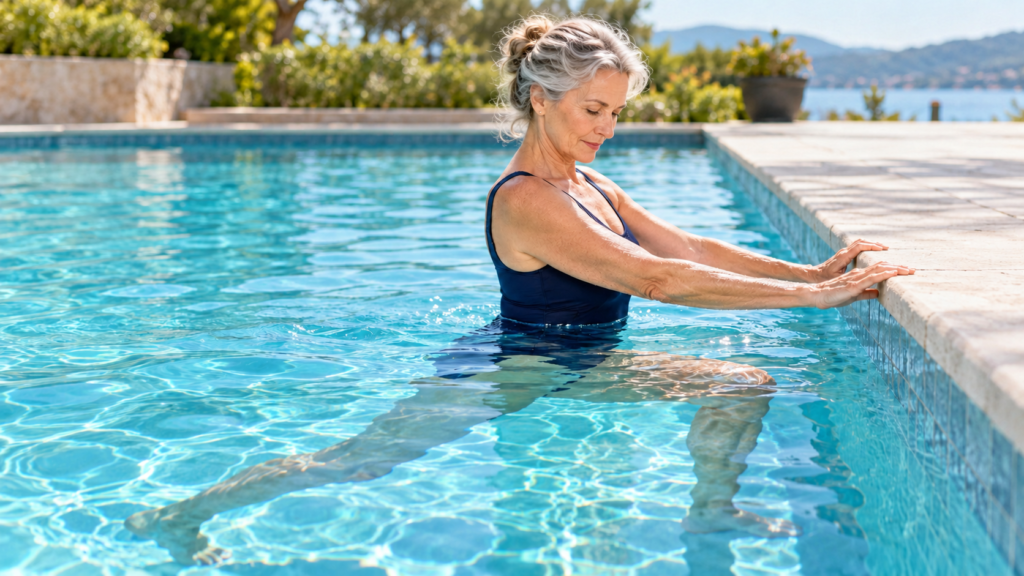
Face the pool wall with both hands resting on the edge. Step one foot back, keeping the back leg straight and the back heel comfortably planted on the pool floor.
Bend the front knee gently and lean forward until you feel a stretch through the calf of the back leg. Hold for two or three breaths, then switch sides.
8. Gentle Ankle Circles
Hold the pool wall if needed. Lift one foot lightly from the floor and make slow ankle circles in both directions.
Switch sides after six to eight circles.
This simple movement can be a calm way to finish after water walking, jogging, kicking, or lower-body work.
Turn the Moves Into an 8-Minute Pool Stretching Routine
Move through each stretch for about 30 seconds per side, keeping transitions slow and easy.
- Tall Reach With Gentle Side Bend
- Chest Opener
- Upper-Back Reach
- Easy Torso Rotations
- Hip Flexor Lunge Stretch
- Hamstring Hinge
- Calf Stretch at the Pool Wall
- Gentle Ankle Circles
You can repeat the full sequence once if it feels good, or choose only the two or three movements your body seems to need that day.
Why Pool Stretching Can Feel Different
Many people find that water makes movement feel more supported. You can keep your balance with the pool wall nearby, move more slowly, and take some of the pressure off your joints while you explore a comfortable range of motion.
That does not mean every stretch will feel right for every person. Your best guide is how your body responds.
Choose the positions that feel comfortable, skip the ones that do not, and remember that a shorter, gentler stretch still counts.
When to Use This Routine
This pool stretching routine works well:
- After an aqua fitness workout
- After an easy swim
- After water walking or jogging
- On a lighter movement day
- Before leaving the pool, when you want a calmer finish
Come back to this pool stretching routine anytime you want a calm, low-impact way to finish your time in the water.
Build a Complete Pool Session
Stretching is a nice finish, but it does not have to be the whole workout.
If you want a simple way to combine strength, mobility, and low-impact movement in one session, try the new and improved free 30-minute aqua fitness demo.
It gives you a guided workout you can follow at your own pace from your own pool or a community pool.
Sign up here:
https://legendaryswimmers.com/free-30-minute-aqua-fitness-workout-sign-up/
Frequently Asked Questions
Should I stretch before or after a pool workout?
Gentle movement can be useful before a workout, while slower stretches and mobility work often feel good afterward. Let your body guide the timing and keep every movement comfortable.
How long should I hold a pool stretch?
A few calm breaths is enough for this routine. There is no need to hold a position until it becomes uncomfortable.
Can I use the pool wall for support?
Absolutely. The wall is there to help you feel stable, especially during standing stretches or single-leg movements.
What if I feel pain during a stretch?
Stop that movement. Do not push through sharp, pinching, or worsening pain. Seek individualized guidance from a qualified healthcare professional if you have ongoing pain or a medical concern.
Recommended Reads:
- Protect Your Joints While Building Strength in the Water
- Why Water Exercise Feels Easier Than Land Exercise (But Still Builds Strength)
- Free 30-Minute Aqua Fitness Workout
https://legendaryswimmers.com/free-30-minute-aqua-fitness-workout-sign-up/
References
- ChoosePT (American Physical Therapy Association) — Tips to Recover from a Workout
https://www.choosept.com/health-tips/tips-recover-from-workout - ChoosePT (American Physical Therapy Association) — 10 Exercises To Do in the Pool
https://www.choosept.com/health-tips/10-exercises-in-pool