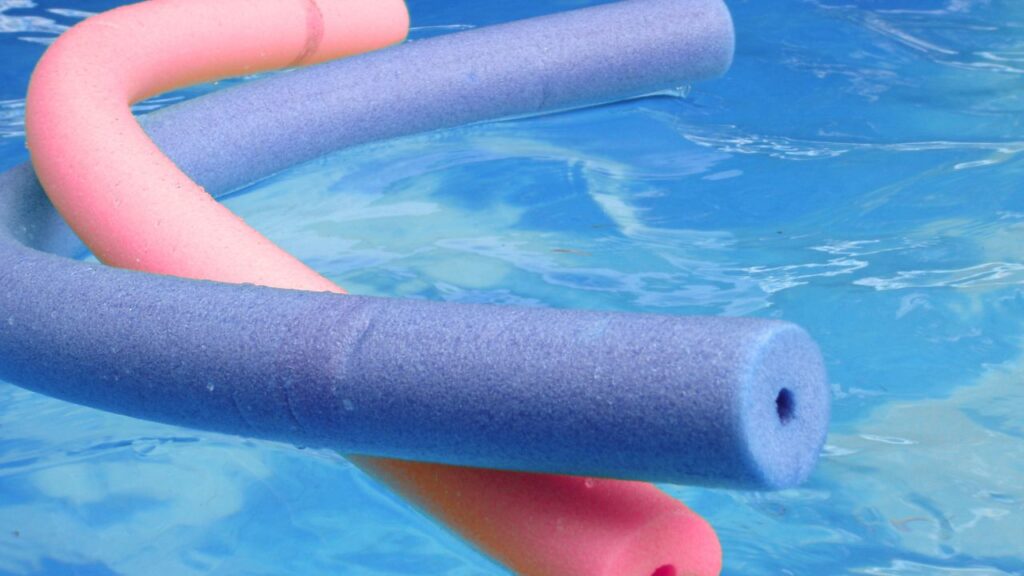
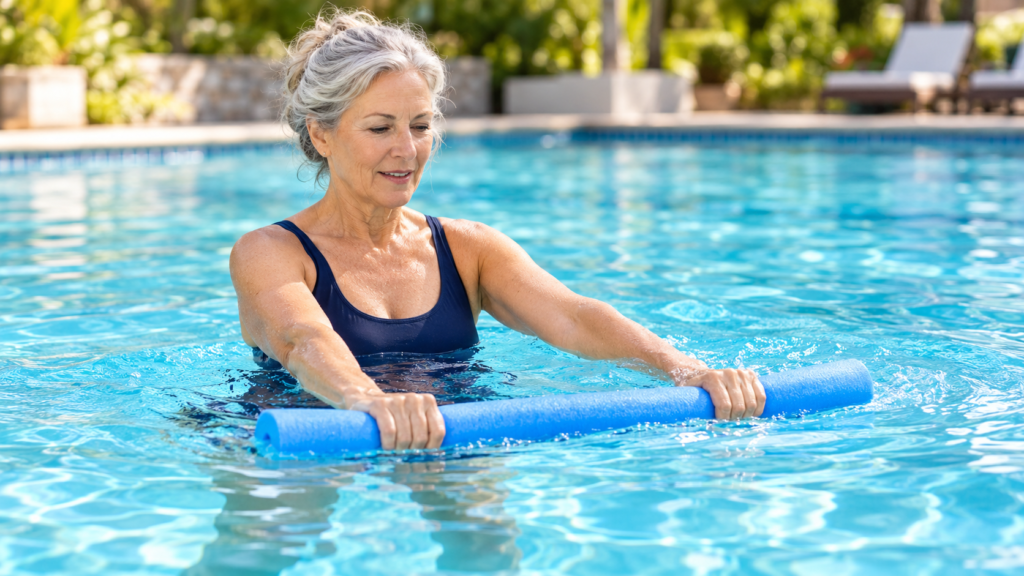
A pool noodle is one of the simplest pieces of equipment you can bring into the water, and it can make a water workout feel more playful, supported, and surprisingly challenging.
Because the noodle wants to float, you have to control it as you press, pull, and move it through the water. That gives your arms, core, and lower body something purposeful to work against without needing traditional weights.
This pool noodle workout is designed for shallow water where you can stand securely. The movements are simple, but simple does not mean ineffective. The water creates resistance every time you move with intention.
The most important rule: stay in control of the noodle. Never force it underwater and let it snap back to the surface. Keep a secure hold, move slowly at first, and choose a water depth where you feel steady.
How to Set Up Your Pool Noodle Workout
Choose waist- to chest-deep water where you can stand comfortably. If you are new to water fitness, stay near the pool wall.
Start with a two- to three-minute warmup:
- Gentle water walking
- Shoulder rolls
- Easy arm sweeps through the water
- A few controlled mini-squats
Then perform each of the seven moves below for 30 to 40 seconds. Rest or water-walk for 20 to 30 seconds between moves.
Complete one round if you are new, or repeat the circuit once more when you are ready.
1. Noodle Press-Downs
Hold the noodle in front of you with both hands, about shoulder-width apart. Keep it at the surface of the water.
Slowly press the noodle downward toward your thighs, then return it to the surface with control.
Keep your shoulders relaxed and avoid letting the noodle spring out of your hands.
You may feel this in: arms, shoulders, upper back, and core.
Make it easier: Use a smaller range of motion.
Make it more challenging: Slow the return to the surface and keep your torso tall.
2. Noodle Chest Presses
Hold the noodle horizontally just below the surface at chest height.
Press it forward through the water, then bring it back toward your chest with control. Keep your elbows softly bent rather than locking them.
The noodle adds surface area, so your arms have more water to move.
You may feel this in: chest, shoulders, arms, and core.
Make it easier: Press only halfway forward.
Make it more challenging: Alternate a slower forward press with a slightly quicker controlled return.
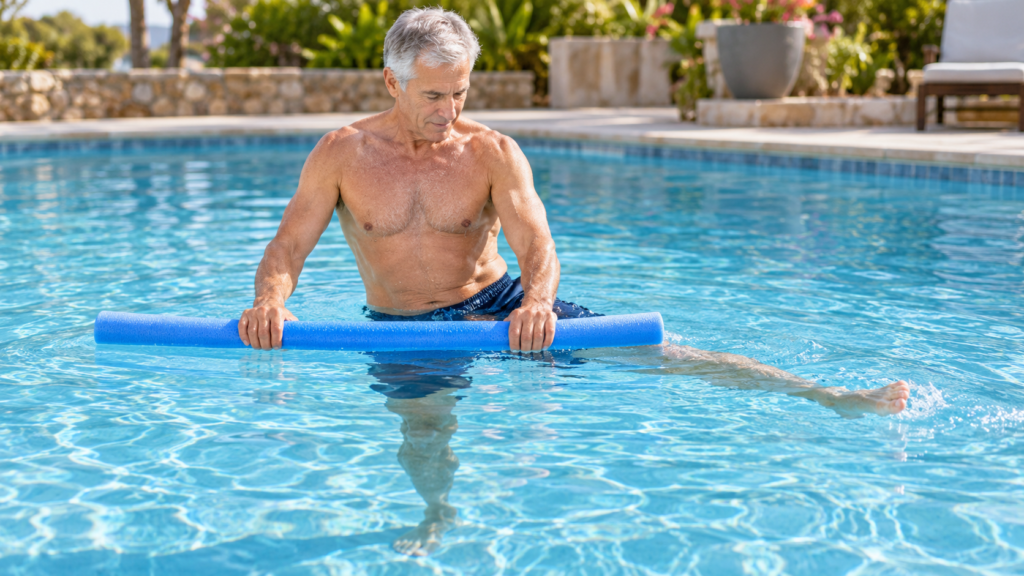
3. Noodle-Supported Side Leg Lifts
Hold the noodle lightly at the surface in front of you, with your hands about shoulder-width apart. Stand tall and shift a little more weight into one leg.
Keeping the other leg long with a soft knee and toes facing forward, lift it out to the side through the water. Lower with control, then switch sides.
Keep your hips facing forward and avoid leaning into the noodle.
You may feel this in: outer hips, glutes, legs, and core.
Make it easier: Use a smaller lift or stand near the pool wall.
Make it more challenging: Pause for one or two seconds at the top of each lift without leaning.
4. Squat With Noodle Press-Down
Hold the noodle horizontally at the water’s surface in front of you, with both hands about shoulder-width apart.
As you lower into a comfortable partial squat, press the noodle down just below the surface. Keep a secure grip and stay tall through your torso.
Keep your knees moving in a direction that feels natural for you. Do not force the noodle deeply underwater.
As you return to standing, allow the noodle to rise slowly with control rather than letting it pop back to the surface.
You may feel this in: legs, glutes, shoulders, arms, and core.
Make it easier: Use a smaller squat and press the noodle only a few inches below the surface.
Make it more challenging: Pause for one second at the bottom while keeping the noodle gently submerged.
5. Noodle Chest Squeezes
Hold the noodle horizontally in front of you at chest height, with your hands near the ends.
Keeping your elbows softly bent, slowly bring both ends of the noodle toward each other so it bends into a gentle “U” shape. Keep your shoulders relaxed and your ribs stacked over your hips.
Return the noodle to a long horizontal shape with control. Do not sharply fold it or let it spring open.
You may feel this in: chest, shoulders, arms, and core.
Make it easier: Hold the very ends of the noodle and make a smaller bend.
Make it more challenging: Slide your hands a few inches inward from the ends and create a slightly deeper bend.
6. Noodle Front Lifts
Hold the noodle horizontally in front of your hips with both hands. Keep your arms extended but not locked.
Slowly lift both arms forward until the noodle reaches, or just breaks, the surface of the water. Then press it back down through the water until it returns in front of your hips.
Keep your chest tall, ribs relaxed, and shoulders away from your ears. Avoid leaning backward as the noodle rises.
You may feel this in: shoulders, arms, and core.
Make it easier: Keep the noodle close to the surface and use a smaller range of motion.
Make it more challenging: Use a slightly stronger downward press through the water, then return the noodle slowly to the surface.
7. Noodle Figure Eights
Hold the noodle in front of your body just below the surface. Slowly trace a figure-eight pattern through the water, keeping your ribs and hips as steady as possible.
This movement does not need to be fast. The goal is to feel the water resist the noodle from changing direction.
You may feel this in: arms, shoulders, core, and upper-body coordination.
Make it easier: Make smaller figure eights.
Make it more challenging: Make the pattern wider while keeping your shoulders relaxed.
A Simple 15-Minute Pool Noodle Circuit
After your warmup, complete each movement for 30 seconds. For the side leg lifts, work 15 seconds per side.
1. Noodle Press-Downs — 30 seconds
2. Noodle Chest Presses — 30 seconds
3. Noodle-Supported Side Leg Lifts — 30 seconds total (15 seconds per side)
4. Squat With Noodle Press-Down — 30 seconds
5. Noodle Chest Squeezes — 30 seconds
6. Noodle Front Lifts — 30 seconds
7. Noodle Figure Eights — 30 seconds
Take 20 to 30 seconds of easy water walking between movements. Repeat the full circuit once if it feels appropriate.
Finish with one or two minutes of gentle water walking and relaxed shoulder circles.
Do You Need a Pool Noodle to Get a Good Water Workout?
No. The water itself provides resistance, and you can build a meaningful workout with no equipment at all just make sure to cup your hands and keep your fingers closed at all times to increase resistance.
A noodle is simply a helpful option when you want to change the feel of your session, add a little buoyancy, or make familiar movements more engaging. It is especially useful for people who want a gentle way to explore resistance without starting with water weights.
If you want to learn about other simple tools, link readers to your existing water-workout equipment guide.
A Note About Safety
Do not use a pool noodle as a substitute for proper flotation support in deep water. This article is intended for shallow water where you can stand securely.
Keep a secure grip on the noodle, stay close to the wall if you are new to aquatic exercise, and stop any movement that causes pain, dizziness, or loss of balance. If you have a health condition, injury, or questions about appropriate exercise, seek individualized guidance from a qualified healthcare professional or physical therapist.
Want a Guided Pool Workout?
The noodle circuit is a fun way to add variety, but sometimes it is nice to press play and simply follow a plan.
Try the new and improved free 30-minute aqua fitness demo for a full, no equipment, low-impact pool workout you can do at your own pace.
Sign up here:
https://legendaryswimmers.com/free-30-minute-aqua-fitness-workout-sign-up/
Frequently Asked Questions
Can beginners do a pool noodle workout?
Yes. Begin in shallow water, stay near the pool wall, and choose small, controlled movements. One round of the circuit is plenty for a first session.
Is a pool noodle better than water weights?
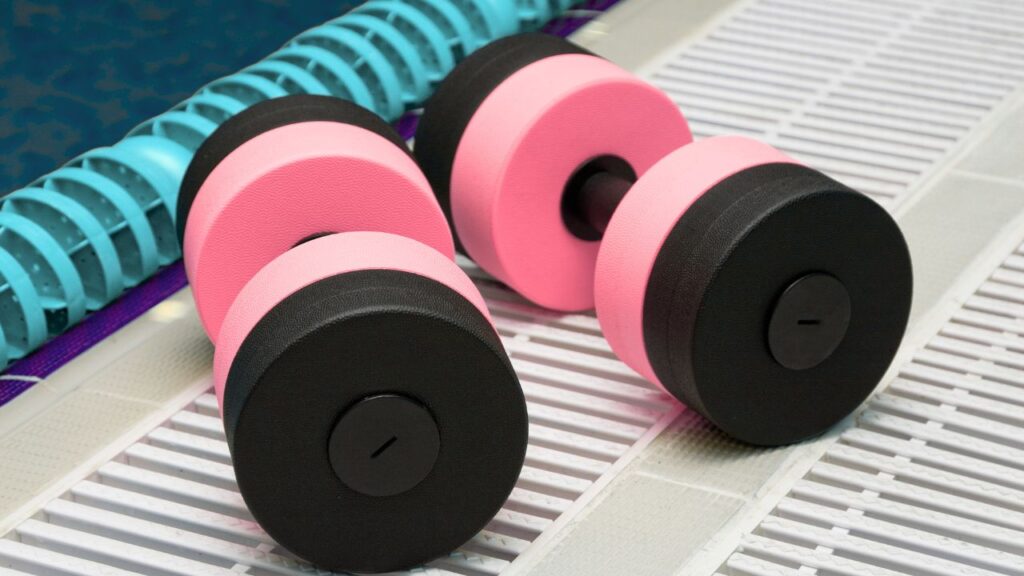
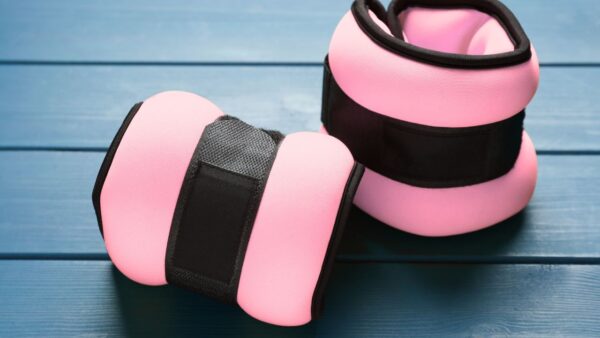
They create different types of resistance. A noodle adds buoyancy and surface area, while water weights are designed for more resistance-focused movements. You do not need either tool to start exercising in the pool.
Can I do these exercises in deep water?
This routine is designed for shallow water. If you exercise in deep water, use appropriate flotation equipment and choose movements that match your comfort and skill level.
Recommended Reads:
- Best Water Workout Equipment for a Stronger Pool Workout
- Water Aerobics Exercises for Your Lower Body: 10 Effective Pool Moves
- Free 30-Minute Aqua Fitness Demo
https://legendaryswimmers.com/free-30-minute-aqua-fitness-workout-sign-up/
References
- ChoosePT (American Physical Therapy Association) — 10 Exercises To Do in the Pool
https://www.choosept.com/health-tips/10-exercises-in-pool - Centers for Disease Control and Prevention — What Counts as Physical Activity for Adults
https://www.cdc.gov/physical-activity-basics/adding-adults/what-counts.html