
Stronger in the Water. Stronger in Life.
Best Water Workout Equipment for a Stronger Pool Workout in 2026
Water workouts are already one of the most joint-friendly ways to build strength, improve endurance, and stay active. But the right equipment can completely change the quality of your workout.
Instead of simply moving through the water, tools like aquatic dumbbells, resistance gloves, pool noodles, kickboards, and flotation belts help you create more resistance, better control, and a more complete full-body workout.
Whether you are new to aquatic fitness, returning to movement after joint discomfort, or looking for a smarter way to build strength in the pool, choosing the right water workout equipment can help you get more from every session.
If Interested in the Benefits of Water Workouts and Aquatic Resistance Training, check out our guides on:
- How Water Exercises Improve Stability, Coordination & Everyday Movement
- How Aquatic Exercises Boost Blood Circulation Naturally
Why Water Workout Equipment Matters
Water naturally creates resistance. Every time you push, pull, sweep, kick, or rotate in the pool, your body has to work against the viscosity of the water. This is one of the reasons aquatic exercise can support strength and endurance while staying low impact. Mayo Clinic notes that water’s resistance can turn aquatic exercise into an effective resistance-training workout, while reducing stress on the joints.
That means you do not always need heavy equipment to make a pool workout effective. In fact, many aquatic tools are lightweight on land but challenging in the water because they increase drag, buoyancy, or surface area.
The right equipment can help you:
Improve upper-body strength
Build lower-body endurance
Challenge your core stability
Support balance and posture
Make low-impact workouts more effective
Add variety to your pool routine
Progress from beginner to advanced movements
This is especially important for people who want a workout that feels strong without the pounding of land-based exercise.
For those interested in learning more on how water resistance training works, view our guide on The Science Behind Water Resistance Training: Why It Works
The Best Water Workout Equipment to Use in 2026
1. Aquatic Dumbbells
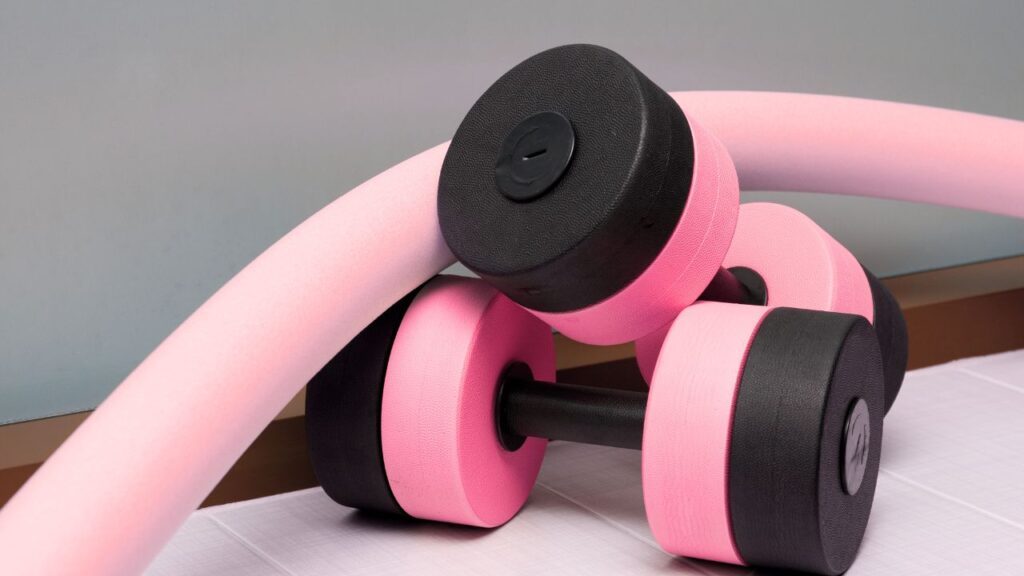
Aquatic dumbbells are one of the most recognizable pieces of water workout equipment. Unlike regular weights, they are usually made from buoyant foam and are designed to create resistance as you push them down, pull them through the water, or move them in different directions.
They are especially useful for upper-body and core exercises.
Aquatic dumbbells can be used for movements like:
Hydro arm presses
Chest flys
Bicep curls
Tricep presses
Core rotations
Cross-body arm swings
Resistance rolls
The key is control. In the water, faster is not always better. Moving with intention helps you use the resistance more effectively and avoid relying only on momentum.
Best for: upper-body strength, core control, resistance training, beginner-to-advanced progressions.
2. Resistance Gloves
Resistance gloves are a simple but powerful tool for improving water workouts. They usually have webbed fingers, which increase the surface area of your hands. This makes every push, pull, sweep, and press more challenging.
These are a great option for people who want resistance without holding equipment.
Resistance gloves are helpful for:
Arm sweeps
Water jogging
Treading movements
Pulling motions
Core twists
Balance exercises
They also work well for people who have difficulty gripping dumbbells for a full workout.
Best for: upper-body endurance, shoulder control, cardio-based aqua fitness, grip-free resistance.
3. Pool Noodles
Pool noodles may look simple, but they are one of the most versatile aquatic fitness tools. They can be used for support, balance, resistance, floating core work, and beginner-friendly movement.
Because noodles float, they can help support the body during certain exercises. But when you press them underwater, they also create resistance.
Pool noodles can be used for:
Floating core crunches
Supported squats
Balance drills
Noodle presses
Seated kicks
Core twists
Assisted stretching
For beginners, a pool noodle can provide confidence and stability. For more advanced participants, it can become a serious resistance tool when pushed, pulled, or held underwater.
Best for: balance, core work, beginner support, low-impact full-body movement.
4. Kickboards
Kickboards are often used for swim training, but they are also excellent for aquatic fitness. They can support lower-body exercises, improve body position, and add resistance when pushed vertically through the water.
Kickboards are especially helpful when combining swim-inspired drills with sculpting movements, which makes them a great bridge between swimming and aqua fitness.
Kickboards can be used for:
Flutter kicks
Leg extensions
Standing core presses
Kickboard pushes
Balance drills
Lower-body endurance work
Cardio intervals
They are also useful for people who want to improve lower-body stamina without needing to swim full laps.
Best for: lower-body endurance, swim-inspired fitness, balance, cardio conditioning.
For more on how to apply kickboards in your swim training, check out our guide on Replacing Gym Workouts With Kickboard Swiming: Is It Effective?
5. Flotation Belts
A flotation belt helps keep the body upright and supported in deeper water. This makes it especially useful for deep-water jogging, core work, and low-impact cardio.
For people who want to exercise without touching the pool floor, a flotation belt can create a safer and more controlled deep-water experience.
Flotation belts can support:
Deep-water jogging
Core stabilization
Suspended leg movements
Low-impact cardio
Posture training
Balance and coordination
They are also helpful for reducing impact while still allowing the body to work hard.
Best for: deep-water workouts, cardio, posture, joint-friendly conditioning.
6. Aquatic Resistance Bands or Loops
Aquatic resistance bands and loops can be used in the pool to create additional challenge for the arms, legs, hips, and core. They are not always necessary for beginners, but they can be useful as someone becomes stronger and wants more variety.
They can support:
Lateral leg work
Arm pulls
Core rotations
Hip strengthening
Balance drills
Functional movement patterns
Because bands create elastic resistance, it is important to move slowly and stay in control.
Best for: strength progressions, hip work, controlled resistance, intermediate-to-advanced workouts.
7. Water Shoes
Water shoes are not usually thought of as “fitness equipment,” but they can make a big difference. They help with traction, comfort, and confidence, especially in shallow-water workouts.
They may be useful for:
Water walking
Aqua aerobics
Squats
Lunges
Balance exercises
Pool deck safety
For people who feel unstable on the pool floor, water shoes can provide added grip and support.
Best for: stability, water walking, shallow-water workouts, safety and comfort.
How to Choose the Right Water Workout Equipment
The best equipment depends on your level, goals, and comfort in the water.
For Beginners
Start with simple, supportive tools.
Good beginner options include:
Pool noodle
Light aquatic dumbbells
Kickboard
Water shoes
These tools help with stability, confidence, and basic resistance without overwhelming the body.
For Strength Training
Choose tools that increase drag and resistance.
Good strength options include:
Aquatic dumbbells
Resistance gloves
Resistance bands
Kickboards used vertically
Pool noodles pressed underwater
These tools help challenge the muscles while still keeping the workout low impact.
For Core and Balance
Look for tools that require control and stabilization.
Good core options include:
Pool noodle
Flotation belt
Kickboard
Resistance gloves
Core training in water is not only about crunches. It often happens when the body has to stay tall, balanced, and controlled against moving water.
For Deep-Water Workouts
A flotation belt is usually the most important tool.
It helps keep the body upright while allowing the legs and core to work without impact from the pool floor.
This can be especially helpful for people who want cardio conditioning without running, jumping, or high-impact movement.
Why Equipment Makes Water Workouts More Effective
Aquatic exercise already has strong benefits. The CDC notes that water-based exercise can support physical and mental health and may be helpful for people with chronic conditions like arthritis, diabetes, and heart disease.
Research also continues to support aquatic exercise, such as swimming or Aquatic Fitness, for strength, balance, pain reduction, and functional movement. A 2025 review on older adults with osteoarthritis found that aquatic exercise significantly improved balance, stiffness, pain, and walking ability compared with non-exercise controls. For more on the benefits of bone health, please visit our guid on Swimming for Bone Health:Combat Osteoporosis with Water Exercise.
A 2026 systematic review and meta-analysis also looked at aquatic exercise and muscle-related outcomes, showing that this continues to be an active area of research for strength, body composition, and functional fitness. If you prefer swimming as a form of water exercises, please visit our guide on Best Swimming Strokes for Muscle Building 2026.
The equipment matters because it helps you apply those benefits in a more structured way.
For example:
Aquatic dumbbells increase resistance for the arms and core.
Kickboards help target the legs and improve endurance.
Pool noodles support balance, floating core work, and resistance drills.
Resistance gloves make every arm movement more challenging.
Flotation belts allow low-impact deep-water cardio.
This is why a well-designed water workout is not random movement. It combines the natural properties of water with the right tool for the right goal.
Beginner Water Workout Equipment Routine
Here is a simple way to combine different tools into one balanced pool workout.
Warm-Up: 5 Minutes
Start with water walking or gentle jogging in chest-deep water.
Focus on tall posture, relaxed shoulders, and steady breathing.
Upper Body: 8 Minutes
Use aquatic dumbbells or resistance gloves.
Try:
Arm presses
Chest flys
Bicep curls
Cross-body arm swings
Move slowly and focus on controlling the water instead of rushing.
Lower Body: 8 Minutes
Use a kickboard or pool noodle for support.
Try:
Flutter kicks
Standing leg lifts
Hydro squats
Alternating knee lifts
Keep the core engaged and avoid leaning too far forward.
Core: 6 Minutes
Use a pool noodle or flotation belt.
Try:
Core twists
Floating knee tucks
Noodle presses
Standing balance holds
The goal is stability, not speed.
Cardio Finish: 5 Minutes
Use no equipment or resistance gloves.
Try:
Water jogging
Aqua jacks
Fast arm pushes
Alternating kicks
Increase the pace while staying controlled.
Cooldown: 3 Minutes
Finish with gentle walking, shoulder rolls, and slow breathing.
Equipment Safety Tips
Water workout equipment should make your workout better, not harder to control.
Keep these tips in mind:
Start with lighter resistance.
Focus on form before speed.
Avoid forcing movements through pain.
Keep your shoulders relaxed during arm exercises.
Use support tools if balance feels difficult.
Rinse equipment after pool use.
Store foam tools away from direct sun when possible.
If you are recovering from an injury or managing a medical condition, it is always best to get guidance from a qualified professional before starting a new exercise program.
Common Mistakes to Avoid
Choosing Equipment That Is Too Hard Too Soon
Bigger dumbbells or stronger resistance do not always mean a better workout. If the equipment causes you to lose posture, rush the movement, or strain your shoulders, it may be too much.
Moving Too Fast
Water creates resistance in every direction. When you move too fast, you may lose control and rely on momentum. Slower, cleaner movement often creates a better strength challenge.
Only Training the Arms
Many people use aquatic dumbbells and forget the lower body and core. A complete water workout should include upper body, lower body, cardio, and stability.
Treating Pool Noodles Like Toys Only
Pool noodles can be excellent training tools when used intentionally. They can support floating core work, balance, and resistance training.
Not Progressing the Workout
Once a movement feels easy, progress it by changing tempo, range of motion, direction, or equipment. In water, small changes can make a big difference.
Try a Free Guided Water Workout
Choosing the right water workout equipment is helpful, but knowing how to use it inside a structured routine makes the biggest difference.
If you are ready to experience a low-impact pool workout for yourself, start with our free 15-minute aqua fitness demo. It is a simple way to try guided aquatic exercise and see how water resistance can support strength, movement, and endurance without heavy impact on the joints.
You can also download our free Swim & Sculpt PDF guide, created to help you combine swim-inspired drills with sculpting exercises in the water. It is a great option if you want to bring more purpose and variety into your pool workouts.
Whether you want a quick guided workout or a printable guide to follow, both options are designed to help you move with more confidence in the water.
Start here:
Try the Free 15-Minute Aqua Fitness Demo
Download the Free Swim & Sculpt PDF Guide
Last Thoughts
The best water workout equipment in 2026 is not about one brand or one product. It is about choosing the right tools for the way you want to move.
Aquatic dumbbells, resistance gloves, kickboards, flotation belts, pool noodles, and water shoes all serve different purposes. Some help with strength. Others support balance, core control, cardio, or confidence in the water.
The real magic happens when these tools are used inside a structured workout.
That is what turns a simple pool session into a complete, low-impact strength and conditioning routine.
Whether you are training for better fitness, more mobility, or simply a fun way to stay active, the right equipment can help you move with more purpose, more resistance, and more confidence in the water.
FAQs
What is the best water workout equipment for beginners?
The best beginner tools are usually a pool noodle, light aquatic dumbbells, a kickboard, and water shoes. These provide support, stability, and gentle resistance without making the workout too difficult.
Are aquatic dumbbells the same as regular weights?
No. Aquatic dumbbells are usually made from buoyant foam and are designed for water resistance. Regular weights should not be used in the pool because they can be unsafe, damage surfaces, and are not designed for aquatic movement.
Do water weights actually build strength?
Yes, they can help build strength and endurance when used correctly. The resistance comes from pushing and pulling against the water, especially when using controlled movement and proper form.
What equipment is best for low-impact pool workouts?
Good low-impact options include flotation belts, pool noodles, kickboards, water shoes, resistance gloves, and aquatic dumbbells. These tools can help support the body while still creating a challenging workout.
What is the best equipment for deep-water workouts?
A flotation belt is usually the most helpful tool for deep-water exercise. It supports upright posture and allows you to jog, kick, and move without impact from the pool floor.
Can seniors use water workout equipment?
Yes. Many water workout tools are helpful for older adults because aquatic exercise is low impact and adaptable. Mayo Clinic notes that aquatic exercise can improve muscular endurance and strength and may help older adults stay active.
What equipment makes pool workouts harder?
Aquatic dumbbells, resistance gloves, resistance bands, and kickboards used as resistance tools can make pool workouts more challenging. The intensity also depends on speed, range of motion, water depth, and control.
Do I need equipment for a good water workout?
No, you can get a good workout using only the resistance of the water. However, equipment can help add variety, structure, and progression, especially when you want to target strength, balance, or endurance more intentionally.
Reference Links
Centers for Disease Control and Prevention — Swimming and Your Health
https://www.cdc.gov/healthy-swimming/about/index.html
This supports the health benefits of water-based exercise, including benefits for people with chronic conditions.
Mayo Clinic — Aquatic Exercises
https://www.mayoclinic.org/healthy-lifestyle/fitness/in-depth/aquatic-exercise/art-20546802
This supports the benefits of aquatic exercise for heart health, strength, endurance, stress reduction, joint use, and older adults.
Mayo Clinic News Network — Water Fitness: Why Aqua Exercise Works Wonders
https://newsnetwork.mayoclinic.org/discussion/readymayo-clinic-q-and-a-water-fitness-why-aqua-exercise-works-wonders/
This supports the explanation that water viscosity creates resistance and can make aquatic exercise effective for resistance training with less joint stress.
PubMed Central — Effects of Aquatic Exercise in Older People with Osteoarthritis
https://pmc.ncbi.nlm.nih.gov/articles/PMC11755622/
This supports the claim that aquatic exercise can improve balance, stiffness, pain, and walking ability in older people with osteoarthritis.
PubMed Central — Effects of Aquatic Exercise on Improving Body Composition and Muscle Strength in Older Adults
https://pmc.ncbi.nlm.nih.gov/articles/PMC12930738/
This is the 2026 systematic review/meta-analysis I used to support the updated “2026” angle around aquatic exercise, muscle outcomes, and body composition.
Share:
More Posts
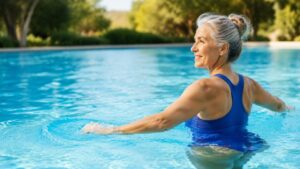
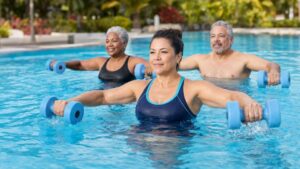
Start Training in the Water
Free Resources
Improve your swimming, build strength, or move with less impact using the water as your training space.
Choose a free resource below to get started.
Recommended Equipment
These aquatic fitness tools help increase water resistance, improve stability, and create a more effective low-impact workout experience in the pool.
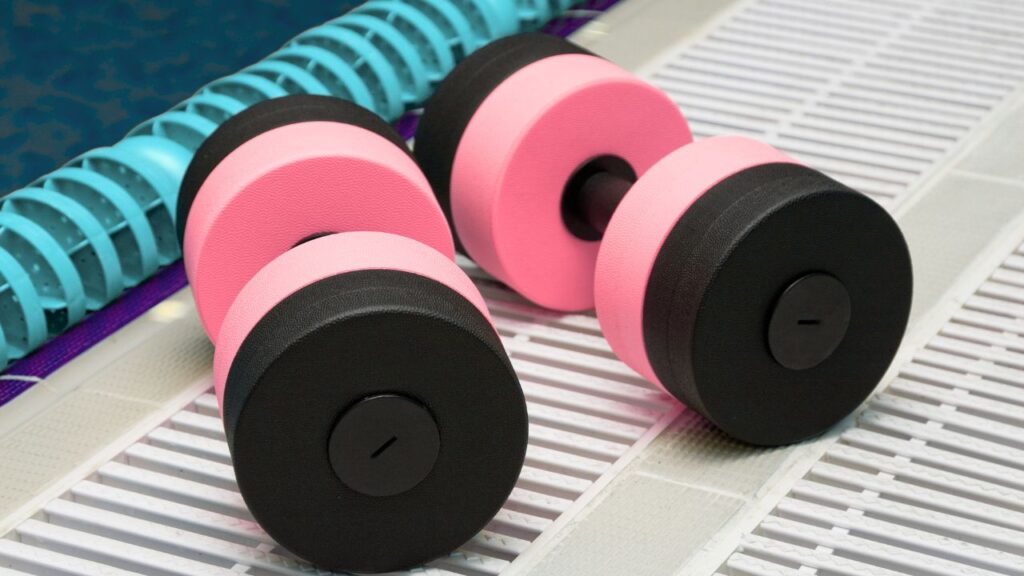
Aqua Dumbbells
Adds upper-body resistance to help improve strength, endurance, and overall workout intensity during aquatic fitness sessions.

Resistance Gloves
Creates additional water resistance for the arms and shoulders while helping improve movement control and muscle engagement.
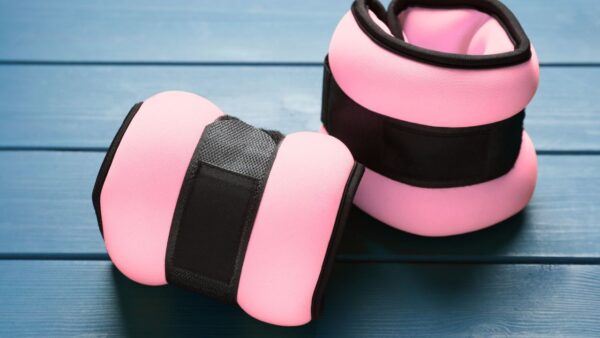
Aquatic Cuffs
Designed to increase resistance on both the arms and legs, helping create more advanced aquatic strength and conditioning workouts.

Flotation Belt
Supports deep-water exercises and helps maintain balance during suspended aquatic workouts without placing stress on the joints.
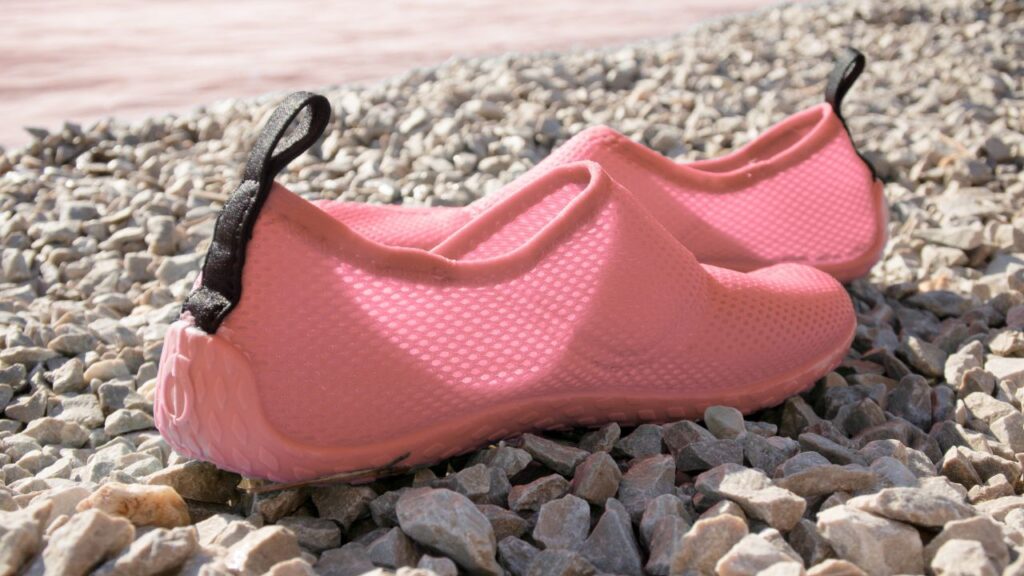
Water Shoes
Provides grip, stability, and foot protection for aquatic fitness classes, pool walking, and water-based exercise routines.
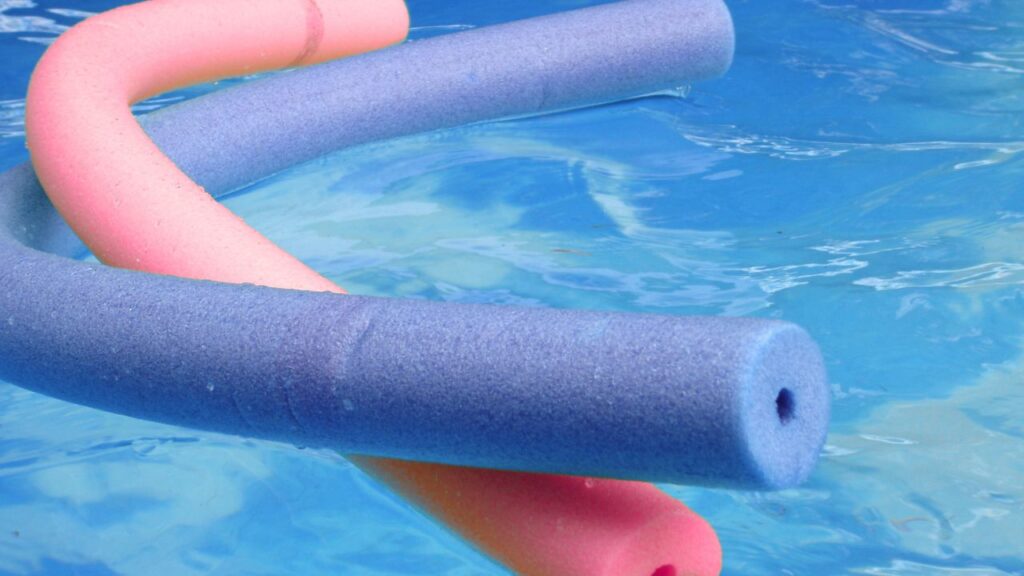
Pool Noodle
Provides flotation support for balance, core training, and low-impact aquatic exercises while helping improve comfort and stability in the water.
Disclosure: Links above are affiliate links, meaning Legendary Swimmers may earn a small commission at no additional cost to you.
Choose How You Prefer to Train in Water
Whether you are here to improve your swimming, build strength, or move with less impact, Legendary Swimmers gives you simple ways to use the water as your training space.
Start with one of our free resources below and choose the path that fits how you want to move in the water.