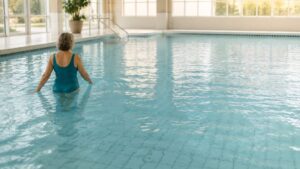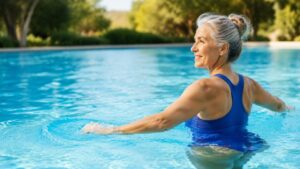

When most people look at a backyard or community pool, they think about swimming, relaxing, or cooling off on a warm day.
But your pool can be much more than that.
It can become a space for strength training, cardio, mobility work, balance exercises, and full-body movement.
And you do not need a complicated setup to get started.
The water itself provides something valuable: support and resistance at the same time.
Water’s buoyancy can reduce stress on the joints, while moving against the water provides resistance for the muscles. Aquatic exercise can support muscular strength and endurance, cardiovascular health, and regular physical activity.
With the right movements and a little structure, the pool you already have access to can become your own low-impact fitness space.
Your Pool Is Already a Resistance Training Environment
You do not have to turn your pool into a gym.
In many ways, it already is one.
When you walk through the water, push your arms forward, pull them backward, kick your legs, or change direction, you are moving against resistance.
This is what makes even simple movements in the pool feel different from the same movement performed in the air.
Harvard Health explains that water provides resistance while buoyancy reduces impact on the joints. Mayo Clinic also notes that aquatic exercise can improve muscular endurance and strength.
The key is learning how to use that environment with purpose.
For example, a pool fitness session can include:
- Knee lifts
- Arm presses
- Chest fly movements
- Aqua jacks
- Leg raises
- Kicks
- Core rotations
- Squats
- Balance exercises
- Cardio intervals
- Stretching and mobility work
You do not need to perform every exercise in one session.
The goal is to understand that the pool gives you options.
Related Reads:
- Why Low-Impact Water Workouts Support Strength & Longevity
- Protect Your Joints While Building Strength in the Water
Start by Creating Different Workout Zones
You do not need to physically divide your pool into sections.
Instead, think about your pool as having different movement zones.
The Warm-Up Zone
Begin with simple movements that allow your body to gradually get moving.
This might include:
- Water walking
- Side steps
- Gentle knee lifts
- Easy kicks
- Shoulder movements
- Arm sweeps
The purpose of this stage is not to exhaust yourself.
It is to prepare for more movement.
Related Reads:
The Strength Zone
Once you are warmed up, begin using the water more intentionally for resistance.
This can include controlled pushing, pulling, lifting, and lowering movements.
For example:
- Arm presses
- Chest fly movements
- Resistance rolls
- Bicep curls against the water
- Squats
- Lunges
- Leg raises
- Glute-focused movements
The important word here is control.
Moving faster is not always the goal.
Slower, intentional movement can help you become more aware of how you are pushing and pulling against the water.
Related Reads:
The Cardio Zone
The pool can also be used to increase your heart rate and build endurance.
Depending on your level, cardio movements could include:
- Faster water walking
- High knee movement
- Aqua jacks
- Cross-country ski movements
- Controlled kicking intervals
- Short swimming intervals
- Faster combinations of water exercises
Aquatic exercise can be used as aerobic physical activity, and the CDC specifically includes activities such as swimming and water aerobics as forms of physical activity.
Related Reads:
- How Aquatic Exercises Boost Blood Circulation Naturally
- Why Swimming is ideal for Women’s Cardiovascular Health
The Mobility and Recovery Zone
Not every part of a workout needs to be intense.
The pool can also provide a supportive environment for controlled movement.
You can slow down and focus on:
- Gentle reaching
- Hip movement
- Shoulder mobility
- Controlled leg movement
- Slow torso rotation
- Easy walking
- Breathing and relaxation
The buoyancy of water can reduce impact on the joints, making aquatic exercise an appealing option for people looking for a lower-impact way to move.
Related Reads:
You Do Not Need a Large Pool
One of the biggest misconceptions about exercising in the water is that you need a large lap pool.
You do not.
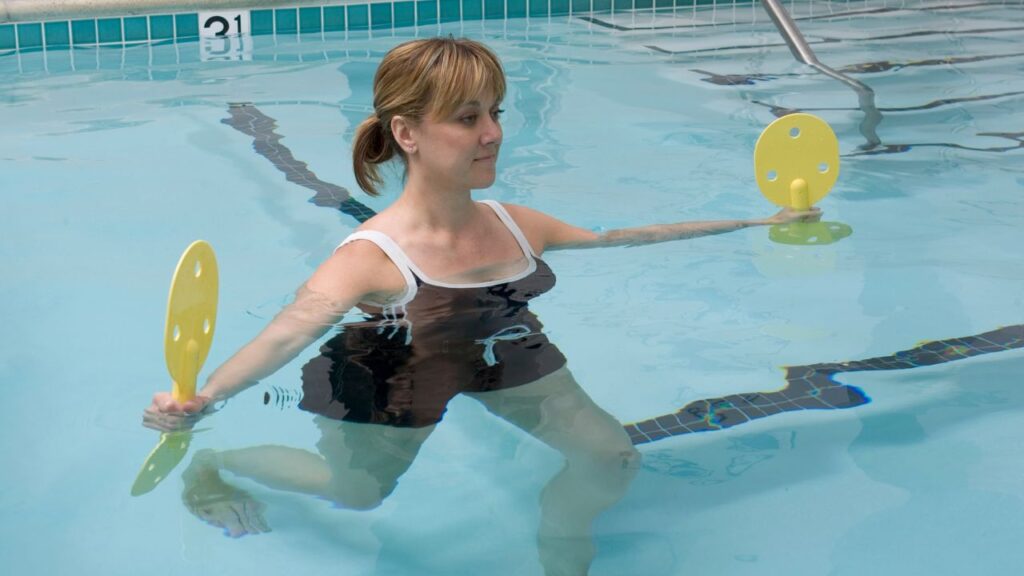
Aqua fitness exercises can be performed in relatively small areas because many movements are done while standing in one place or moving through a short section of water.
For example, you can combine:
- 30 seconds of knee lifts
- 30 seconds of arm presses
- 30 seconds of aqua jacks
- 30 seconds of side leg raises
- 30 seconds of core rotations
Then repeat the sequence.
A small space can still support a complete workout when the session is structured intentionally.
You also do not necessarily need to know how to swim to participate in many forms of aquatic exercise. Mayo Clinic notes that aquatic exercise can be performed by non-swimmers when they remain in an appropriate, comfortable area of the pool.
Related Reads:
Use the Water Before Adding Equipment
Aquatic fitness equipment can add variety and challenge, but you do not need to begin there.
Start by learning how the water feels.
Practice:
- Pushing against it
- Pulling through it
- Changing direction
- Increasing and decreasing speed
- Opening and closing the arms
- Moving with control
This builds awareness of water resistance.
Once you understand the movements, equipment can be added when appropriate to your workout and ability level.
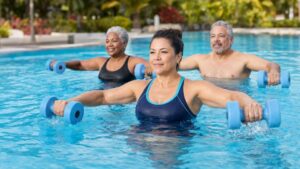
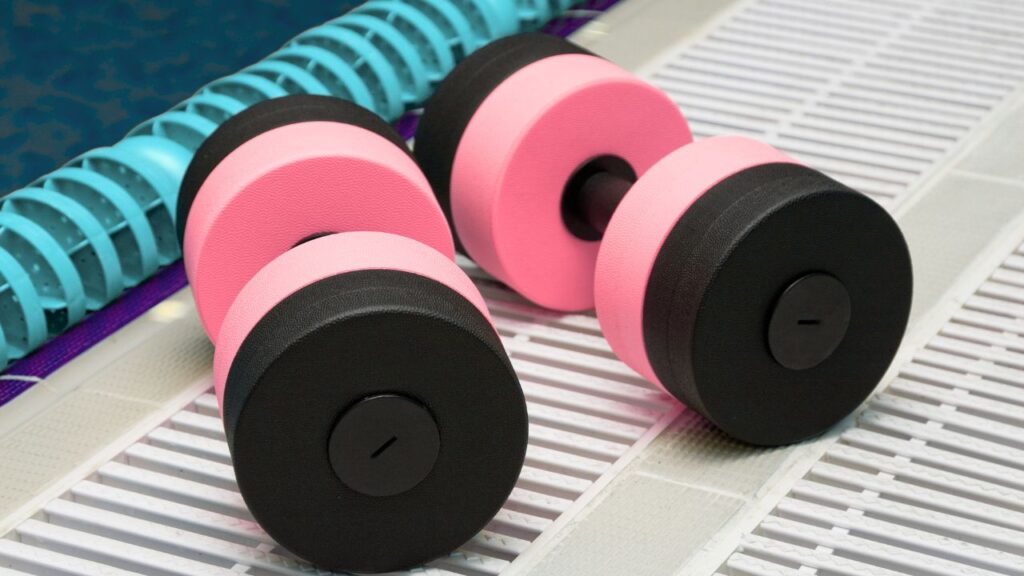
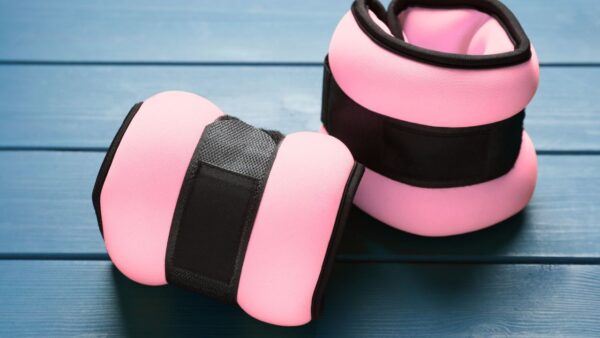
For example, a structured aqua fitness routine may eventually incorporate tools such as aquatic dumbbells or other equipment designed specifically for water exercise.
But equipment should support the workout.
It should not replace good movement and control.
Related Reads:
Build a Balanced Pool Workout
Instead of randomly choosing exercises every time you get into the pool, create a simple structure.
A balanced session might look like this:
1. Warm-Up
Begin with gentle water walking and easy full-body movement.
2. Lower-Body Strength
Use movements such as controlled squats, knee lifts, lunges, kicks, or leg raises.
3. Upper-Body Strength
Use the resistance of the water for presses, pulls, arm sweeps, chest fly movements, and controlled rotations.
4. Cardio Intervals
Add periods of faster movement such as aqua jacks, high knees, faster water walking, or another exercise appropriate for your level.
5. Core Work
Use controlled rotations, knee movements, cross-body exercises, and other movements that require trunk stabilization.
6. Cooldown
Finish with slower walking, breathing, and gentle mobility movements.
This simple structure helps turn a collection of individual exercises into an actual workout.
And that distinction matters.
Knowing exercises is helpful.
Knowing how to organize them into a balanced session is what helps you train with intention.
Try Combining Swimming and Aqua Fitness
Your pool fitness routine does not have to be only swimming or only aqua fitness.
You can combine them.
For example:
- Swim a few comfortable lengths.
- Then perform a short strength sequence.
- Return to swimming.
- Then perform a core or lower-body sequence.
This type of combination can add variety and allow you to use the pool in different ways during the same session.
At Legendary Swimmers, this idea is also part of our Swim & Sculpt approach, where swim drills and strength-focused aqua fitness movements are paired together.
Swimming can emphasize rhythm, coordination, technique, and endurance, while aqua fitness can provide more targeted opportunities for strength and muscle-focused movement.
The pool does not have to serve only one purpose.
Related Reads:
Make Your Pool Fitness Space Work for Your Schedule
One of the biggest advantages of exercising in a pool you already have access to is convenience.
You do not have to make every workout 60 minutes long.
A structured water workout can be adapted to the time available.
You may have:
- 15 minutes before work
- 30 minutes in the afternoon
- A longer workout on the weekend
The most useful workout is not necessarily the longest one.
It is the one that fits realistically into your life and that you can return to consistently.
Regular physical activity is associated with a range of health benefits, and public health guidance emphasizes the importance of accumulating regular aerobic and muscle-strengthening activity over time.
Your pool can give you another place to work toward that consistency.
Related Reads:
A Simple Beginner Pool Workout
New to water exercise?
Here is one simple way to start.
Warm-Up
- Water walk at a comfortable pace.
- Add gentle arm sweeps.
- Practice controlled side steps.
Strength
- Perform controlled knee lifts.
- Add standing leg raises.
- Push and pull the water with your arms.
- Practice controlled squats at a comfortable depth.
Cardio
- Increase the pace of your water walking.
- Add gentle aqua jacks or another comfortable cardio movement.
- Return to slower movement for recovery.
Core and Control
- Add controlled cross-body movements.
- Practice slow rotations.
- Focus on upright posture and controlled movement.
Cooldown
- Slow your walking pace.
- Relax your shoulders.
- Use gentle stretches and comfortable range-of-motion movements.
- The goal is not to rush through the routine.
- Focus on posture, control, breathing, and how your body responds.
Guided Workouts Can Remove the Guesswork
Having access to a pool is one thing.
Knowing what to do once you get into it is another.
This is where a guided workout can help.
Instead of standing in the pool wondering:
What exercise should I do next?
or:
How long should I do this movement?
you can follow a structured session that moves through warm-up, strength, cardio, core work, and cooldown.
That is exactly why we created the free 15-Minute Aqua Fitness Workout.
It gives you a simple way to experience a guided water workout in your own pool.
No complicated planning.
Just get into the water, press play, and follow along.
Try the Free 15-Minute Aqua Fitness Workout
Your Pool Can Become Part of Your Fitness Routine
Sometimes the biggest barrier to exercise is not motivation.
- It is friction.
- Driving somewhere to your local community pool.
- Figuring out what to do.
- Finding a workout that feels right.
- Trying to fit movement into an already busy schedule.
When you begin seeing your pool as a fitness space, the way you think about exercise can change.
You are no longer looking at the water only as a place to swim laps or relax.
You begin to see possibilities:
- A place to build strength.
- A place to improve endurance.
- A place to work on mobility.
- A place to combine swimming and resistance training.
- A place to follow a guided workout.
- A place to keep moving.
The pool was already there.
Sometimes, you simply need a new way to use it.
Related Reads:
Frequently Asked Questions
1. Can I get a good workout in a swimming pool?
Yes. Aquatic exercise can include cardiovascular activity, muscular strength and endurance work, and mobility-focused movement. Water provides resistance as you move, while buoyancy reduces impact on the joints.
2. Do I need aquatic fitness equipment to work out in my pool?
No. Many water exercises can be performed using the water itself for resistance. Movements such as water walking, arm sweeps, knee lifts, kicks, aqua jacks, squats, and controlled upper-body movements can be performed without equipment.
Equipment can later be added for variety or additional challenge, depending on the exercise and your ability level.
3. Do I have to know how to swim to do aqua fitness?
Not always. Many aquatic exercises can be performed while standing in shallow water. Mayo Clinic notes that aquatic exercise can be done by people who do not know how to swim, provided they remain in an appropriate and comfortable area of the pool.
4. Can I exercise in a small backyard pool?
Yes. Many aqua fitness exercises are stationary or require only a small amount of space. A smaller pool can still be used for strength exercises, water walking, cardio intervals, mobility work, and guided aqua fitness routines.
The exercises should always be selected according to the pool’s depth, available space, and the individual’s comfort and ability.
5. How long should a pool workout be?
Workout length depends on your fitness level, goals, health, and available time.
A beginner may start with a short session, while someone with more experience may choose a longer workout. The most important thing is to choose a duration and intensity appropriate for your current level and build gradually.
6. Is water exercise low impact?
Water exercise is generally considered low impact because buoyancy helps support the body and reduces impact on the joints. At the same time, the resistance of the water can still challenge the muscles.
7. Can I combine swimming with aqua fitness exercises?
Yes. Swimming and aqua fitness can complement one another.
One simple approach is to alternate comfortable swimming intervals with strength or core-focused water exercises. This can provide variety and allow you to use your pool for different types of training within the same workout.
Conclusion
Your pool can be more than a place to cool off.
It can become a low-impact fitness space for strength, cardio, mobility, endurance, and purposeful movement.
You do not need to begin with complicated equipment.
You do not need to create the perfect workout.
And you do not need to spend an hour in the water every time you exercise.
Start with simple movements.
Learn how to use the resistance of the water.
Add structure.
And gradually begin seeing your pool differently.
Because when you have the right guidance, the pool you already have access to can become one of the most versatile movement spaces available to you.
Ready to begin?
Try the free 15-minute Aqua Fitness Workout and experience a guided workout in your own pool.
References
Mayo Clinic — Aquatic Exercises
Mayo Clinic explains that aquatic exercise can support heart health, muscular endurance and strength, and can provide a way for older adults to stay active.
https://www.mayoclinic.org/healthy-lifestyle/fitness/in-depth/aquatic-exercise/art-20546802
CDC — Swimming and Your Health
The CDC discusses the physical and mental health benefits of water-based exercise, including benefits for people living with certain chronic conditions.
https://www.cdc.gov/healthy-swimming/about/index.html
CDC — Adult Activity: An Overview
The CDC outlines physical activity recommendations for adults, including aerobic and muscle-strengthening activity.
https://www.cdc.gov/physical-activity-basics/guidelines/adults.html
CDC — Benefits of Physical Activity
The CDC explains the immediate and long-term benefits associated with regular physical activity.
https://www.cdc.gov/physical-activity-basics/benefits/index.html
Harvard Health — Advantages of Water-Based Exercise
Harvard Health discusses the joint-friendly nature of water exercise, including the effects of buoyancy and water resistance.
https://www.health.harvard.edu/healthbeat/advantages-of-water-based-exercise
Harvard Health — What Makes Water Workouts So Worthwhile?
Harvard Health discusses swimming and water aerobics as joint-friendly forms of exercise that can challenge both the cardiovascular system and muscles.
https://www.health.harvard.edu/heart-health/what-makes-water-workouts-so-worthwhile
Arthritis Foundation — In the Swim: Aquatic Exercise for Arthritis
The Arthritis Foundation discusses aquatic exercise research related to osteoarthritis, including joint function, discomfort, and quality of life.