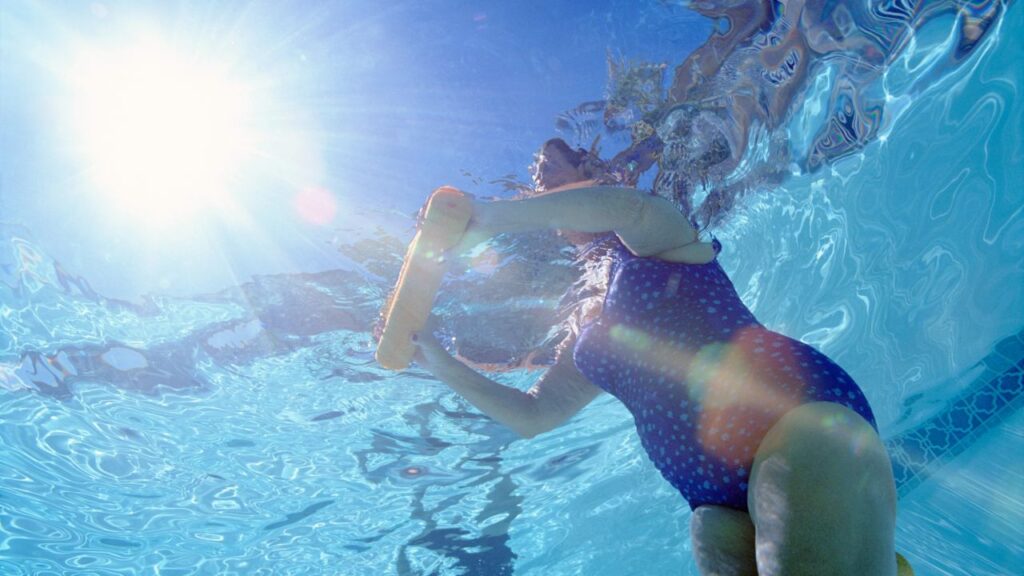
Water exercise feels easier for many people because the water supports the body while still creating resistance. Many people step into a pool for the first time and notice that walking, jogging, squatting, jumping, or balancing can feel more comfortable in the water than on land.
For some people, this makes them wonder whether they are actually getting a workout at all.
The answer may surprise you.
While water can make movement feel easier on the joints, it also creates a unique environment that challenges the body in ways that traditional land exercise cannot. Every movement encounters resistance, balance becomes more dynamic, and muscles work continuously to move through the water.
This combination of support and resistance is one of the reasons aquatic exercise has become popular among people of all ages, from competitive athletes to individuals looking for a low-impact way to stay active.
In this guide, we’ll explore why water exercise often feels easier than land exercise, how it can still help build strength and endurance, and why many people are turning to aquatic fitness as a sustainable way to support long-term health and movement.
Why Water Exercise Feels Easier Than Land Exercise
The biggest reason water exercise feels easier is because water helps support your body weight.
Unlike land-based exercise, where your joints and muscles must absorb the full force of gravity, water provides buoyancy that reduces stress on the body. Depending on water depth, the body may experience significantly less weight-bearing pressure compared to standing on land.
This support often allows people to move more freely, especially those dealing with joint discomfort, previous injuries, mobility limitations, or simply the natural effects of aging.
For many individuals, movements that feel difficult on land suddenly become more comfortable in the pool.
Understanding why water exercise feels easier can help people appreciate the unique benefits of aquatic fitness and related pool workouts such as swimming.
Related Reads:
- The Science Behind Water Resistance Training: Why It Works
- Why Water Exercises Challenge Your Core Differently
The Role of Buoyancy: How Water Supports Your Body
Buoyancy is the upward force that water exerts on the body.
When you enter the water, part of your body weight is supported by the water itself. This is one of the reasons aquatic exercise is often recommended for people recovering from injuries or looking for lower-impact forms of exercise.
The deeper you go into the water, the more support your body receives.
This support can help reduce stress on:
- Knees
- Hips
- Ankles
- Lower back
- Spine
Because of this, many people find they can perform movements in the pool that may feel uncomfortable during traditional land-based exercise.
Related Reads:
Water Creates Resistance in Every Direction
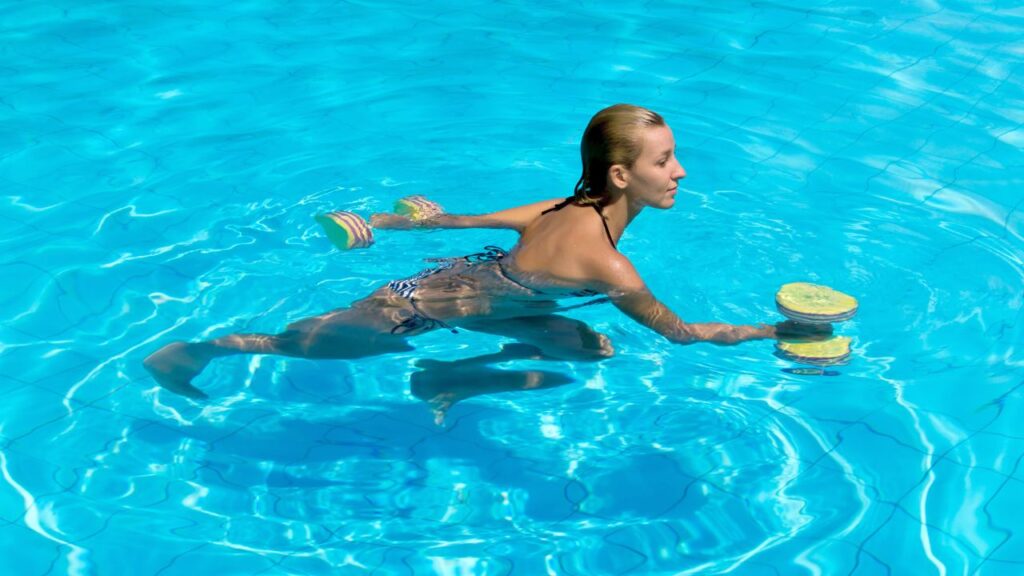
While water supports the body, it also provides resistance.
Unlike a dumbbell that only creates resistance in one direction, water pushes back against movement from multiple angles.
Every time you:
- Walk
- Jog
- Kick
- Push
- Pull
- Reach
- Twist
your muscles must work against the resistance created by the water.
The faster you move, the greater the resistance becomes.
This is one of the reasons water exercise can feel surprisingly challenging despite feeling gentler on the joints.
Simple movements often become full-body exercises because the body is constantly working to move through the water.
Related Reads:
- Benefits of Pool Walking: Why Water Walking is Great for Your Health
- Why Low-Impact Water Workouts Support Strength & Longevity
Why Water Exercise Can Still Build Strength
A common misconception is that water exercise is only for rehabilitation or light activity.
In reality, water can be an effective environment for strength development.
When muscles repeatedly work against water resistance, they must generate force to move and control the body.
Aquatic fitness exercises commonly target:
- Arms and shoulders
- Chest and back
- Core muscles
- Glutes
- Quadriceps
- Hamstrings
- Calves
The combination of resistance and movement allows many exercises to challenge multiple muscle groups simultaneously.
For this reason, aquatic fitness classes often incorporate movements inspired by traditional gym exercises, including squats, lunges, punches, kicks, presses, curls, and core exercises.
Related Reads:
- Water Aerobics Exercises for Your Upper Body: 10 Effective Moves
- 30-Minute Pool HIIT Workout for Strength, Fat Loss & Endurance
Water Exercise and Joint-Friendly Movement
One of the most appreciated benefits of water exercise is its low-impact nature.
High-impact activities such as running and jumping can place significant stress on the joints over time. While these activities can be excellent forms of exercise, they may not be suitable for everyone.
Water helps reduce impact while still allowing the body to move, strengthen, and improve cardiovascular fitness.
This makes aquatic exercise popular among:
- Older adults
- Individuals with arthritis
- People returning from injury
- Those seeking lower-impact workout options
- Individuals looking for sustainable long-term movement
Many people discover they can stay active more consistently when movement feels comfortable and enjoyable.
Related Reads:
- Why Low-Impact Water Workouts Support Strength & Longevity
- Water Resistance Training: How Pool Exercises Build Strength Without Heavy Impact
Balance and Stability Challenges in the Water
Water may support the body, but it also creates a constantly changing environment.
Unlike standing on solid ground, the body must continuously adjust to maintain balance and control in the water.
Small waves, turbulence, and directional changes require the muscles to work together to stabilize the body.
This often challenges:
- Core strength
- Coordination
- Body awareness
- Balance
- Movement control
For this reason, aquatic exercise can be an excellent way to practice stability and movement patterns in a lower-impact setting.
Related Reads:
Who Can Benefit from Water Exercise?
One of the greatest advantages of aquatic exercise is its accessibility.
Water workouts can be adapted for many different fitness levels and goals.
Water exercise may benefit:
- Beginners starting a fitness routine
- Swimmers looking to complement their training
- Adults seeking low-impact exercise
- Older adults focused on maintaining mobility
- Athletes looking for cross-training options
- Individuals recovering from certain injuries (with medical clearance)
If you’re curious about water exercise but aren’t sure where to start, try our free 15-Minute Aqua Fitness Workout. It introduces simple, low-impact movements designed to help you experience the benefits of aquatic exercise firsthand.
Swimming vs Water Exercise: Understanding the Difference
Although both take place in the water, swimming and aquatic exercise are not exactly the same.
Swimming focuses on moving through the water using strokes such as freestyle, backstroke, breaststroke, and butterfly.
Aquatic exercise focuses on using the water itself as a resistance tool for strength, mobility, balance, and cardiovascular training.
Both can provide excellent health benefits.
Many people choose to combine swimming and aquatic exercise because they complement each other well.
Swimming can improve endurance, technique, and cardiovascular fitness, while aquatic fitness can help develop strength, stability, and movement control.
For swimmers who want to target specific muscle groups more intentionally, our free Swim & Sculpt Starter Series combines swimming-inspired drills with aquatic fitness exercises designed to strengthen many of the same muscles used during swimming.
Related Reads:
Can Water Exercise Help Support Healthy Aging?
As people age, maintaining strength, mobility, balance, and cardiovascular health becomes increasingly important.
Regular physical activity can play a significant role in supporting overall health and independence.
Water exercise provides an option that allows many individuals to remain active while minimizing impact on the joints.
Potential benefits include:
- Improved muscular endurance
- Better balance and coordination
- Enhanced cardiovascular fitness
- Increased mobility
- Greater confidence in movement
Because of these benefits, water exercise is frequently included as part of healthy aging and wellness programs.
Related Reads:
Common Misconceptions About Water Workouts
“Water exercise isn’t a real workout.”
Water resistance challenges muscles throughout movement, making many exercises surprisingly demanding.
“Water workouts are only for older adults.”
People of all ages use aquatic exercise for fitness, strength, conditioning, and athletic performance.
“You have to know how to swim.”
Many aquatic fitness exercises are performed in shallow water where participants can comfortably stand.
“Water exercise can’t build strength.”
Water provides continuous resistance, allowing muscles to work throughout the entire movement.
Conclusion
Water exercise feels easier for many people because water supports the body and reduces impact on the joints.
At the same time, water creates resistance in every direction, requiring muscles to work continuously throughout movement.
This unique combination of support and resistance is what makes aquatic exercise different from many traditional forms of exercise.
Whether your goal is improving strength, building endurance, supporting healthy aging, or simply finding a comfortable way to stay active, the pool can provide a powerful environment for movement and fitness.
If you’d like to experience it for yourself, try our free 15-Minute Aqua Fitness Workout and explore our free Swim & Sculpt Starter Series to discover how swimming and aquatic fitness can work together to support strength, balance, and confidence in the water.
References
- Centers for Disease Control and Prevention (CDC) – Benefits of Physical Activity
- Harvard Health Publishing – The Health Benefits of Swimming
- National Institutes of Health (NIH) – Aquatic Exercise Research Database
- American Council on Exercise (ACE) – Aquatic Exercise and Water Workouts
- Arthritis Foundation – Benefits of Exercising in Water
- Mayo Clinic – Exercise and Healthy Aging