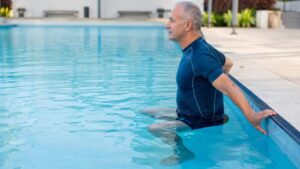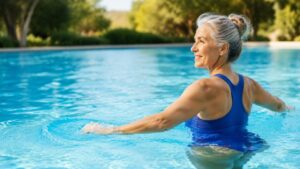
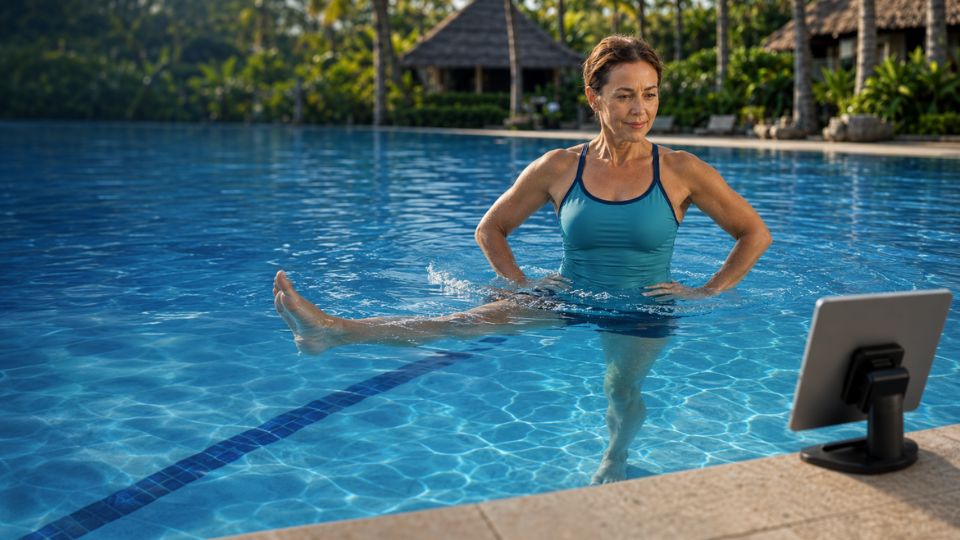
Water aerobics offers a supportive way to strengthen your legs, glutes, and hips without relying on heavy weights or high-impact movements.
As you move through the pool, the water provides resistance in every direction. At the same time, its buoyancy reduces the amount of weight placed on your joints. According to the Mayo Clinic, aquatic exercise can help improve muscular strength and endurance while supporting joint movement.
This makes lower-body water exercises useful for beginners, active adults, swimmers, and anyone looking for a gentler way to build strength and stay active.
Below are 10 effective lower-body exercises you can perform in the pool, along with the muscles they target and ways to adjust them to your current fitness level.
Ready to try a guided routine? Start with our free 15-minute aqua fitness workout.
Related Reading: The Science Behind Water Resistance Training: Why It Works
Why Train Your Lower Body in the Water?
Your lower body supports walking, climbing stairs, maintaining balance, rising from a chair, and completing many other everyday movements.
Water provides a different training environment than land. Its natural resistance challenges your muscles as you move your legs forward, backward, and sideways. Because the water surrounds you, your core also works to help stabilize your body.
The Centers for Disease Control and Prevention explains that people may be able to exercise longer in the water without increased joint or muscle pain. Water-based exercise can be especially helpful for people who want to remain active while reducing the impact associated with some land-based activities.
Regular lower-body water exercise may help support:
- Muscular strength and endurance
- Hip and knee mobility
- Balance and coordination
- Cardiovascular fitness
- Confidence with everyday movement
- A more comfortable return to regular exercise
Related Reading: Why Low-Impact Water Workouts Support Strength & Longevity
Helpful Equipment for Lower-Body Water Exercises
Most of these exercises can be performed using the water’s resistance alone. You do not need equipment to get started.
Optional equipment includes:
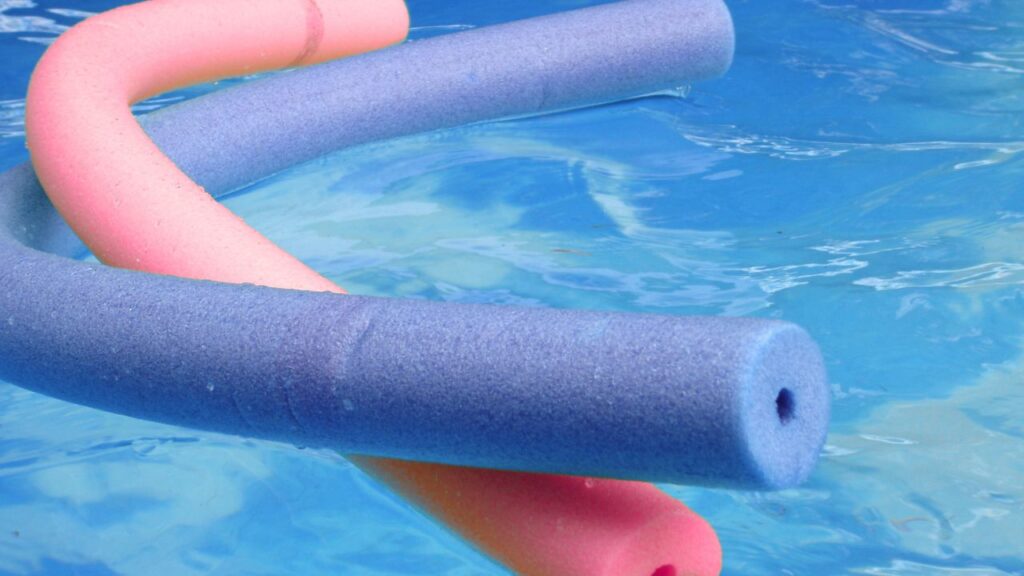
- Pool noodle: Provides support during balance exercises or suspended movements
- Flotation belt: Helps keep you upright during deep-water exercise
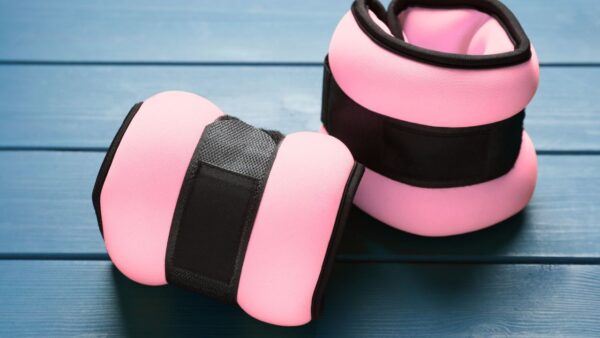
- Aquatic cuffs: Add resistance or buoyancy around the ankles
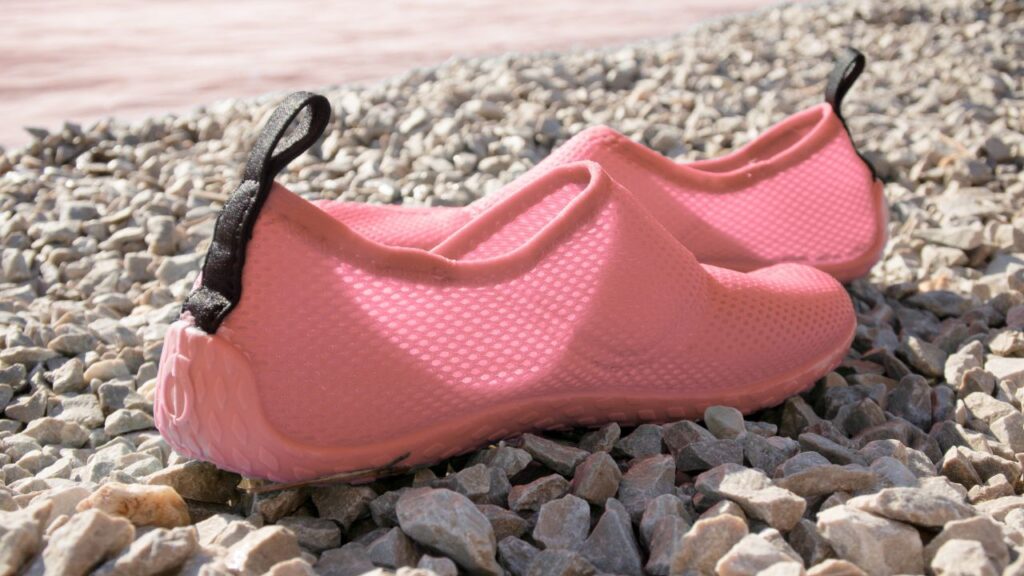
- Water shoes: May provide additional traction on the pool floor
- Pool wall: Offers stability during single-leg exercises
If you are new to aquatic fitness, begin without additional resistance. Add equipment only after you feel comfortable controlling each movement.
You can learn more about aquatic equipment in our guide to the best water workout equipment for a stronger pool workout.
1. Hydro Squats
Hydro squats strengthen several of the major muscles in your lower body while the water helps support your movement.
Muscles targeted: Quadriceps, glutes, hamstrings, calves, and core
How to perform Hydro Squats:
- Stand in approximately waist- to chest-deep water.
- Position your feet about shoulder-width apart.
- Keep your chest lifted and gently engage your core.
- Push your hips backward as though you were sitting in a chair.
- Bend your knees only as far as feels comfortable.
- Press through your feet and squeeze your glutes as you return to standing.
- Complete 8–12 controlled repetitions.
Beginner option: Use the pool wall for support and reduce the depth of your squat.
More challenging option: Increase your speed slightly while maintaining control, add a small upward lift at the top by adding heal raises or add buoyant resistance tools that can be held while performing the squat and lift with control.
2. Hydro Lunges
Hydro Lunges challenge the legs and glutes while helping develop balance and coordination.
Muscles targeted: Quadriceps, glutes, hamstrings, calves, and hip stabilizers
How to perform Hydro Lunges:
- Begin standing tall with your feet together.
- Step one foot forward.
- Bend both knees slightly while keeping your chest upright.
- Keep your front knee aligned with your foot.
- Press through the front foot to return to your starting position.
- Alternate legs for 8–10 repetitions on each side.
Beginner option: Use a smaller step and jump slightly using the water for control.
More challenging option: Perform alternating lunges continuously, add controlled arm movements with resistance tools or perform a control jump in between each lunge.
3. Forward Hydro Kicks
Forward Hydro Kicks strengthen the front of the legs while challenging your posture and balance.
Muscles targeted: Quadriceps, hip flexors, core, and supporting leg muscles
How to perform Forward Hydro Kicks:
- Stand tall with your feet underneath your hips.
- Shift your weight onto one leg.
- Extend the opposite leg forward through the water.
- Keep the kick controlled instead of snapping the knee.
- Return your foot to the pool floor.
- Alternate legs for 10–16 repetitions.
Keep your chest lifted and avoid leaning backward as the leg moves forward.
4. Backward Hydro Kicks
Backward Hydro Kicks emphasize the muscles along the back of your lower body.
Muscles targeted: Glutes, hamstrings, lower back stabilizers, and core
How to perform Backward Hydro Kicks:
- Stand facing the pool wall and hold it lightly for balance.
- Keep your standing leg slightly bent.
- Extend the opposite leg behind you without arching your lower back.
- Squeeze your glute briefly.
- Return the leg slowly to the starting position.
- Complete 10–12 repetitions before switching sides.
The movement does not need to be large. Focus on engaging the glute while keeping your torso upright.
For swimmers wanting to exercise legs, check out our guide: Swimming Kick Strength: How Your Legs and Glutes Improve Propulsion
5. Side Leg Raises
Side Leg Raises strengthen the muscles around your hips and help support side-to-side stability.
Muscles targeted: Outer hips, gluteus medius, inner thighs, and core
How to perform Side Leg Raises:
- Stand beside the pool wall and hold it with one hand.
- Keep both feet pointing forward.
- Lift your outside leg to the side.
- Keep your torso upright and avoid leaning toward the wall.
- Return the leg slowly through the water.
- Complete 10–12 repetitions and switch sides.
The resistance works in both directions, so control the outward and returning portions of the exercise.
6. Standing Knee Raises
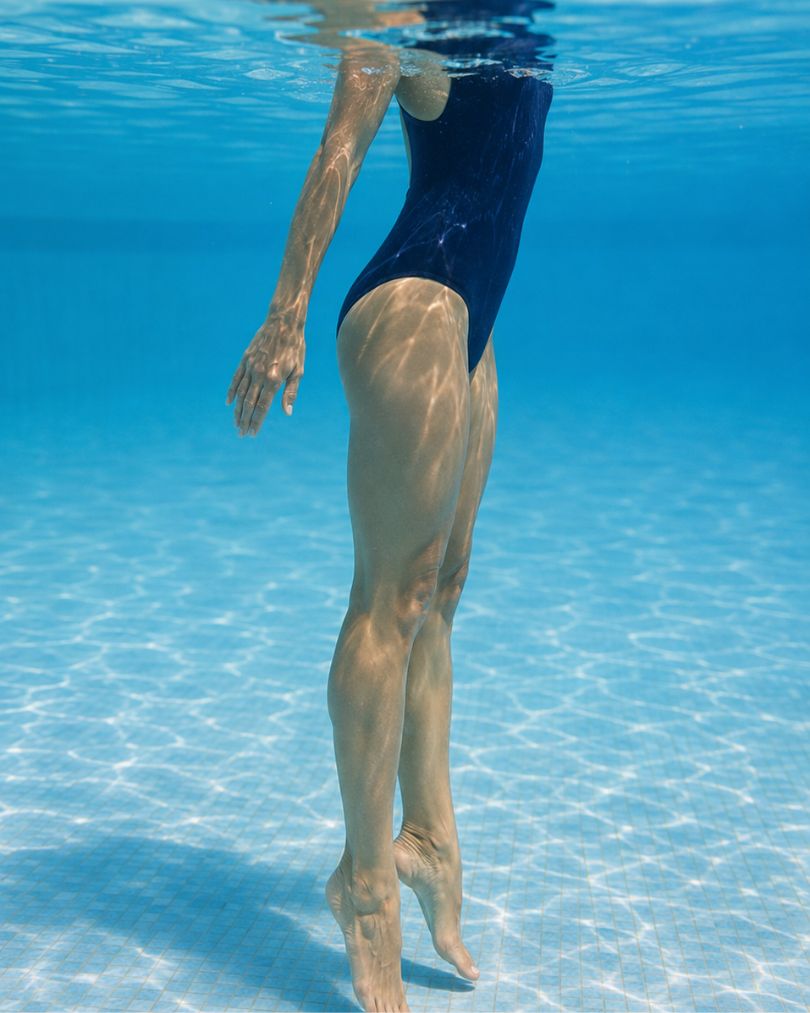
Hydro Knee Raises combine lower-body strengthening with balance and core engagement.
Muscles targeted: Hip flexors, quadriceps, lower abdominal muscles, and standing-leg stabilizers
How to perform Standing Knee Raises:
- Stand tall with your feet hip-width apart.
- Lift one knee toward your chest.
- Keep your shoulders relaxed and your torso upright.
- Lower the foot with control.
- Alternate knees for 30–45 seconds.
Beginner option: Perform the movement slowly while holding the pool wall.
More challenging option: Increase the rhythm to create a water-jogging motion.
Related Reading: How Water Exercises Improve Stability, Coordination & Everyday Movement
7. Glute Squeezes with Leg Extension
This controlled movement focuses on engaging the glutes without requiring jumping or deep knee bending.
Muscles targeted: Glutes, hamstrings, hips, and core
How to perform the movement:
- Stand tall and gently hold the pool wall.
- Extend one leg slightly behind you.
- Keep the leg long without locking the knee.
- Squeeze the glute for one or two seconds.
- Return the foot to the floor.
- Complete 10–15 repetitions before changing legs.
Avoid arching your lower back. The movement should come from the hip.
8. Aqua Jacks
Aqua Jacks combine lower-body movement with cardiovascular exercise.
Muscles targeted: Inner and outer thighs, glutes, calves, shoulders, and core
How to perform Aqua Jacks:
- Begin with your feet together and your arms at your sides.
- Move your feet outward while raising your arms.
- Bring your feet back together as your arms return to your sides.
- Continue at a comfortable rhythm for 30–60 seconds.
Low-impact option: Step one foot out at a time rather than jumping.
More challenging option: Perform the exercise in deeper water with appropriate flotation support.
9. Aquatic Power Jumps
Aquatic Power Jumps introduce a more energetic lower-body movement while the surrounding water slows the landing.
Muscles targeted: Quadriceps, glutes, calves, hamstrings, and core
How to perform Aquatic Power Jumps:
- Stand with your feet approximately shoulder-width apart.
- Lower into a comfortable partial squat.
- Press upward through your legs.
- Allow your feet to lift gently from the pool floor.
- Land softly on one side with your knees slightly bent.
- Reset your position before repeating and jumping to the opposite side.
- Complete 6–10 controlled repetitions.
Stop if jumping causes discomfort, dizziness, or difficulty maintaining control.
Lower-impact option: Drag your foot and leg to one side until legs are together, once there, continue the motion by dragging the foot to the opposite side until legs are fully closed once again and repeat.
Related Reading: 30-Minute Pool HIIT Workout for Strength, Fat Loss & Endurance
10. Heel Curls
Standing Hamstring Curls strengthen the backs of your thighs and support knee control.
Muscles targeted: Hamstrings, glutes, calves, and standing-leg stabilizers
How to perform Standing Hamstring Curls:
- Stand facing with feet shoulder width apart.
- Shift your weight onto one leg.
- Bend the opposite knee, bringing your heel toward your glute.
- Keep your thighs relatively aligned.
- Lower the foot slowly.
- Complete 10–15 repetitions before switching legs.
Move slowly enough to feel the resistance as your heel rises and returns.
A Simple Lower-Body Pool Routine
After learning each exercise separately, combine them into a short routine:
- Hydro Squats — 10 repetitions
- Forward Hydro Kicks — 10 per side
- Backward Hydro Kicks — 10 per side
- Hydro Knee Raises — 30 seconds
- Side Leg Raises — 10 per side
- Aqua Jacks — 30 seconds
- Hydro Lunges — 8 per side
- Heel Curls — 10 per side
Rest as needed and repeat the sequence once or twice if it feels appropriate for your fitness level.
Quality of movement matters more than completing a certain number of rounds.
How to Adjust the Exercises to Your Level
Basic Level
- Hold the pool wall when needed.
- Use a smaller range of motion.
- Keep both feet on the floor for jumping movements.
- Perform fewer repetitions.
- Move slowly while learning the exercise.
Intermediate Level
- Reduce your reliance on the pool wall.
- Increase the range of motion gradually.
- Add coordinated arm movements.
- Complete longer intervals.
- Use slightly faster—but still controlled—movements.
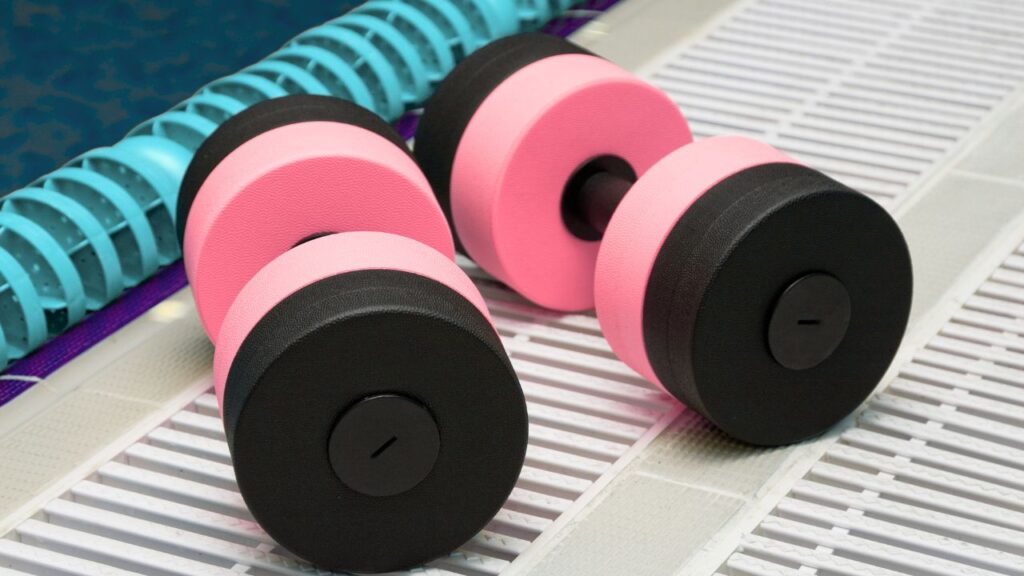
- Add resistance tools such as aquatic dumbbells.
Advanced Level
- Use aquatic cuffs or other appropriate resistance equipment.
- Combine exercises into continuous intervals.
- Perform suspended variations with a flotation belt.
- Add changes in direction or tempo.
- Increase the duration before increasing speed.
Progress gradually. Faster movement is not automatically better if it causes you to lose control or proper alignment.
Tips for a Safer Lower-Body Pool Workout
The American Physical Therapy Association recommends pool exercises such as hip movements, squats, and deep-water cycling as options for exercising in water. However, every exercise should be adjusted to the individual.
Keep these guidelines in mind:
- Exercise in a water depth where you feel stable and in control.
- Use the pool wall when practicing balance.
- Wear water shoes if the pool floor feels slippery.
- Avoid locking your knees.
- Maintain controlled movements rather than forcing a larger range of motion.
- Stay hydrated, even if you do not feel sweaty.
- Stop if you experience sharp pain, chest discomfort, unusual shortness of breath, or dizziness.
- Speak with a qualified healthcare professional before beginning a new exercise program if you have an injury, medical condition, or recent surgery.
Related Reading: Protect Your Joints While Building Strength in the Water
Combine Lower-Body, Upper-Body, and Core Training
A balanced aquatic fitness routine should not focus on only one area of the body.
You can combine these movements with our 10 upper-body water aerobics exercises and learn more about why water exercises challenge your core differently.
Together, upper-body, lower-body, and core exercises can create a well-rounded pool workout that supports strength, coordination, mobility, and cardiovascular fitness.
If you would rather follow a guided routine, begin with the free 15-minute aqua fitness workout.
Frequently Asked Questions
1.Are water aerobics exercises good for strengthening your legs?
Water aerobics can help improve muscular strength and endurance because your legs must push against the water’s resistance. Exercises such as squats, lunges, kicks, and knee raises challenge the major muscles of the lower body.
2.What muscles do lower-body water exercises work?
Depending on the exercise, lower-body water movements can engage the quadriceps, hamstrings, glutes, calves, hip flexors, inner thighs, outer hips, and core.
3.Can beginners perform lower-body water aerobics exercises?
Yes. Beginners can use the pool wall, perform smaller movements, reduce the number of repetitions, and choose stepping variations instead of jumping. Start with movements you can control comfortably.
4.Do I need aquatic equipment?
No. Water alone provides resistance. Equipment can be added later when you can perform the exercises with proper control.
5.How often should I perform lower-body water exercises?
The appropriate frequency depends on your current fitness level, workout intensity, health, and recovery. Begin gradually and allow your body time to adjust. General physical-activity recommendations are available through the CDC’s physical activity guidance.
6.Can I perform these exercises if I have knee or hip pain?
Water exercise may feel more comfortable than some land-based activities because buoyancy reduces weight-bearing stress. However, pain has many possible causes. Ask a qualified healthcare professional which exercises and ranges of motion are appropriate for you.
Final Thoughts
Lower-body water exercises can help you build strength, improve balance, and keep your body moving in a supportive environment.
Begin with controlled movements such as Hydro Squats, Hydro Lunges, and leg raises. As your strength and confidence improve, you can gradually add longer intervals, more resistance, or more advanced variations.
You do not need to perform every exercise at once. Choose a few movements that match your level and focus on consistent, comfortable progress.
Ready to experience a guided water workout? Try the free 15-minute aqua fitness workout.
References