
Building muscle as you age is less about reaching the hardest workout level and more about giving your muscles a reason to keep adapting, at a pace you can repeat. A well-chosen starting point helps you learn the movement. Thoughtful progressions give you options when that version becomes manageable.
Why muscle-strengthening activity matters
Strength supports more than a workout. It plays a role in everyday tasks such as standing up from a chair, carrying groceries, climbing stairs, and maintaining independence. The National Institute on Aging explains that muscle-strengthening exercise can help maintain strength, slow the loss of muscle mass, and support physical function as people age.
At the muscle level, strength training creates a demand that can prompt muscle tissue to adapt. Over time, that adaptation can improve strength and may increase muscle size. A systematic review of 32 studies in adults 65 and older found that resistance training increased measures of muscle size and muscle-fiber area, though the pooled analysis did not find a significant increase in leg lean mass. These measures capture different things, so strength and muscle-size changes do not always show up in the same way. Read the systematic review.
The benefits also extend to physical function. A Cochrane review of 121 trials involving 6,700 older adults found that progressive resistance training improved muscle strength and some measures of physical ability, including getting up from a chair. That helps explain why strength work matters for healthy aging: everyday tasks depend on the ability to produce force, not on how large muscles look. Results vary between people, and the research does not mean everyone should progress at the same pace. Read the Cochrane review.
The CDC recommends that adults 65 and older include muscle-strengthening activities at least two days a week, alongside aerobic and balance activities. These are broad guidelines, not a personal prescription; the right activity and effort depend on a person’s abilities, health, and experience.
Why a workout may need a new challenge over time
When you repeat a movement, your body can become more familiar with it. If the exercise now feels manageable and you can maintain control, you may choose a small progression to keep the muscles working at a meaningful level. The NIA notes that gradually increasing resistance, repetitions, sets, or training days can lead to stronger muscles.
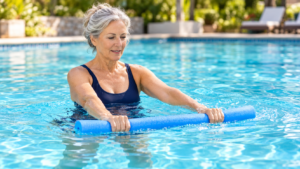
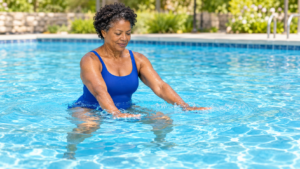
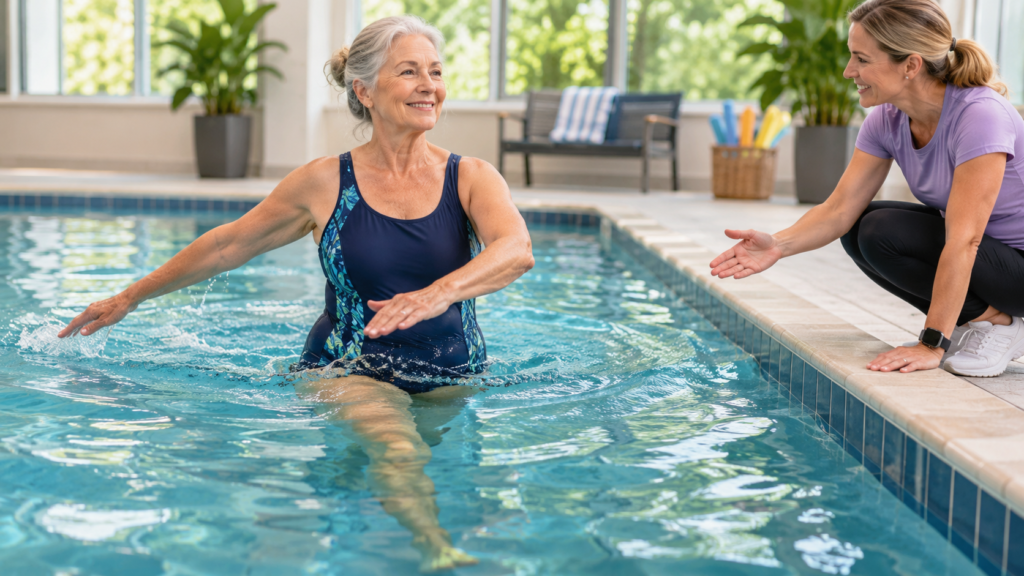
In a pool, progression does not have to mean jumping or using heavier equipment. You might slightly increase the time you work, use a larger comfortable range of motion, add a coordinated arm movement, or change how your hands move through the water. The guide How to Progress in Water Aerobics explains several ways to adjust a water workout. Choose one change at a time so you can notice how it feels.
Basic, Intermediate, and Advanced are options, not labels
Three levels make progression easier to understand. They give you a starting point and a next option when you are ready. They do not rank your worth, and they do not mean you must move up on a fixed schedule.
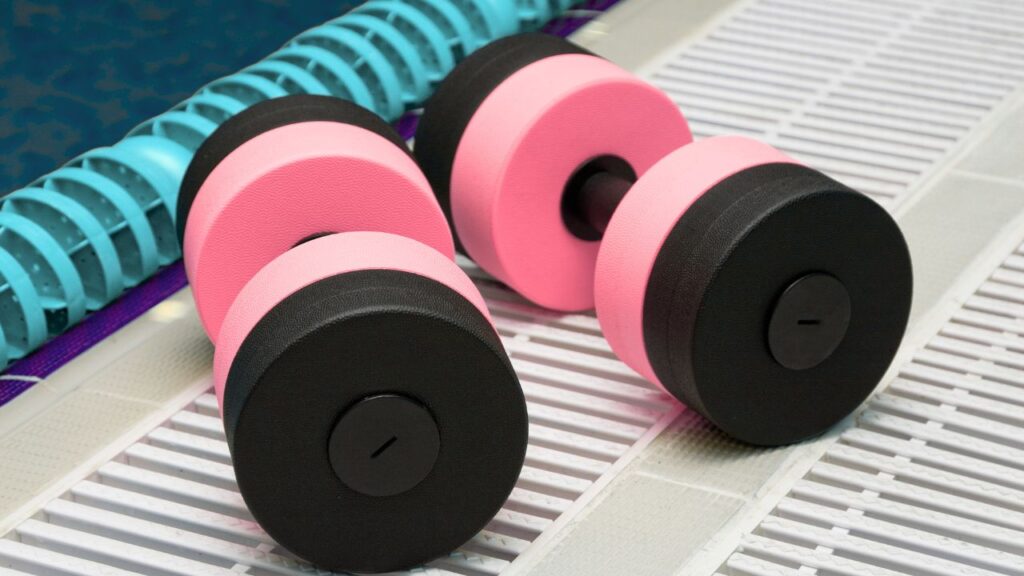
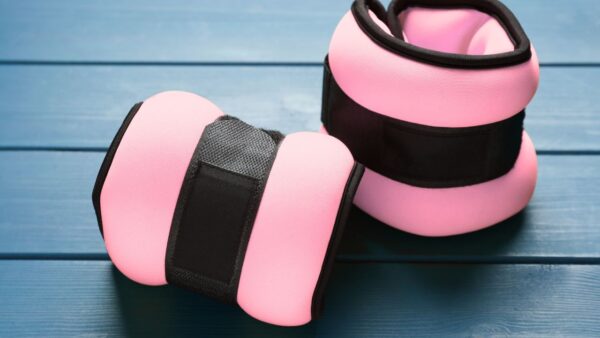
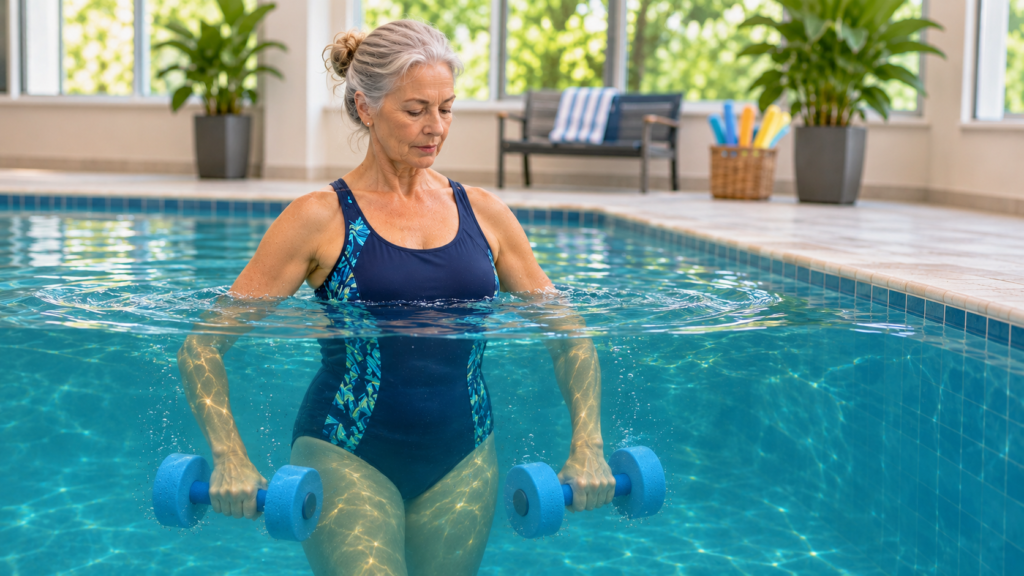
For example, a Basic water press might use a smaller, slower push with a comfortable stance. An Intermediate variation could use a fuller controlled range and a steady arm pattern. An Advanced option might add more coordinated movement or resistance. Each version should stay controlled; the hardest version is not automatically the best one for every person.
You may choose different levels for different exercises, and your choice can change from day to day. If a variation still provides a useful challenge, repeating it is worthwhile. If you are tired, returning after time away, or adjusting to how your body feels, an easier option may be the right choice. Progress is not a straight line.
How to tell when you may be ready to progress
Consider trying a small change when you can perform your current variation with steady posture, smooth breathing, and control in both directions. You should be able to finish and recover comfortably. If form breaks down, you rely on momentum, or the movement causes pain or unusual symptoms, return to an easier version and seek qualified guidance when appropriate.
A progression can be as simple as adding a little time, not advancing an entire workout. It can also mean improving control rather than moving faster. The U.S. Physical Activity Guidelines recommend increasing activity gradually, allowing the body time to adapt.
A guided way to keep moving forward
It can be hard to know what to do next when every workout is a guess. The Legendary Swimmers membership offers guided pool workouts and an exercise catalog with Basic, Intermediate, and Advanced variations. That structure lets you choose the version that fits you now, repeat movements as you learn them, and explore a progression when you feel ready.
The goal is not to prove you can always do more. It is to build a consistent strength practice with options that can grow and adapt with you. Explore the membership to see whether structured, level-based water workouts fit the way you want to train.
Recommended Reads:
How to Progress in Water Aerobics: From Beginner Movements to More Challenging Workout
Why Water Exercise Feels Easier Than Land Exercise (But Still Builds Strength)
References
National Institute on Aging: Three Types of Exercise Can Improve Your Health and Physical Ability
Resistance training and muscle hypertrophy in adults 65 and older: systematic review and meta-analysis
Cochrane: Progressive resistance strength training and physical function in older adults
Centers for Disease Control and Prevention: What Counts as Physical Activity for Older Adults
U.S. Department of Health and Human Services: Physical Activity Guidelines for Americans, 2nd edition
This article is for general education and is not individualized medical or exercise advice. If you have a health condition, injury, or questions about changing your activity, consult a qualified health professional.