


Backstroke Stroke Mechanics: Mastering Arm and Leg Movements
Learn how to swim backstroke with the right arm movements, flutter kicks, breathing, and body position. Perfect your strokes with these expert swimming tips! Swimmers appreciate the grace of backstroke swimming. But they must use precise techniques for it to be effective. To set a personal record in a competition or improve your backstroke for fun, you need to know the basics. Each movement, from body position to arm strokes and leg kicks, plays a vital role. The Benefits of Backstroke Swimming Backstroke isn’t a pretty swimming style. It also provides many health and performance benefits. Here’s why it’s worth your time in the water. Cardiovascular Advantages Backstroke is excellent for improving cardiovascular endurance. This stroke allows for easy respiration, considering that your face remains above the water. This enhances your heart and lung function over time with consistent practice. Muscle Development This exercise targets multiple muscle groups, including your shoulders, core, and legs. The arm movement strengthens the upper body. It focuses on essential muscles, such as the lats, traps, and shoulders. The flutter kick targets the lower body. It works the quadriceps, hamstrings, and calves. Swim Efficiency Mastering stroke mechanics in backstroke means spending less energy while covering longer distances. A smooth backstroke helps improve efficiency in distance swimming. This allows swimmers to maintain their effort without getting too tired. Body Positioning in Backstroke Proper frame positioning is the foundation for a powerful backstroke swimming technique. Staying in a flat, streamlined position reduces drag. This helps you go faster and use less energy. Good positioning not only boosts performance but also saves energy during longer swims. The Importance of Horizontal Alignment Maintaining your body at water level is crucial for optimal buoyancy. Keep your head relaxed. Look up, and tuck your chin ever so slightly to maintain your alignment. Aim to keep your hips and legs high to avoid sinking and extra resistance. Engaging your core gives you more stability. Adjusting your posture slightly can reduce drag and enhance your movement in the water. Role of Head Position Your head position plays a critical role in maintaining balance. Keep it relaxed and steady, with your eyes focused upward toward the ceiling or sky. Avoid tilting your chin too far forward or backward. This will reduce the rubble of your alignment and cause more drag. Arm Movement Mechanics The arm stroke in backstroke is key to propulsion, significantly impacting your speed and efficiency. Arm Entry and Initial Pull The arm pull begins with a clean hand entry into the water. Lift one arm straight up next to your body. To hit the water first, rotate your pinky. This helps reduce splash and resistance. Once submerged, pull downward to grip the water using your forearm and hand for a strong catch. Underwater Arm Motion Your arm moves in a curved underwater path to generate power. This motion has an S-shape. Your hand sweeps down, out, and then back to your hip. This action maximizes propulsion. Keep your elbow high to stay efficient and engage stronger muscles. Arm Recovery Process As you improve, your arm glides smoothly out of the water. Lead along with your thumb to keep your method proper. Allow your arm to rotate comfortably overhead to reduce shoulder tension. A smooth recovery keeps your rhythm steady. It reduces strain and helps you maintain a comfortable stroke over long distances. Breathing Techniques Proper breathing is essential for improving your backstroke, increasing speed, and maximizing efficiency. Breathing might seem simple, but it can enhance your swimming skills. Establishing a Rhythmic Breathing Pattern: A rhythmic breathing habit stops oxygen debt while swimming. Time your breaths together with your strokes to keep oxygen flowing. This is key for endurance. Don’t hold your breath; exhale underwater like a fish and inhale while you stroke. With practice, this rhythm will feel natural. Enhancing Speed Through Effective Breathing Effective breathing improves both speed and endurance. A proper rhythm conserves energy, helping you perform better in long swims or sprints. Maintain a streamlined head movement to reduce drag. Align your body to build steady momentum. This helps reduce energy use as you breathe. Role of Body Rotation Body rotation is key in backstroke swimming. It cuts down drag and boosts propulsion. Proper rotation keeps swimmers streamlined, boosting efficiency. Minimizing Drag Roll your shoulders and hips together. Rotate in a controlled manner to ensure smooth movement. This keeps you aligned and balanced, making each stroke smoother and more powerful. Less drag saves energy, which is key for long swims or races. It also allows for a smoother glide. Incorporating Rotation into Strokes Moving your hips with your arms boosts your reach in both the recovery and power phases of the swing. This enables the cowl to move a greater distance with each stroke. Proper rotation helps your breathing and body alignment. This makes your technique more efficient. Training that emphasizes rotation can enhance speed and endurance. Common Mistakes and How to Avoid Them Even experienced swimmers face challenges with backstroke. Fixing common mistakes can improve your skills and help you progress in the water. Over-Rotation and Its Impact Excessive rotation of your shoulders and hips can disrupt your stability. This leads to zigzagging instead of moving in the right straight line. Line: This wastes power and reduces stroke performance. Keep your body aligned by making a slight rotation. This helps you move with ease. Think of your body as a straight line with enough rotation for efficient arm movement. Misalignment in Arm Entry The wrong-hand entry adds resistance and slows propulsion. This makes it more challenging to keep up with the speed. Sloppy entries cause splashing and disrupt rhythm. Aim for a clean, pinky-first entry into the water to create a smooth, efficient stroke. Inefficient Leg Kicking Evil kicks, like scissoring or bending the knees too much, cause drag. This slows you down. They also strain your upper body, causing fatigue. Preserve kicks are small, short, and rhythmic, with a moderate bend at the inside
Backstroke Stroke Mechanics: Mastering Arm and Leg Movements Read More »

How Aquatic Exercises Boost Blood Circulation Naturally
Aquatic exercises enhance blood flow and heart function through muscle activation and hydrostatic pressure without joint stress. Ideal for seniors, rehab, and low-impact fitness, they’re safe, effective, and supported by science. Water has been a healing remedy for centuries. Modern science is now uncovering how aquatic exercises can change your circulatory system. Aquatic workouts can improve blood flow, strengthen your heart, and boost health. They are gentle and effective. This guide looks at how water-based activities improve blood circulation. It shares the science of their benefits. It also gives practical tips for adding them to your routine. Aquatic exercises are essential for modern heart care. They help people with chronic conditions. They also help residents looking for low-impact exercises and those recovering from injuries. Understanding Aquatic Exercises Aquatic exercises include any activity done in water. This ranges from swimming and water walking to water aerobics classes. These exercises use water’s special qualities to provide great cardiovascular workouts. They also reduce stress on joints and muscles. Aquatic exercise is beautiful because it’s versatile. Water offers resistance for building muscle strength. It also provides buoyancy to protect joints. This exercise is suitable for all fitness levels. The Texas Heart Institute discovered that water can quickly improve heart health, often in minutes. Aquatic workouts differ from traditional land exercises. They engage multiple muscle groups at once. Water provides constant resistance from all directions. This full muscle activation boosts circulation in the body. Thus, a great substitute for vascular health is a water remedy. Benefits of Aquatic Exercises for Blood Circulation Buoyancy and Its Impact Water’s buoyancy can reduce body weight by up to 90%. This lowers the strain on your heart and makes exercise easier. Less gravitational stress helps blood vessels relax. As a result, blood flows better through your circulatory system. Water immersion lowers pressure on blood vessels. These improvements return blood, the process by which blood flows back to the heart. People with chronic venous insufficiency or varicose veins can use it. The decreased gravity makes blood flow from the legs to the heart easier. Hydrostatic Pressure Benefits Hydrostatic pressure acts like a full-body compression garment. It’s similar to compression socks but affects the whole body. This pressure is strongest at deeper points and lessens as it rises. This creates a natural pumping action that boosts circulation. Water immersion applies external pressure that reduces swelling and boosts lymphatic drainage. This process helps remove waste from tissues. Better circulation can help stop blood clots. It also lowers the chance of deep vein thrombosis. This matters a lot for people with mobility issues or recovering from surgery. Enhanced Cardiovascular Efficiency Water-based exercises increase cardiac output and stroke volume, both key to heart health. The cooling effect of water and hydrostatic strain trigger the human diving reflex. By guiding blood flow to vital organs, this reflex enhances cardiovascular attributes. Studies show that aquatic exercises can boost ejection fraction and cardiac index. These are key indicators of heart health. Water resistance offers a great aerobic workout. It strengthens the heart muscle. Plus, the water helps regulate the heart rate better than land exercises. Muscle Strengthening Effects Water currents and jets in therapeutic pools create resistance. This is great for building muscle strength. Stronger leg and core muscles help push blood back to the heart. This improves overall circulation. Water’s resistance grows as you speed up. This creates natural interval training that targets different muscles and improves cardiovascular endurance. Varying resistance helps reduce muscle fatigue, which is common in regular workouts. It also offers great benefits for circulation. Joint Impact Reduction Aquatic exercises are great for people with joint pain or injuries. Their low impact allows the body to deal with less stress. Less stress on joints helps people exercise longer and more often. This can improve blood flow and heart health over time. This joint-friendly space helps older adults and those with arthritis. It lets them stay active and supports healthy blood flow. Plus, it doesn’t worsen their conditions. Popular Aquatic Exercises Swimming Techniques Swimming surely is effective for every muscle in the body while also providing excellent cardiovascular conditioning. Different strokes work different muscles and keep blood flowing well in the body. Swimming’s rhythm helps control heart rate and boosts oxygen flow to tissues. Swim lanes in pools create organized spaces for steady training. They help people boost intensity over time and keep track of their heart health. Even basic swimming movements in therapeutic swimming programs can provide significant circulatory benefits. Water Walking Water walking is an easy form of exercise. It needs no special skills and offers great cardiovascular benefits. Walking in chest-deep water gives great hydrostatic pressure benefits. It also lets your arms move freely, which improves blood flow to your upper body. Moving continuously stops blood from pooling in the legs. Additionally, it enhances the muscles that facilitate blood flow back to the heart. Water Aerobics Water aerobics classes mix cardio and strength training. They offer a fun and social setting. These structured programs often feature aqua zumba and water gymnastics. They keep participants engaged and offer steady circulatory benefits. The group setting encourages consistent participation, crucial for long-term cardiovascular improvements. Many programs use aquatic bikes or other gear. This adds variety and focuses on specific muscle groups. Plus, it keeps the circulation benefits of water immersion. Aquatic Exercises and Overall Health Stress Reduction and Relaxation Water naturally calms us. It helps lower stress hormones that can harm heart health. Water-based exercise helps you relax and stay active. It offers physical benefits and creates a great setting for better heart health. Regular water exercise boosts mental health and leads to better heart function. Physical activity and stress reduction work together to boost circulatory health. Lowering Blood Pressure Water immersion controls hydrostatic pressure and temperature. This can lower blood pressure during and after exercise. Aquatic therapy is great for people with high blood pressure or those at risk of heart disease. Research shows that regular water exercise can reduce systolic
How Aquatic Exercises Boost Blood Circulation Naturally Read More »

Benefits of Pool Walking: Why Water Walking is Great for Your Health
Pool walking (also called water walking) is a powerful low-impact workout that improves heart health, strengthens muscles, supports joints, boosts flexibility, and even helps reduce stress. Ideal for all ages, including seniors and those recovering from injury, this aquatic exercise is gentle on the body while delivering full-body fitness benefits. Whether you want to manage weight, ease arthritis pain, or feel more energized, pool walking offers a simple way to stay healthy and active. Pool walking, also called water walking, helps heart health and builds muscle strength. It also protects joints. These benefits are rare in other exercises. Water walking can improve your well-being. It helps if you recover from an injury, manage a chronic condition, or want a new way to stay active. This guide covers all you need to know about pool walking. It includes health benefits and swimming safety tips to help you get the most from each session. Pool walking is a good low-impact workout. It uses water’s resistance and buoyancy. This gives many health benefits. It’s ideal for enhancing cardiovascular health and boosting muscle tone while promoting joint health. Pool walking suits all ages and fitness levels. It also improves mental health, balance, and flexibility. How Does Pool Walking Actually Work? Pool walking takes place in water, typically at chest depth. Your feet stay connected with the pool’s floor as you engage in movements ranging from gentle strolling to more dynamic marching. Choose an intensity that aligns with your fitness goals and capability. The magic lies in the water’s distinct characteristics. The Aquatic Exercise Association says aquatic exercises give about 12 times more resistance than exercises done in the air. Each step you take in water works many muscle groups at once. This gives a full workout. Water’s buoyancy supports about 90% of your body weight. This greatly lowers pressure on your joints and bones. Water walking lowers physical stress. This makes it a good choice for gentle, low-impact exercise. I decided to give pool walking a try five years ago and was genuinely surprised by the intensity of the workout. While the movements themselves were gentle and smooth, the water’s resistance worked muscles I didn’t even realize I had. This unique factor offered a depth to the exercise that I hadn’t expected. The buoyancy of the water eased the knee pain I usually felt when exercising on land. This allowed me to engage in a more robust workout without the discomfort I was accustomed to. Why Is Pool Walking So Beneficial? The Low-Impact of Water Walking One of the standout benefits of pool walking is its low-impact nature. The buoyancy of water can reduce a person’s body weight by up to 90%, significantly easing the pressure on joints and bones. When submerged up to the neck, joint strain can decrease by as much as 90%. Pool walking is a good choice for people with arthritis, osteoporosis, or those healing from injuries. I’ve worked with clients who struggled with pain when walking on land but found they could comfortably engage in 30-minute water walking sessions. Suitable for All Ages and Fitness Levels Pool walking is an adaptable exercise that caters to various fitness levels. Beginners can start with simple forward steps. Experienced people can add hard intervals of high intensity. They can also add backward steps or other cross-training exercises. This activity is suitable for kids as young as 10 and seniors in their 90s. The American Council on Exercise says water walking is easy to do. It needs little training or special skills to start. How Is It Joint and Injury-Friendly? Water pressure gently surrounds the body. This reduces swelling and improves blood flow. Natural pressure acts like a full-body compression garment. It supports muscles and joints and helps with healing. Many healthcare workers, especially physiotherapists, suggest pool walking as a good way to recover and exercise. The controlled water environment helps injured tissues heal slowly. It aids recovery after knee replacement, hip surgery, or back injury. Pool walking gives these healing benefits without sudden impacts or jolts. What Are the Health Benefits of Pool Walking? How Does It Enhance Cardiovascular Fitness? Pool walking is excellent for boosting cardiovascular health by conditioning the heart and lungs. Water’s natural resistance makes the heart work harder. This helps blood flow efficiently. Being underwater helps blood flow back to the heart. This helps improve overall circulation. The Aquatic Exercise Association says a 30-minute session of moderate pool walking can burn 240 to 350 calories. This calorie burn is comparable to walking on land under mild conditions, with the added benefit of being much gentler on the body. This makes water walking an ideal exercise for a broad range of individuals. How Does Pool Walking Strengthen Muscles? Water walking works many muscle groups at once. This gives a full workout. Your core muscles stabilize your body. Your legs push against the water’s resistance. Your arms help build upper-body strength by moving continuously. Water resistance surrounds the body evenly. This makes muscles work harder. It helps build balanced strength all over the body. In just six weeks, people often see clear improvements in their posture. They also get a much stronger core. Does It Improve Balance and Coordination? Doing regular physical activity is important for health and well-being. This is especially true for seniors who may have more frailty and balance problems. Pool walking is a low-impact exercise. It greatly improves stability and lowers the risk of falls. The Aquatic Therapy and Rehabilitation Institute found that balance exercises in water work about 40% better than on land. Aquatic exercises help improve balance and coordination. They offer a safe and supportive place for people to improve their physical skills. Does It Improve Flexibility and Range of Motion? Buoyancy reduces joint stress by lessening gravity’s pull. This leads to smoother, easier movements. Frequent pool walkers typically notice enhanced flexibility in their hips, shoulders, and spine. Water’s gentle stretching helps fight the bad effects of sitting too long. Therapy pools kept
Benefits of Pool Walking: Why Water Walking is Great for Your Health Read More »

Pool Stretching Exercises for Back Pain and Flexibility
Pool stretching exercises use buoyancy and warm water to relieve pain, improve flexibility, and support gentle movement. Perfect for arthritis, back pain, and mobility rehab.. Chronic back pain impacts millions globally. Many people seek gentle and effective ways to find relief. Water exercises provide a special way to heal. They use hydrostatic pressure and allow for gentle movement. The swimming pool is your therapy centre. Buoyancy eases joint stress, and water resistance builds muscle. Pool exercises are safe for people with: Lower back pain Rheumatoid arthritis Knee osteoarthritis The American Physical Therapy Association endorses aquatic exercise as a superb rehabilitation method. Water can support 90% of body weight. This helps joints move easily with less stress than when on land. This guide walks you through water-based exercises that physical therapists highly recommend. Find specific stretches, key safety tips, and ways to create a routine just for you. Exploring the Benefits of Stretching in the Water Water workouts give healing benefits that regular gym exercises cannot provide. Hydrostatic pressure in water works like a compression garment. It helps reduce swelling and boosts circulation. This natural pressure helps diminish inflammation around aching joints and muscles. Water’s buoyancy makes these exercises easy. People with different muscle and bone conditions can do them. People with hip osteoarthritis or chronic joint pain can move in water more easily than on land. Water supports your body weight. It also lets you do exercises with a full range of motion. Temperature is a key factor in how well water exercise works. Soaking in warm water, between 83 and 88°F, can relax tight muscles. It also helps improve flexibility. This warm feeling can help ease tension. It makes muscles stretch and relax more easily. Many people find relief from back pain and muscle stiffness after one session in a heated pool or hot tub. The soothing heat helps you feel good and prepares your body for better stretching. This makes it an essential part of any water workout. Preparing for Pool Exercises: Safety and Tips Putting safety first is key when starting any water exercise plan. If you have a heart ailment, joint issues, or recent accidents, see a physical therapist first. They can tailor modifications to suit your specific needs. Utilising the right equipment can greatly enhance both safety and performance. Water shoes grip slippery surfaces well. A flotation vest or device helps those who feel unsure in deeper water. Using pool noodles and foam dumbbells adds resistance. They keep buoyancy. Check the water depth before you start. Chest-deep water is best for most exercises. It keeps your feet grounded and provides good buoyancy. Above-ground pools often supply the perfect depth for therapeutic workouts. Stretching Basics: Understanding Resistance in Water Water naturally pushes back against your movements. As you move faster, this resistance grows. This lets you easily change how hard you exercise. Sluggish and controlled moves help you stretch lightly. Faster actions build functional strength. Unlike land exercises that rely on gravity, water resistance works in all directions. This engages stabilising muscle groups that often get overlooked. Working to balance against resistance helps improve your core strength. Water temperature is key to muscle flexibility. It also helps comfort while exercising. Cooler water, under 80°F, can make muscles stiff. In contrast, water above 90°F can lead to overheating. Superman Stretch: Strengthening Spine and Core The Superman stretch works your lower back muscles. It also improves core stability. Doing this exercise in water reduces spinal stress more than the floor method. This makes it a popular choice among physical therapists for back injury recovery. Stand in chest-deep water near the pool wall or stairs for support. Hold the pool edge with both hands. Lift one leg back while reaching forward with the opposite arm. Preserve this position for 5-10 seconds before switching aspects. Water’s buoyancy supports your lifted limbs. This reduces strain on your spine and helps you focus on proper form and muscle engagement. Try to do 8-12 reps on each side. As you get stronger, slowly increase the hold time. Water Walking: Enhancing Flexibility and Range of Motion Water walking is a great way to improve heart health and increase joint flexibility. This gentle workout is suitable for human beings with knee osteoarthritis. It’s also great for anyone getting back into fitness. The American Council on Exercise says water walking is key to aquatic workouts. Walk forward in the shallow end of the pool. Keep your posture straight and move your arms together. Water resistance makes your muscles work harder than regular walking. It also cushions your joints. To mix it up, walk backwards, do side steps, or try high-knee marches. These changes boost hip mobility and work different muscle groups. Use the water treadmill at your facility for a steady walking routine. Aqua Jogging: Cardiovascular Boost and Stress Relief Aqua jogging provides a great cardio workout while being gentle on the joints. It mimics land running but takes advantage of water’s resistance. Athletes often use it for injury rehab; many choose it as their main cardio exercise. For the best results, go to the deeper parts of the pool where your feet don’t touch the bottom. You might want to wear a flotation vest for extra support. Stand tall and move your arms and legs like you’re running. Lift your knees and pump your hands in sync. Start with sessions of 10 to 15 minutes, then increase the time as you get stronger. Water resistance makes this workout effective. It boosts your fitness without the harsh impact of normal jogging. Plus, most people feel it puts less strain on the lower back than running on land. Leg Lifts: Joint-Friendly Muscle Strengthening Water leg lifts are great for strengthening hip and thigh muscles. They help support your body weight and improve balance. This exercise is often used in physical therapy, especially for hip rehab. Stand with your back against the pool wall to support yourself while exercising. Gradually lift one leg to the facet, maintaining
Pool Stretching Exercises for Back Pain and Flexibility Read More »

Water Aerobics Exercises for Your Upper Body: 10 Effective Moves
Water aerobics gives special upper body benefits that land exercises often do not. The water’s natural resistance gives a good muscle workout. Its buoyancy lowers the stress of bearing weight. This dual benefit reduces the strain on joints and connective tissue. Aquatic exercises build muscle endurance faster than regular workouts. This guide explores 10 effective upper-body water workouts that build strength, improve mobility, and reduce joint strain. Ideal for seniors, beginners, and anyone seeking a low-impact way to tone arms, chest, and shoulders in the pool. The CDC states that water fitness classes can help build muscle. They also improve heart health and keep joints lubricated. Exercising in chest-deep water creates hydrostatic pressure. This pressure improves blood flow and lowers inflammation. It is good for people with rheumatoid arthritis or chronic health problems. In 2025, upper-body water workouts became a top rehab method for adults over 40. Aquatic Equipment Essentials: Dumbbells, Kickboards, and Resistance Tubing Choosing the right gear can turn simple pool exercises into full resistance workouts. These workouts target your upper body well. To maximize your pool time, consider these essential pieces of gear: Core Equipment: Aquatic dumbbells: foam weights that provide buoyancy resistance Kickboards: Essential for chest presses and support exercises Resistance tubing: Elastic bands designed for underwater use Pool noodles: Versatile tools for stability and resistance Water shoes: Provide grip on the pool floor for safety Optional Additions: Ankle weights: Add intensity to arm movements Resistance gloves: Increase water resistance during pulls and pushes Flotation device: Helpful for deep water exercises Hand paddles: Amplify resistance during swimming motions Read Also: Aqua Aerobics for Women Over 50 Bicep Curls: Building Arm Strength Performing bicep curls in chest-deep water provides two significant benefits. It effectively targets the forearm muscles. This strengthens them and boosts their endurance and power. At the same time, it engages the core muscles, promoting better balance and stability as you execute the curls. This combined effect makes the exercise very useful for building functional strength. Functional strength helps you do daily tasks more easily and efficiently. Adding this exercise to your routine improves arm strength and core stability. This leads to better overall physical function. Step-by-Step Technique: Stand with feet shoulder-width apart, holding aquatic dumbbells. Maintain your elbows close to your face throughout the movement. Slowly curl weights upward, fighting the water’s buoyancy. Pause at the top, then control the descent. Complete 12-15 repetitions for 2-3 sets. Water resistance makes lifting and lowering tough. It offers a full workout that regular weights cannot match. I’ve always done bicep curls in my swim strength training. Recently, I wondered if they might shorten the muscle and affect my streamlining. Some swimmers think curls aren’t needed. They help on pull days, especially when done lightly as an accessory. – User on r/Swimming Tricep Extensions: Enhancing Muscle Tone Tricep extensions in water work your arm’s back. They improve your upper body shape. Great for trimming arm flab and building strong, toned arms, this exercise gives quick results. Grab an aquatic dumbbell with both hands and raise it overhead in chest-deep water. Bend your elbows to decrease the burden behind your head. Then, extend your arms to return to the start. The water’s resistance makes the exercise better for building muscle strength. Pro Tip: Keep your upper arms still during the movement. This helps activate your triceps and avoids shoulder strain. Single Arm Row: Boosting Endurance Single-arm rows strengthen your back muscles and enhance posture while boosting muscular endurance. This exercise mirrors everyday actions like pulling open heavy doors or lifting items. Position yourself facing the pool wall, gripping the edge with one hand for stability. With your free hand, pull against the water, drawing your arm back towards your ribcage while engaging your shoulder blade. The water’s natural resistance causes constant tension during exercise. Muscles Targeted: The latissimus dorsi, rhomboids, rear deltoids, and biceps all work together. This exercise strengthens the entire upper body. Punch-Pulls: Power and Precision Punch-pulls combine cardio exercise and upper-body strength training. This active movement raises your heart rate, giving good cardio benefits. It also builds explosive power and strength in your arms and shoulders. Execution Technique: Start with arms extended forward at shoulder height unexpectedly punch one arm ahead at the same time as pulling the opposite back alternate arm in a rhythmic sample for 30-60 seconds Focus on generating maximum water displacement with each movement This exercise burns significant calories while improving coordination and full-body workout efficiency. Kickboard Chest Press: Engaging the Chest Muscles The kickboard chest press works your chest muscles and improves stability training. This exercise builds functional chest strength. It’s important for pushing actions. Hold a kickboard against your chest with both hands. Then, push it out through the water. The buoyancy will provide a special form of resistance. This action engages your chest muscles throughout the motion. Go back to the starting position. Manage your motion and withstand the kickboard’s upward push. Protection word: preserve your shoulders, lower back, and middle tight.allows preventing a decrease in stress at the same time as being urgent. Lateral Arm Raises: Toning the Shoulders Lateral raises in water are great for building shoulder strength. They also lower the risk of impingement that often comes with regular weights. This exercise builds well-rounded shoulder muscles. It also improves joint stability. Proper Form: Stand in chest-deep water with your fingers at your sides. Hold aquatic dumbbells or use water resistance alone. Raise arms out to the sides until they reach the water’s surface. Control the descent, fighting the water’s buoyancy. Complete 10-12 repetitions with perfect form. The water’s natural resistance keeps tension steady. This makes the exercise great for building shoulder strength and endurance. Water Fly: A Chest and Shoulder Workout Water flies provide a special workout. They target both the chest and shoulder muscles at the same time. This exercise improves flexibility and builds useful upper-body strength. Start with your palms wide at shoulder height. Then, pull them together in front
Water Aerobics Exercises for Your Upper Body: 10 Effective Moves Read More »
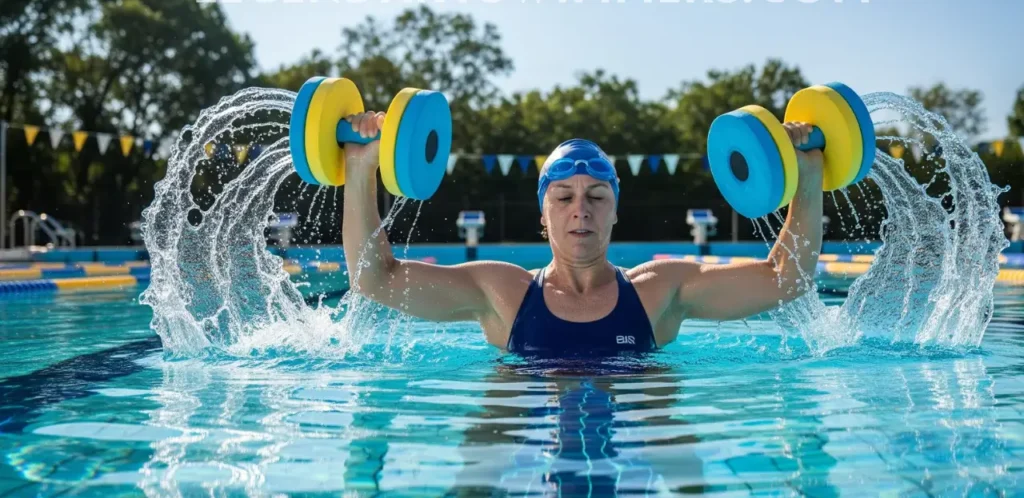
Top Water Weights for Pool & Resistance Workouts (2025)
Want a full-body workout that’s joint-friendly and fun? Water weights are your go-to in 2025! This guide covers the best water weights (Sportneer, AquaJogger, Speedo), how to choose the right gear, expert tips for safe use, and maintenance practices. Ideal for seniors, rehab, and fitness lovers alike. Water-based workouts revolutionize fitness by combining fun, functionality, and low-impact benefits. To boost your aquatic exercise routine, choose the right water weights. They can make your workouts better. These versatile tools—water dumbbells, resistance belts, and kickboards—boost strength and endurance. They suit different fitness levels and goals. Why Water Weights Are Essential in 2025 Water weights are now essential for aquatic exercise programs. They are both flexible and effective. These tools offer many fitness benefits. They use water’s natural resistance for rehab, training, or toning. Here’s why they are essential for modern pool workouts: Build Overall Strength: Water weights work different muscle groups because of water’s resistance. This helps improve strength and endurance. Low-Impact Fitness: Ideal for seniors, those recovering from injuries, and anyone with joint pain. The buoyancy of water minimizes stress on joints. Customizable Intensity: Water weights let users adjust resistance by changing movements. This makes them remarkable for all health levels. Boosts Heart Health: Water workouts and aerobic exercises create a great workout that’s easy on your body. The Evolution of Water Workouts Water workouts have evolved. They now include structured fitness programs, not just swimming. These programs use special tools. They include aquatic dumbbells, resistance belts, and EVA foam accessories. Over the years, we’ve moved from aerobic exercises to more complete pool workouts. These workouts include core strengthening, balance training, and full-body conditioning. Key Mileposts in Water Weight Design Evolution: In the early 2000s, basic plastic water dumbbells ruled the market. They offered limited resistance. 2010s: Introduction of EVA foam for lighter, buoyant, and durable water weights. 2020 gift: cutting-edge designs have ergonomic handles and adjustable weights. They also use colorfast materials. This makes them more comfortable and visually appealing. How to Choose the Right Water Weights When choosing water weights, keep these points in mind for your fitness goals and comfort: Material Quality: EVA foam is light and strong. It floats well, so it’s great for water exercises. Grip Comfort: Ergonomic handles prevent strain and allow a firm grip during workouts. Resistance Levels: Choose products with adjustable or varied resistance. This helps to match different strength levels. Versatility: Tools like pool noodles and resistance belts support strength and cardio training. Best Water Weights and Tools in 2025 Sportneer Water Weights lead the market in 2025. They stand out for their durability, performance, and easy-to-use design. Features: Made with high-quality EVA foam, it ensures long-term buoyancy and durability. Contoured handles provide a secure and comfortable grip. Perfect for both beginners and experienced users. It offers moderate resistance for toning and strength training. Benefits: Helps enhance upper body strength while remaining lightweight and easy to maneuver. Perfect for both pool exercises and rehabilitation routines. AquaJogger Classic Belt: Support and Stability The AquaJogger Classic Belt is a top pick for better buoyancy and core support in pool workouts. Features: Constructed with closed-cell EVA foam that resists water absorption and ensures durability. An adjustable belt strap accommodates various body sizes comfortably. Benefits: Provides excellent back and joint support. It enables users to focus on controlled movements and improves balance and posture. Speedo Kickboards: Versatile Swim Support Swimmers and fitness fans love the Speedo Kickboard. Its design is simple but very effective, making it versatile. Features: Ultra-durable EVA foam creation with contoured edges for each grip and luxury. Lightweight and easy to use, it is great for pool resistance exercises. Benefits: Great for lower body workouts like leg lifts and flutter kicks. Those sporting events help to strengthen and tone your muscle groups. Enhances aquatic endurance when combined with resistance training. Dreidel Company Pool Noodles: Fun and Functional Pool noodles aren’t fun toys for the pool. They also help with your aquatic fitness routine. Dreidel Company’s noodles stand out for their quality and durability. Features: Crafted from premium closed-cell foam, it ensures sturdiness and a long lifespan. Available in various vibrant colors that maintain their appearance over time. Benefits: Useful for both buoyancy support and resistance-based exercises. Perfect for core-strengthening moves and low-impact workouts for all ages. Combining Accessories for a Comprehensive Workout To make the most of your pool exercise equipment, combine water weights with other tools. The AquaJogger Classic Belt works great with Speedo kickboards. Together, they create a smooth full-body workout. The use of resistance bands or aqua gloves diversifies your activities. They effectively target different muscle groups. Expert Tips for Beginners and Experts Start slow: master basic movements first. Then, try high-resistance weights or complex combinations. Mix It Up: Pair aerobic exercises, like water jogging, with weight training for a complete workout. Focus on Form: Good posture and control in movement are key. They help reduce strain and prevent injuries. Maintaining Your Water Weights for Longevity Keeping your water resistance equipment in tip-top shape is simple with regular maintenance. Consider these guidelines: Rinse well with fresh water after each use. This facilitates the casting off of chlorine and other chemical substances in the pool. Store in a shady, dry environment to maintain EVA foam integrity and color vibrancy. Check for wear on handles or straps now and then. Replace them if needed. Conclusion Water weights are crucial for pool and resistance workouts. They provide versatility, safety, and effectiveness. Whether you are a seasoned athlete or new to aquatic fitness, the right tools can inspire you. Use Sportneer Water Weights, AquaJogger Classic Belts, and Speedo Kickboards. They’ll make your workouts more productive and fun. Take the plunge this year and invest in water weights tailored to your fitness goals. Expert tips and proper care can help you become stronger, healthier, and happier in 2025. FAQs What are water weights used for in a pool? Water weights are used to add resistance during aquatic workouts. They help build muscle strength and
Top Water Weights for Pool & Resistance Workouts (2025) Read More »

Low-Impact Water Aerobics: Boost Fitness with Aquatic Exercises
Searching for a mild health routine for your joints that packs a punch when it comes to consequences? Water aerobics might be the perfect solution. This aquatic exercise combines cardiovascular fitness with strength training while being low-impact. Water exercises can help anyone. They are great for recovering from injuries, managing joint pain, or staying fit. This blog highlights the benefits of water aerobics. It includes popular moves, safety tips, and essential gear. By the end, you’ll have everything you need to get started and make a splash with your workout routine. Benefits of Water Aerobic Exercises Low Impact on Joints One of the standout advantages of water aerobics is its minimal impact on joints. Water’s buoyancy eases stress on the body. This makes it great for people with arthritis or joint problems. Supports joint pain relief. Eases mobility in people with chronic conditions. Provides an environment for safe rehabilitation. Enhances muscle strength and endurance. Water resistance forces your muscles to work harder, even with easy actions. This helps target many muscle groups at the same time and boosts endurance. Build lean muscle. Improves balance and coordination. Improves cardiovascular health. Looking for a low-impact cardio workout? Water aerobics enhances heart rate in a safe, controlled manner. They strengthen the heart and improve circulation. Contributes to a lower risk of heart disease. Aids in maintaining a healthy cardiovascular system. Mental Well-Being and Mood Enhancement Research shows that exercising in water reduces stress and improves mental health. Water has a calming effect. Exercise releases endorphins, which can lift your mood and improve your well-being. Pro Tip: Enhance the mood benefits of water aerobics. Try adding mindfulness exercises. Be aware of your breath or sense the water. This helps reduce stress and improve relaxation. 5. Social and Fun Exercise Environment Group aquatic activities help you stay active and connect with others. These activities make workouts fun and motivating since you connect with others. Joining a class makes it easier to stick to your fitness routine. It can turn exercise into a fun habit. It’s also a great chance to make lasting connections with like-minded people. Pro Tip: Team up with a friend or family for aquatic activities to make it fun and stay motivated. This also helps with accountability and consistency. Popular Water Aerobics Moves 1. Walking and Jogging in Water These basic water-based exercises are great for building strength and improving mobility. Water walking is a great full-body workout. It’s ideal for beginners, seniors, or anyone wanting a low-impact routine. It’s an easy and effective way to stay active in a gentle, supportive environment. Start with shallow water. Increase speed over time to elevate intensity. 2. Water Jumping Jacks Water-based jumping jacks use resistance to work your muscles better. They also lower stress on your joints. They improve flexibility, endurance, and strength, making them perfect for all fitness levels. Tip: Keep your movements controlled to maximize resistance. 3. Flutter Kicks Flutter kicks are a great way to build core strength while working your lower body muscles. This exercise is perfect for improving stamina and toning your legs. Use the pool wall or a flotation device to maintain proper form and balance for added support. Arm Exercises with Water Weights Using water weights is a fun way to tone your arms and upper body in the water. They create resistance as you move, helping to build muscle and endurance. For variety, add resistance bands to target different muscles and increase intensity. Using pool noodles for resistance. Pool noodles are perfect for water resistance exercises. You can use them for leg lifts and arm stretches. Protecting the noodle makes your muscle mass work harder. It also supports you in a safe workout. Lightweight and easy to use, they’re perfect for beginners and advanced users. Safety Tips for Water Aerobics Stay Hydrated: Water workouts may not feel as sweaty as land exercises, but you still lose fluids. Keep a water bottle close. Sip water often during breaks. This helps you stay energized and avoid dehydration. Wear Proper Footwear: Use good water shoes to protect your feet. They raise traction, prevent slips, and defend against difficult pool flooring and sharp edges. Good footwear provides support and cuts down fatigue. This makes your exercise more secure and extra comfortable. Check pool conditions: Look for cracks or hazards on the pool wall and floor before you start. Ensure the water temperature is comfortable—extremes can cause overheating, cramps, or discomfort. A safe pool permits you to concentrate on your workout without distractions. Equipment for Effective Water Aerobics Pool Noodles: These basic tools provide significant buoyancy and resistance. Perfect for beginners and advanced workouts alike. Water Weights: Light aquatic dumbbells provide great resistance for your arms. They help build strength without placing strain on your joints. Kickboards: Focus on your lower body by incorporating kickboards into leg-specific exercises. Aqua Gloves: Aqua gloves improve water resistance. They boost upper-body movement and help refine swimming skills. Modifications for Specific Needs 1. Exercises for Knee Pain Relief Low-impact exercises like water walking and leg lifts help reduce knee pain. They improve muscle tissues whilst being gentle on the joints. They improve muscle tissue while being mild on the joints. Water resistance builds strength over time. Hold the pool’s edge and try knee extensions. This can help with stability and reduce discomfort. Pro tip: Begin with 10-15 minutes of walking in waist-deep water. As your knees get more potent, increase the intensity. Add light ankle weights for extra muscle engagement. 2. Water Aerobics for Rehabilitation Recovering from surgery or injury? Water aerobics helps rebuild strength and flexibility safely. The water’s buoyancy eases stress, making movements less complicated than on land. Flutter kicks or arm circles improve mobility without strain. Pro tip: Use pool noodles or resistance gloves for more of a challenge as you progress. Seek advice from your physical therapist to ensure sports fit your recuperation plan. 3. Adaptations for Seniors Water aerobics improves mobility, balance, and fitness for older adults. The water’s
Low-Impact Water Aerobics: Boost Fitness with Aquatic Exercises Read More »

How to do Backstroke Flip Turn: Step-by-Step Guide for Swimmers
For competitive swimmers, mastering the backstroke flip turn is key to better performance. This guide details the steps for a smooth, effective turn. It will help you save time, boost momentum, and conserve energy. This guide gives you expert tips to master backstroke flip turns. It’s key to doing great on race day. To swim backstroke well, you need to master all parts of the stroke. The flip turn is significant. Whether you’re a pro swimmer or want to improve, learning the flip turn can save you time and energy in a race. Understanding the Importance of Efficient Flip Turns A good flip turn does more than make you look smooth in the water. It boosts your backstroke speed and helps improve your race time. A sluggish or sloppy flip turn-in backstroke can cost you a lead. But a quick, smooth turn can give you an advantage. Here are a few benefits of mastering your backstroke flip turn: Save time: A flip turn helps you keep moving forward. It reduces pauses and makes the most of the underwater phase. Build momentum: A strong push-off from the wall guarantees you go out of the flip with velocity. Save energy: When done right, a flip turn uses little energy and boosts your efficiency. To master your flip turn in backstroke or switch to breaststroke, you need to focus and practice. Preparing for the Flip Turn Approaching the Wall: Timing and Stroke Counting A consistent backstroke turn begins with a well-timed approach to the wall. Count your strokes between the backstroke flags and the wall during practice. This will help you figure out how many strokes you need when racing. It will also reduce mistakes, like touching the lane line or misjudging the distance. Identifying the Flags Cue for Distance Calculation When you’re close to the wall, search for the backstroke flags. This is your cue to start the backstroke turn. The flags and the wall are typically five yards or meters apart. Use this marker to practice your rotation technique. Regulate your stroke timing for an easy flip. Technique for Initiating the Flip Turn Slight Body Rotation To begin the backstroke flip turn, execute a slight body rotation onto your side. This shift in position helps you control your body. It makes your turn smoother. Swimmers often misjudge this rotation phase. This leads to a loss of momentum or misaligned positioning. A 2023 study in ResearchGate found that a streamlined push-off with a 10° body angle reduces drag by 18%, improving underwater glide efficiency Executing the Tuck and Somersault After you roll to your side, tuck your chin and knees to start the somersault. This movement is the core of a well-executed flip turn for backstroke. Stay tight to your body for a quick and controlled rotation. This helps you get ready for the next part of the turn. Using Both Arms for Greatest Momentum During the flip turn, keep your arms by your head in a streamlined position. This keeps your speed up and reduces drag as you move from the wall to the glide. Swim experts suggest using both arms at the same time. This creates a smooth push-off. Proper chin tucking and knee positioning. Position your head and knees on point to achieve a successful backstroke turn. Tuck your chin to your chest. Keep your knees close together for a strong and smooth rotation. The Push-off: A Powerful Start Correct Foot Placement and Body Alignment Successful push-off positioning begins with your feet. Place your feet against the wall. Keep them shoulder-width apart and point your toes up. This position helps you generate the best force as you push off the wall. Engaging in an Explosive Push-off and Glide To boost your power, extend your legs to their most excellent length. Also, engage your core muscles as you push off. Move into a streamlined position. Keep your body flat to reduce drag. The force of your push affects your speed as you move into the underwater part of the swim. Streamlining and Transitioning Performing Compact and Rhythmic Dolphin Kicks Your underwater phase is essential for regaining momentum after the backstroke flip turn. Deliver compact, rhythmic dolphin kicks to maintain both velocity and performance. Avoid wide or uneven kicks, as they create turbulence and slow you down. Advanced swimmers work on this sequence in lessons or camps to stay consistent. Executing a Controlled First Stroke The shift from dolphin kicks to backstroke starts with a careful first stroke. This helps you keep a steady rhythm and stay aligned. You won’t lose your momentum. Some professional swimmers, like Hayley Church, emphasise practicing this phase for flawless results. Mastering Alternate Methods Understanding the Bucket Turn Technique If you’re looking for alternatives, try the bucket turn. It uses a circular motion to pull your body over the top and off the wall. Though not as common as the standard flip turn, it works well in certain training situations. Strategies for a Clean Finish Without Hitting the Wall Hitting the wall or fixing your position too late can ruin a good backstroke flip turn. To avoid this, sharpen your stroke counting and rhythm awareness during practice. Maintaining body control enables cleaner execution and reduces the likelihood of mistakes. FAQs Q: How do I prepare for a backstroke flip turn? Preparation involves counting strokes between the backstroke flags and the wall. This ensures a smooth transition and reduces errors, such as touching the lane line. Q: What is the key to executing a successful backstroke flip turn? Begin by turning a bit onto your side. Tuck your chin and knees. Then, do a managed somersault to keep your speed during the flip. Q: How does a flip turn improve my backstroke performance? A good flip turn saves energy and builds momentum. It also helps you push off with strength and shortens the duration of the transition. Q: What is the importance of the push-off in backstroke turns? Good foot placement and body alignment
How to do Backstroke Flip Turn: Step-by-Step Guide for Swimmers Read More »