
Stronger in the Water. Stronger in Life.
Breaststroke Benefits: Full-Body Strength, Cardio & Low-Impact Fitness

Breaststroke for fitness is one of the most effective ways to build full-body strength, cardio endurance, and low-impact movement in the water. It provides a balanced full-body workout while remaining low-impact, making it accessible to people of various ages and fitness levels. This article covers everything from the benefits of breaststroke, calories burned, and muscles used, to comparisons with other strokes, and even mental health effects. Whether you’re a beginner or looking to improve your stroke, you’ll find useful, practical insights here.
Overview of Breaststroke Swimming Benefits
Breaststroke is often recommended for fitness enthusiasts because of its unique characteristics: it’s easier to learn, energy-efficient, and effective in improving cardiovascular health. Swimming breaststroke improves heart function by increasing heart rate while remaining low-impact. The continuous motion helps regulate blood pressure and oxygen efficiency. It is slower than other strokes, but it offers excellent control and rhythm.
Related Reads:
Why Swimming is ideal for Women’s Cardiovascular Health
Is Breaststroke a Good Workout?
Yes, breaststroke is an excellent workout, especially for beginners or those recovering from injuries. Breaststroke provides a full-body workout by engaging the upper body, lower body, and core simultaneously. It promotes balance and coordination. According to Harvard Health Publishing, a 155-pound person can burn around 360 calories in 30 minutes of swimming
Breaststroke Swimming Benefits
- Enhances lung capacity and breathing control
- Tones chest, arms, legs, and core
- Improves posture and flexibility
- Strengthens cardiovascular endurance
- Promotes fat-burning and weight loss
Calories Burned in Breaststroke Swimming
Breaststroke can help you burn significant calories depending on your intensity and body weight. It’s one of the more efficient strokes for moderate fat burning over extended sessions.
How Many Calories Are Burned?
This is a general estimate and can vary based on factors like individual body weight, the specific activity, and the duration of the activity. According to some sources:
- Light pace (recreational): 200–300 calories/hour
- Moderate pace: 300–500 calories/hour
- Competitive pace: 500–700+ calories/hour
Compare this to running at 5 mph, which burns around 600 calories per hour. The low-impact nature of swimming makes it a preferred method for long-term sustainability. For more on how swimming burns calories, visit our guide on Does Swimming Actually Burn Calories?(Experts Tips 2024)
Muscles Used in Breaststroke
Breaststroke engages multiple muscle groups, providing a total-body workout.
Primary Muscles Engaged
- Chest (Pectorals): Major engagement during the arm pull phase
- Arms (Biceps, Triceps, Deltoids): Used in pulling and recovery
- Core (Abdominals, Obliques): Stabilizes the body and aids in breathing
- Legs (Quadriceps, Hamstrings, Calves): Kicking motion strengthens the lower body
- Back (Latissimus dorsi, Erector spinae): Supports posture and propulsion
Regular swimming tones and strengthens these areas, improving body balance and strength.
To build on those same strength benefits, our Swim & Sculpt Free PDF Training Guide pairs swim-focused movement with water resistance exercises to better target key muscles and for better strength, balance, and control in the pool.
Breaststroke vs Freestyle for Fitness
Each swimming stroke offers unique benefits. Here’s how breaststroke compares to freestyle.
Breaststroke vs Freestyle
| Feature | Breaststroke | Freestyle |
| Speed | Slower | Fastest stroke |
| Calories Burned | Moderate | High |
| Difficulty Level | Easier for beginners | Intermediate to advanced |
| Muscle Engagement | Full-body | Full-body with more upper body focus |
| Breathing Control | Easier | Requires side breathing |
Freestyle is more intense, but breaststroke is ideal for sustainable, long-term fitness, especially for those starting out. Swimmers interested in the difference between Breaststroke vs Butterfly may also benefit from learning these techniques for different swim goals.
For swimmers who want to improve speed and efficiency, learning proper freestyle swimming technique can also help build confidence across different strokes. If you are newer to the water, our guide to beginner swimming techniques can help you build stronger fundamentals before focusing on stroke-specific details.
Breaststroke Swimming Technique
Proper form is crucial to get the most from breaststroke swimming.
Basic Steps
- Start with a horizontal body position
- Pull arms outwards and sweep inward
- Perform a frog-like kick
- Inhale during arm pull, exhale during kick
- Glide briefly between strokes
Practicing with a coach or video analysis can help refine form and prevent injury. Swimmers looking to improve timing, glide, and propulsion can also explore our guide on breaststroke speed and efficiency techniques for faster swimming.
Breaststroke for Weight Loss
Swimming regularly with breaststroke can lead to gradual, sustainable weight loss.
Why It Helps
- Consistent calorie burn
- Builds muscle, which boosts metabolism
- Low injury risk allows frequent workouts
Experts recommend 3–5 sessions per week, 30–45 minutes each, to support weight loss goals.
Related Reads:
- Best Swimming Strokes for Muscle Building 2026
- Best Swim Workout to Burn Fat Faster Than Ever Before!
Breaststroke for Beginners
Breaststroke is considered the most beginner-friendly swimming stroke.
Tips for Beginners
- Focus on glide to conserve energy
- Practice breath timing
- Use float boards for leg practice
- Don’t rush your stroke — rhythm is key
Beginners often prefer breaststroke due to its easy breathing pattern and low speed. Building strong fundamentals early can make swimming more enjoyable and efficient, especially when learning proper breathing and body position in the water. Our beginner swimming techniques guide can help you get started.
Benefits of Breaststroke: Endurance, Health & Recovery
Breaststroke isn’t just a foundational swim stroke — it’s a full-body, low-impact exercise that offers significant benefits for endurance, lung health, mental well-being, and physical recovery. Whether you’re a beginner or returning to swimming after a break, here’s how breaststroke can support your overall fitness journey.
Improving Endurance with Breaststroke
Breaststroke is an excellent choice for building cardiovascular endurance, especially for beginners or those easing into a fitness routine. Its steady pace and manageable breathing rhythm allow swimmers to sustain longer workouts without overexertion.
Endurance Tips:
-
Begin with 20-minute sessions and gradually increase the duration as your stamina improves.
-
Alternate between slow and fast-paced laps to build speed and recovery ability.
-
Include interval training such as 4 x 100m swims with 30 seconds of rest between each to condition your heart and muscles effectively.
Consistency is key — aim to swim 2–3 times per week for lasting results.
Swimming Breaststroke for Mental Health
Swimming is known to reduce stress and anxiety, and breaststroke’s rhythmic nature enhances these effects by promoting mindfulness.
Psychological Benefits:
-
Improves mood through the release of endorphins — natural feel-good hormones.
-
Enhances focus and relaxation by engaging the mind and body in repetitive, calming motion.
-
Encourages mindfulness, as the consistent breathing and gliding movements help you stay present and grounded.
Whether used as a moving meditation or a form of stress relief, breaststroke can support your mental wellness.
Related Reads:
Physical and Mental Health Benefits of Swimming – 2026
Breaststroke Breathing Technique and Lung Health
The breaststroke breathing pattern — lifting the head to inhale and submerging to exhale — trains swimmers to develop better respiratory control.
Breathing Tips:
-
Inhale during the lift phase of the stroke, when your head breaks the surface.
-
Exhale fully underwater, ensuring complete breath cycles.
-
Keep a steady rhythm to build lung efficiency and maintain a relaxed state.
Over time, this breathing control strengthens the respiratory muscles and improves oxygen utilisation, which can benefit overall lung health.
Low-Impact Cardio with Breaststroke
One of the most accessible aspects of breaststroke is its joint-friendly nature. It provides cardiovascular benefits without placing stress on weight-bearing joints.
For another way to support heart health in the water, explore the cardiovascular benefits of swimming and how regular aquatic exercise can improve endurance, circulation, and overall fitness.
Why It’s Joint-Friendly:
-
Being a non-weight-bearing activity, swimming reduces pressure on knees, hips, and ankles.
-
Ideal for seniors, those with arthritis, or individuals recovering from joint injuries.
-
Breaststroke’s slow, controlled motion offers a safe workout that supports heart health and mobility.
It’s a go-to option for those needing a sustainable way to stay active without risk of impact-related strain.
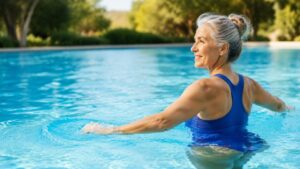
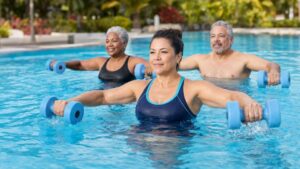
Many swimmers also combine breaststroke sessions with water aerobic exercises to improve endurance, mobility, and overall strength while keeping workouts gentle on the joints. To build on those same strength benefits, our Swim & Sculpt Free PDF Training Guide pairs swim-focused movement with water resistance exercises to better target key muscles and for better strength, balance, and control in the pool.
Swimming can also support long-term mobility and joint-friendly movement, especially for adults focused on maintaining strength and bone health over time.
Stretching and Warm-Up Before Swimming Breaststroke
A proper warm-up primes your muscles for performance and prevents cramping or injuries during your swim.
Suggested Warm-Up Routine:
-
Arm circles to loosen shoulders
-
Leg swings for hip mobility
-
5 minutes of light swimming to elevate heart rate
-
Dynamic stretches targeting the shoulders, chest, and hips
Warming up enhances blood flow to muscles and helps you swim more efficiently and safely.
Swimming for Overall Fitness
Incorporating breaststroke into your weekly routine can improve your strength, endurance, flexibility, and mental clarity. It engages multiple muscle groups including the chest, legs, and core, offering a balanced workout for the whole body.
Regular swimmers often notice better posture, sleep, and energy levels — proof of swimming’s wide-reaching impact on physical and mental fitness.
Swimming for Seniors and Low-Impact Workouts
Breaststroke is especially beneficial for older adults. Its gentle movements help maintain strength, coordination, and cardiovascular health without stressing the joints.
-
The stroke’s predictable rhythm makes it easy to learn and sustain.
-
It helps promote mobility and prevent age-related muscle loss.
- Swimming also offers social and psychological benefits, especially when done in group classes or community pools.
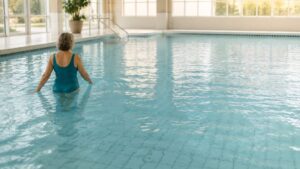
For those easing into aquatic exercise, pool walking can also be an effective way to improve circulation, mobility, and confidence in the water.
Swimming for Injury Recovery
For those recovering from injuries, breaststroke offers a safe way to regain mobility and rebuild strength.
Why It Helps:
-
Provides resistance training without impact, which protects healing tissues.
-
Encourages a full range of motion in shoulders, hips, and knees.
-
Stimulates blood circulation, aiding muscle and joint recovery.
Important: Always consult with a physiotherapist or healthcare provider before returning to the pool after an injury to ensure proper progression.
For a gentle place to start, try our free 15-minute aqua fitness workout and experience simple, low-impact movements you can do in the pool.
Benefits of Swimming vs Gym Workouts
| Feature | Swimming | Gym Workouts |
| Joint Stress | Low | Medium to high |
| Calorie Burn | High (depending on the stroke) | Moderate to high |
| Mental Health | High | Moderate |
Swimming is a full-body, joint-safe alternative to weight lifting or treadmill workouts. [Source: Aura Leisure Centres]
Some swimmers also choose this form of exercise because they provide resistance and cardio training without the repetitive joint stress often associated with traditional gym routines.
Swimming Routines for Fat Loss
Sample Weekly Plan
| Day | Routine | Focus |
|---|---|---|
| Monday | 30-minute moderate breaststroke swim | Fat-burning, steady cardio |
| Wednesday | Interval training: 5 x 100m breaststroke (with rest between sets) | High-intensity, metabolic boost |
| Friday | Long-distance swim (45 minutes continuous) | Endurance, calorie burn |
| Sunday | Light recovery swim or stretching session | Active recovery, muscle relaxation |
Common Breaststroke Mistakes
Proper technique is essential in breaststroke, especially if you’re swimming for fitness. One common mistake is lifting the head too high during breathing, which can place unnecessary strain on the neck and disrupt body alignment. Instead, aim to lift just enough to inhale while keeping the head in line with the spine.
Another frequent error is using excessively wide arm pulls. While it might feel powerful, this actually wastes energy and causes drag, reducing forward momentum. Keeping the pull narrower and more controlled allows for a more efficient stroke.
Lastly, many swimmers rush through the glide phase, cutting it short in an attempt to swim faster. This undermines the natural rhythm of breaststroke and reduces its overall efficiency. Allowing a brief glide between strokes conserves energy and improves endurance.
By addressing these mistakes, swimmers can enhance their performance, reduce fatigue, and make breaststroke a more effective tool for fitness and conditioning.
FAQs
How Often to Swim Breaststroke for Fitness
Fitness experts suggest swimming breaststroke 3–5 times weekly for general health, and 4–6 times for weight loss or endurance improvement.
Which swim stroke burns more Calories?
Freestyle generally burns more calories due to higher speed, but breaststroke offers better control and longer workout sessions.
Breaststroke vs Backstroke for Toning Muscles
Backstroke targets the back and shoulders more, while breaststroke works the chest and legs more evenly.
Breaststroke vs Butterfly: Which is Harder?
Butterfly requires greater strength, timing, and lung control. Breaststroke is easier to maintain for longer sessions.
Which swimming stroke is best for beginners
Breaststroke is ideal due to its simple breathing and relaxed pace.
How breaststroke affects VO2 Max
VO2 max improves with regular breaststroke as cardiovascular and respiratory efficiency increase over time.
Sources
Share:
More Posts
Start Training in the Water
Free Resources
Improve your swimming, build strength, or move with less impact using the water as your training space.
Choose a free resource below to get started.
Recommended Equipment
These are some of the swim training tools and aquatic fitness essentials commonly used to improve technique, build strength, and create a more effective experience in the water.
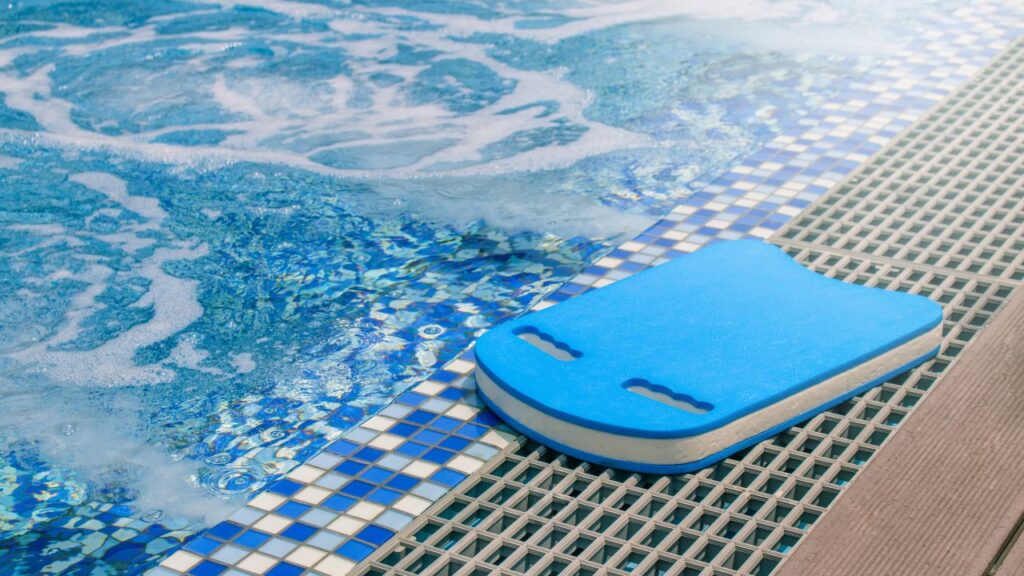
Kickboard Training
Helps improve kicking strength, body position, and lower-body endurance during swim practice.
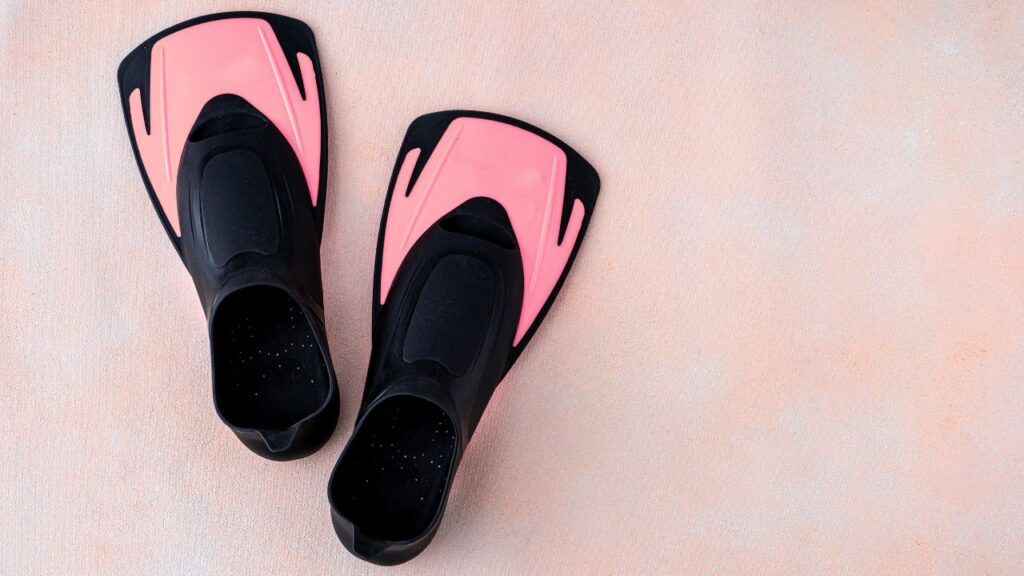
Swim Training Fins
Builds leg power, improves kick technique, and creating smoother movement through the water.
Pull Buoy Float
Supports upper-body focused swim training by helping stabilize the legs during drills and technique work.
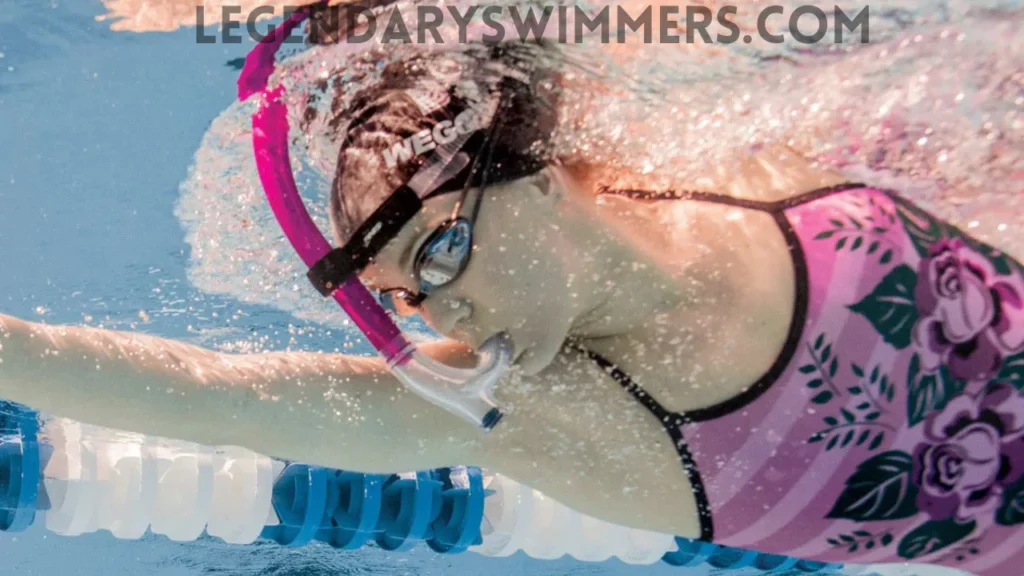
Front-Mount Swim Snorkel
Allows swimmers to focus on body position and stroke technique without turning to breathe.
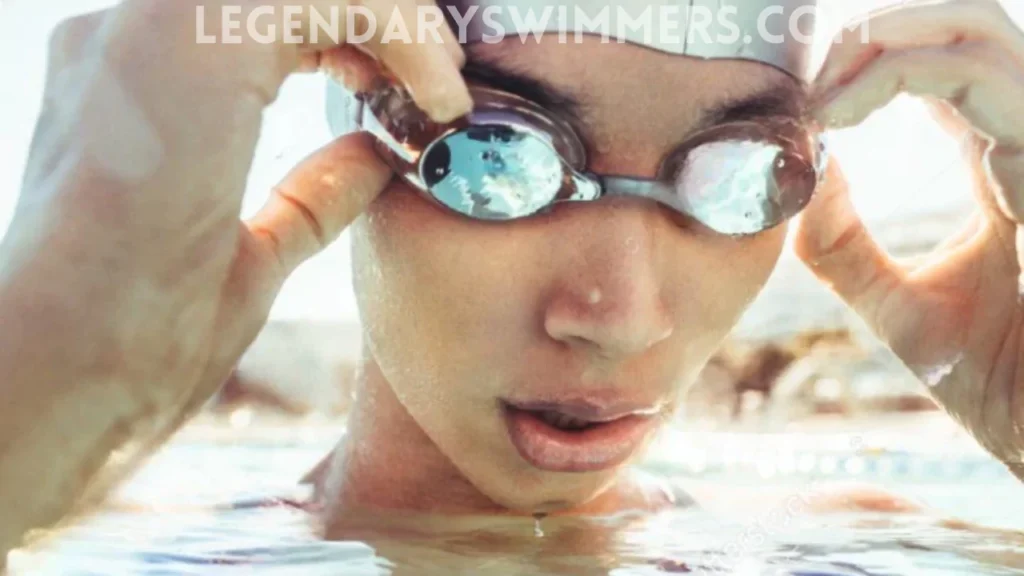
Swim Goggles
Designed to improve underwater visibility and comfort during training, lap swimming, and aquatic workouts.

Swim Cap
Helps reduce drag, improve comfort, and keep hair more secure during swim training and aquatic workouts.
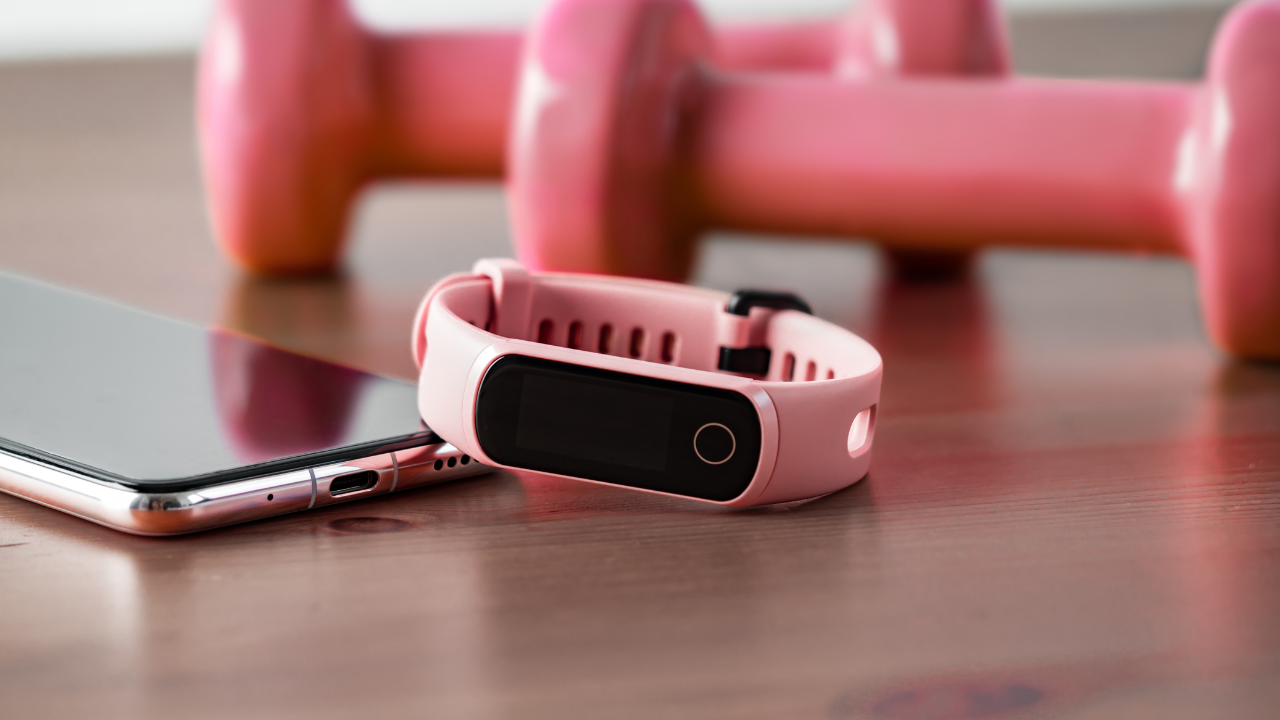
Waterproof Fitness Tracker
Tracks movement, activity, heart rate, and consistency during swimming, pool walking, and aquatic wellness routines.
Disclosure: Links above are affiliate links, meaning Legendary Swimmers may earn a small commission at no additional cost to you.
Choose How You Prefer to Train in Water
Whether you are here to improve your swimming, build strength, or move with less impact, Legendary Swimmers gives you simple ways to use the water as your training space.
Start with one of our free resources below and choose the path that fits how you want to move in the water.