
Stronger in the Water. Stronger in Life.
Aquatic Exercise for Healthy Aging: What the Research Says
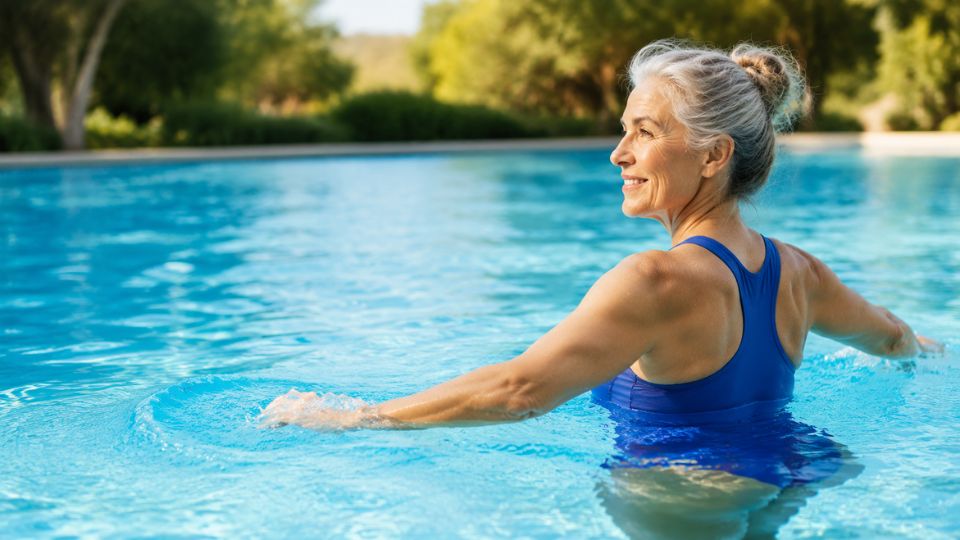
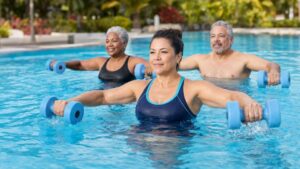
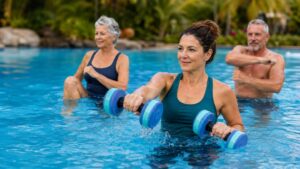
Aquatic exercise for healthy aging can be a powerful way to support strength, balance, cardiovascular fitness, and confidence in movement, without relying only on high-impact exercise.
As we age, staying active becomes about much more than checking off a workout. It is about maintaining the strength to carry groceries, the balance to move confidently, and the cardiovascular fitness to keep up with daily life.
That is one reason aquatic exercise can be such a valuable form of movement. The water can feel supportive on the body while still providing meaningful resistance, challenge, and opportunity to build fitness.
Whether you are already active, returning to movement after time away, or looking for a lower-impact way to stay consistent, aquatic exercise may offer a practical place to begin.
Why Healthy Aging Includes Strength, Balance, and Cardio Fitness
Healthy aging does not mean avoiding challenge. It means choosing movement that helps you continue building and maintaining the physical abilities that matter in everyday life.
Those abilities often include:
- Muscular strength for lifting, standing, climbing stairs, and getting up from a chair
- Balance and stability for moving with greater confidence
- Cardiovascular fitness for walking, traveling, playing with family, and completing daily tasks
- Mobility and flexibility for comfortable movement
- Confidence in your ability to stay active
No single workout is perfect for every person. However, a balanced exercise routine can support many of these areas over time. For many adults, aquatic exercise for healthy aging offers a practical way to train strength, balance, and cardiovascular fitness in one environment.
Aquatic exercise is especially interesting because it can be adjusted for many different fitness levels. A person can begin with controlled water walking, arm sweeps, gentle squats, or supported leg movements. As they become stronger, they may increase speed, range of motion, surface area, resistance equipment, or coordination demands.
How Water Creates a Different Kind of Challenge
Water is often described as “gentle,” but that does not mean it cannot be challenging.
Buoyancy can reduce the impact and loading that occur when you move on land. At the same time, water creates resistance in every direction. When you push, pull, sweep, kick, or change direction, your body must move against that resistance.
The challenge can increase when you:
- Move faster while maintaining control
- Use a larger range of motion
- Increase the surface area of your hands, arms, or legs
- Add aquatic dumbbells, resistance gloves, a noodle, or other equipment
- Move in more than one direction
- Perform balance or single-leg movements
- Work in deeper water
This makes it possible to create water workouts that are both adaptable and progressive. You do not need to choose between movement that feels supportive and movement that helps you get stronger.
Related Reading: The Science Behind Water Resistance Training: Why It Works
What Does Research Say About Aquatic Exercise?
A 2022 systematic review and meta-analysis examined 62 studies on water-based exercise in healthy adults and adults living with chronic conditions.
Among healthy adults, the review found beneficial effects on:
- Strength
- Balance
- Cardiorespiratory fitness
The researchers noted that programs lasting at least 12 weeks, performed two to three times per week, were associated with these benefits in the healthy-adult studies.
This is important because strength, balance, and cardiovascular fitness are not separate goals. They work together to support the ability to move, remain active, and feel capable throughout life.
The review also looked at adults with chronic conditions. It found promising results across several populations and health-related measures, including balance, physical fitness, pain, gait, and quality of life. However, research findings varied depending on the condition, the specific program, the person’s starting point, and the outcome being measured.
That is why research-informed aquatic exercise should never be presented as a one-size-fits-all treatment plan.
Read the systematic review: Benefits of aquatic exercise in adults with and without chronic disease
Aquatic Exercise and Chronic Conditions: An Important Note
Water movement can be a meaningful option for many people living with arthritis, osteoporosis, fibromyalgia, multiple sclerosis, injury history, or other health concerns.
But “may be helpful” does not mean that every exercise, intensity, pool environment, or progression is appropriate for every person.
Your needs may be influenced by factors such as:
- Your diagnosis and symptoms
- Current pain, fatigue, balance, or mobility level
- Medications and health history
- Whether you are recovering from an injury or procedure
- Guidance from your physician, physical therapist, or other qualified healthcare professional
If you are managing a medical condition, returning from injury, or unsure where to begin, speak with your healthcare professional before starting or changing an exercise routine. A qualified aquatic physical therapist or other appropriately trained professional can help determine what is suitable for your individual needs.
The goal is not to force your body through a workout. The goal is to find safe, appropriate movement you can return to consistently.
How to Start Aquatic Exercise for Healthy Aging
If you are new to aquatic exercise, begin with movements that feel manageable and controlled.
A simple starting session may include:
- Water walking or light marching
- Controlled arm sweeps forward and backward
- Gentle shoulder movements within a comfortable range
- Supported squats or sit-to-stand-style movements
- Heel raises
- Slow knee raises
- Easy side steps
- Light balance practice while holding the pool wall if needed
Start at a pace that allows you to maintain good posture, steady breathing, and control. You do not need to make every movement large or fast for it to be useful.
Over time, you can progress by increasing your workout duration, adding repetitions, moving with slightly more speed, using equipment, or choosing more challenging variations.
Consistency matters more than trying to do too much too soon.
Related Reading: How Water Exercises Improve Stability, Coordination & Everyday Movement
The Value of Finding Movement You Want to Continue
One of the greatest benefits of water exercise may be that it gives people another way to stay active.
For some, the water offers a place to move with less impact. For others, it provides resistance that makes exercise feel purposeful and full body. For many people, it simply makes movement more enjoyable.
Healthy aging is not about trying to stay exactly the same forever. It is about continuing to care for your strength, mobility, confidence, and quality of life as your needs change.
Water can be a powerful place to do that.
Related Reading: How Aquatic Exercises Boost Blood Circulation Naturally
Ready to Experience the Water’s Resistance?
If you would like to try a guided, low-impact water workout, explore our free 15-minute aqua fitness workout.
It is designed to help you experience how intentional water movement can support strength, mobility, and full-body fitness, at a pace you can build from.
Try the Free 15-Minute Aqua Fitness Workout
This article is for general educational purposes only and is not medical advice. Consult a qualified healthcare professional before beginning or changing an exercise program, especially if you have a medical condition, injury, or concern about your ability to exercise safely.
The cited review included 62 studies and reported beneficial effects of water-based exercise on strength, balance, and cardiorespiratory fitness in healthy adults; it also summarized condition-specific findings that should not be generalized into individual treatment advice.
Reference
Faíl LB, Marinho DA, Marques EA, et al. Benefits of aquatic exercise in adults with and without chronic disease—A systematic review with meta-analysis. Scandinavian Journal of Medicine & Science in Sports. 2022;32(3):465–486. https://doi.org/10.1111/sms.14112
Share:
More Posts
Start Training in the Water
Free Resources
Improve your swimming, build strength, or move with less impact using the water as your training space.
Choose a free resource below to get started.
Recommended Equipment
These aquatic fitness tools help increase water resistance, improve stability, and create a more effective low-impact workout experience in the pool.
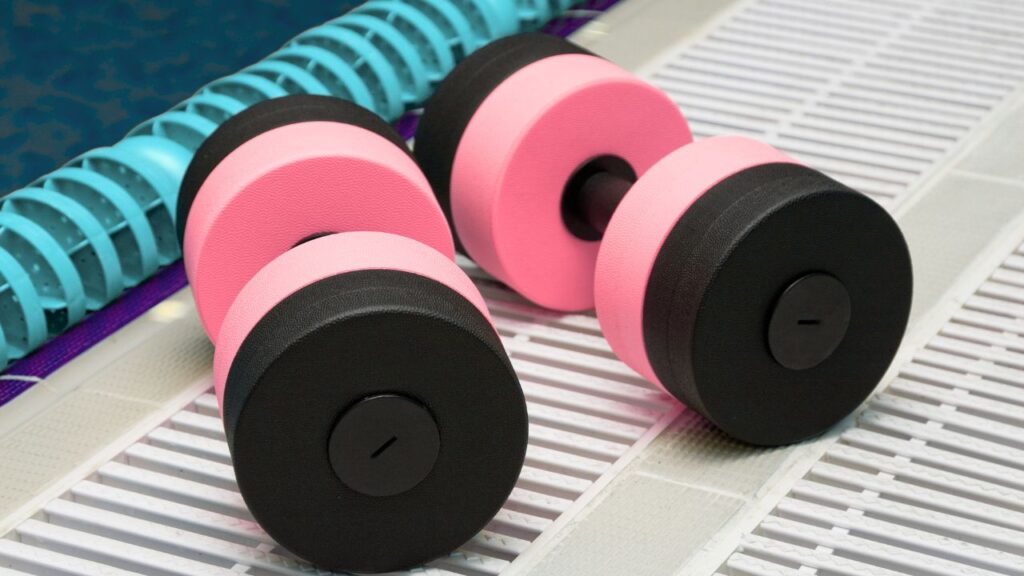
Aqua Dumbbells
Adds upper-body resistance to help improve strength, endurance, and overall workout intensity during aquatic fitness sessions.

Resistance Gloves
Creates additional water resistance for the arms and shoulders while helping improve movement control and muscle engagement.
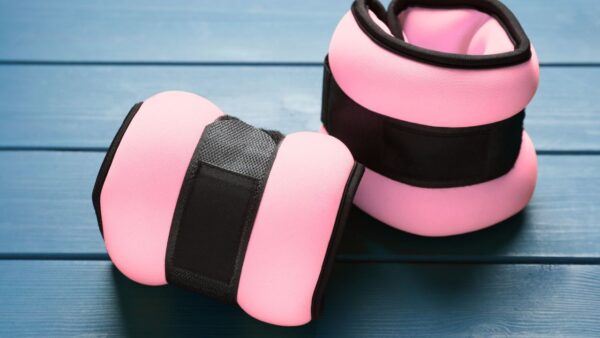
Aquatic Cuffs
Designed to increase resistance on both the arms and legs, helping create more advanced aquatic strength and conditioning workouts.

Flotation Belt
Supports deep-water exercises and helps maintain balance during suspended aquatic workouts without placing stress on the joints.
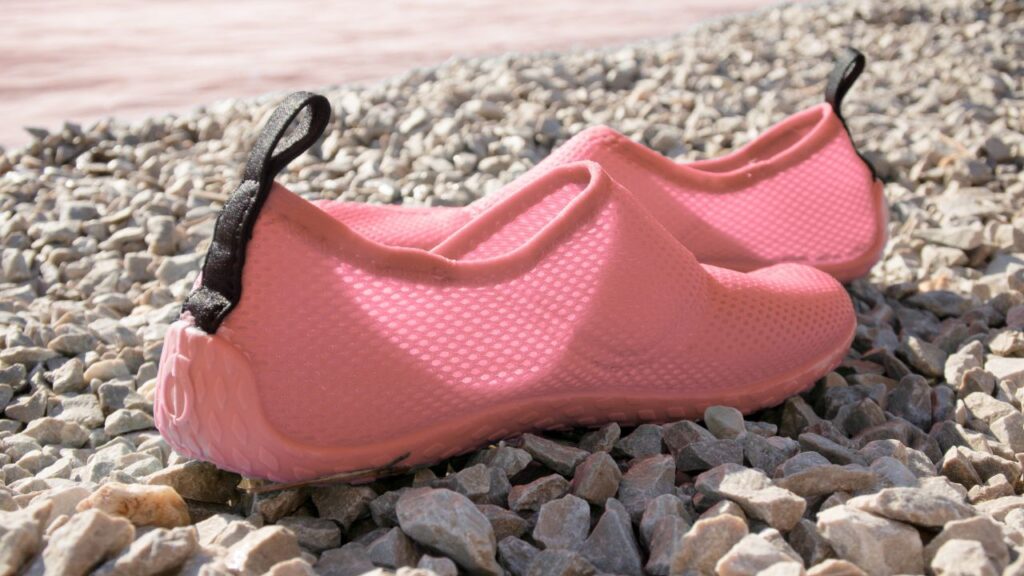
Water Shoes
Provides grip, stability, and foot protection for aquatic fitness classes, pool walking, and water-based exercise routines.
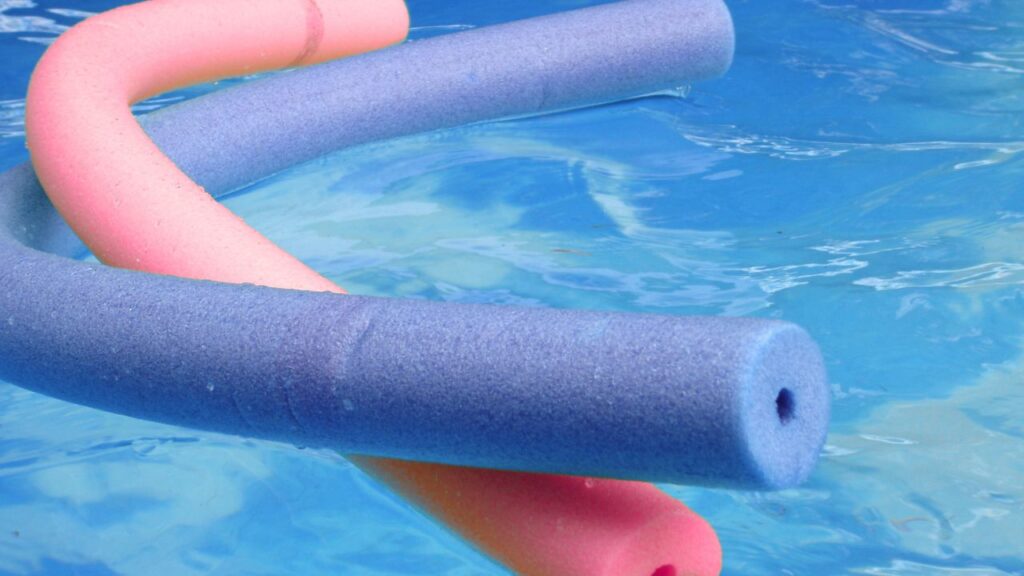
Pool Noodle
Provides flotation support for balance, core training, and low-impact aquatic exercises while helping improve comfort and stability in the water.
Disclosure: Links above are affiliate links, meaning Legendary Swimmers may earn a small commission at no additional cost to you.
Choose How You Prefer to Train in Water
Whether you are here to improve your swimming, build strength, or move with less impact, Legendary Swimmers gives you simple ways to use the water as your training space.
Start with one of our free resources below and choose the path that fits how you want to move in the water.