
Stronger in the Water. Stronger in Life.
The Science Behind Water Resistance Training: Why It Works
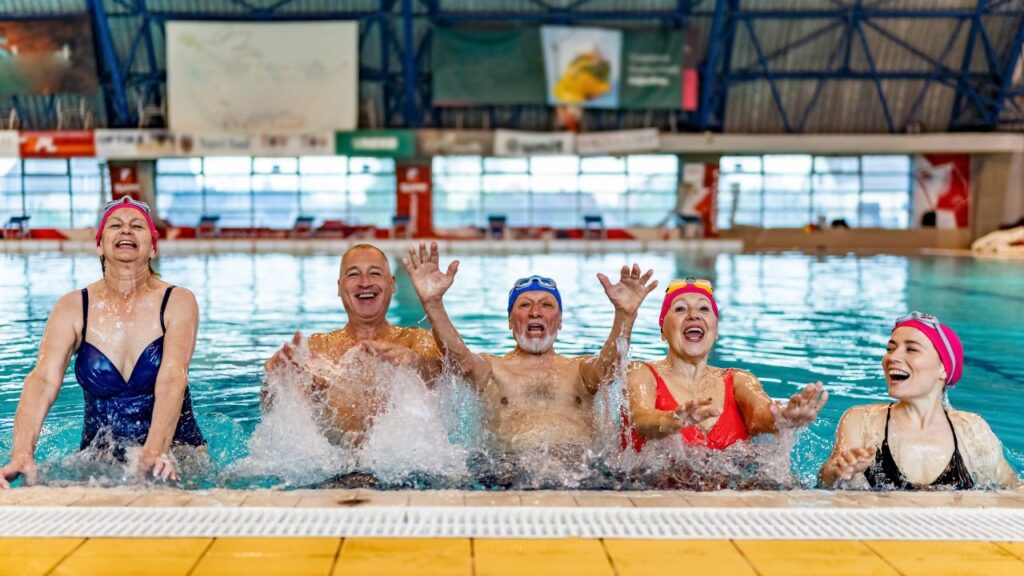
Water resistance training is one of the most effective yet underrated ways to build strength, improve mobility, and stay active long-term — all while placing less stress on the joints.
Unlike traditional workouts that rely heavily on gravity and impact, movement in water creates natural resistance in every direction. Whether you are swimming laps, walking in the pool, or participating in aquatic fitness exercises, your body constantly works against the resistance of the water itself.
For many people, this creates a more sustainable and joint-friendly way to exercise while still developing strength, endurance, and coordination.
How Water Resistance Training Works
Water is significantly denser than air. In fact, research commonly notes that water creates approximately 12–14 times more resistance than movement on land.
This means that even simple movements like:
- walking
- pressing
- kicking
- lifting the arms
- balancing
require the muscles to continuously engage throughout the movement.
Unlike traditional weightlifting where resistance often comes from a single direction, water resistance training creates multidirectional resistance. Your muscles work both when pushing and pulling through the water.
The faster you move, the greater the resistance becomes.
This is one of the reasons aquatic resistance training can be adapted for:
- beginners
- older adults
- swimmers
- athletes
- rehabilitation programs
- low-impact fitness training
without necessarily needing heavy equipment.
Why Water Resistance Training Feels Different
One of the biggest advantages of resistance training in water is buoyancy.
Water helps support a portion of your body weight, reducing impact on:
- knees
- hips
- ankles
- lower back
According to the U.S. Centers for Disease Control and Prevention (CDC), water-based exercise can help reduce stress on joints while still supporting muscular fitness and physical activity.
At the same time, water adds natural resistance to every movement. Even simple motions like walking, pressing, kicking, or lifting the arms become forms of resistance training.
If you are interested in gentle low-impact movement, check out our post on Benefits of Pool Walking: Why Water Walking is Great for Your Health.
This combination of:
- support
- resistance
- mobility
- stability
is what makes water workouts unique compared to many land-based workouts.
Can Water Resistance Training Build Strength?
Yes — and often in ways people do not initially expect.
While water resistance exercises may not always create the same maximal load as heavy weightlifting, they can effectively improve:
- muscular endurance
- mobility
- balance
- coordination
- core engagement
- functional strength
Research published through the National Institutes of Health (NIH) has shown that aquatic exercise programs can significantly improve strength, flexibility, cardiovascular fitness, and overall physical function.
Because water creates continuous resistance, muscles stay active throughout the movement instead of only during isolated phases of an exercise.
This is why many swimmers and aquatic fitness participants often notice improvements in:
- posture
- stability
- movement control
- daily mobility
Water resistance training also plays an important role in long-term mobility and healthy aging. You can learn more in our post on Why Water Workouts Support Strength & Longevity. For those interested in what kind of Aquatic Fitness exercises build muscular strength see our full guide on Water Aerobics Exercises for Your Upper Body: 10 Effective Moves.
Why Swimmers and Aquatic Fitness Participants Benefit
Swimming itself is a form of water resistance training.
Every stroke requires the body to move against the resistance of the water while coordinating breathing, balance, and muscular control.
At the same time, aquatic fitness exercises use many of these same principles through:
- water jogging
- aqua resistance movements
- mobility drills
- pool strength exercises
- recovery-based movement
This is one reason water workouts can support both:
- performance
- recovery
Many athletes use pool workouts as a low-impact cross-training method because they allow movement and conditioning without the repetitive impact associated with some land-based training.
Swimming itself also provides physical and mental wellness benefits that support long-term health and movement. You can explore more in our post on Physical and Mental Health Benefits of Swimming – 2026.
A Smarter Way to Train for Longevity
For many adults, the goal is no longer simply pushing harder during workouts.
Instead, many people are looking for movement that:
- feels sustainable
- supports the joints
- improves strength safely
- helps maintain long-term mobility
This is where water resistance training becomes especially valuable.
Whether through swimming, aquatic fitness, pool walking, or structured water workouts, the water creates an environment where people can continue moving consistently without the same level of impact found in many traditional workouts.
Over time, consistency is often what matters most. For more on how low impact water aerobics benefits the body, check out our article on Low-Impact Water Aerobics: Boost Fitness with Aquatic Exercises.
Start Exploring Movement in Water
Whether you are interested in swimming, low-impact fitness, aquatic resistance training, or pool exercises, movement in water offers a powerful way to build strength while supporting your body long-term.
The resistance is natural.
The movement is adaptable.
And for many people, it becomes one of the most sustainable ways to stay active.
Final Thoughts
Water resistance training offers a unique combination of strength, mobility, endurance, and joint-friendly movement that few other forms of exercise can provide.
Whether through swimming, aquatic fitness, pool walking, or structured resistance exercises, the water naturally creates an environment that supports the body while still challenging the muscles.
For many people, this becomes a more sustainable way to stay active long-term — especially when looking for movement that feels supportive instead of exhausting.
The goal is not always to push harder.
Sometimes, the smartest approach is finding movement that allows you to stay consistent, protect your joints, and continue building strength over time.
Water makes that possible.
Q&A
Q: What is water resistance training?
A: Water resistance training is a form of exercise where the natural resistance of water is used to strengthen muscles, improve endurance, and support mobility. Swimming, pool exercises, and aquatic fitness workouts all use water resistance.
Q: Is water resistance training good for joints?
A: Yes. Water helps reduce impact on the knees, hips, ankles, and lower back by supporting part of the body weight. This makes it a popular low-impact option for people looking for joint-friendly workouts.
Q: Can water resistance training build muscle?
A: Water resistance training can help improve muscular endurance, strength, stability, and coordination. While it may feel different from traditional weightlifting, moving against water resistance continuously activates the muscles throughout the exercise.
Q: Why does water create resistance?
A: Water is much denser than air, which means the body has to work harder to move through it. The faster you move in the water, the greater the resistance becomes.
Q: Is swimming considered resistance training?
A: Yes. Swimming is a form of water resistance training because every stroke requires the muscles to push and pull against the resistance of the water. For more, check out our guide on the Best Swimming Strokes for Muscle Building 2026
Q: Who benefits from aquatic resistance training?
A: Aquatic resistance training can benefit:
- beginners
- older adults
- swimmers
- athletes
- people recovering from injuries
- individuals looking for low-impact fitness options
because exercises can easily be adapted to different fitness levels.
Q: Do you need equipment for water resistance exercises?
A: No. Many water resistance exercises use only the natural resistance of the water itself. However, tools like aquatic dumbbells, resistance gloves, kickboards, or pool noodles can increase intensity. If interested in learning more about the type of equipment, check out our guide on Top Water Weights for Pool & Resistance Workouts (2026)
Q: Why are water workouts good for longevity?
A: Water workouts support long-term movement because they combine strength, mobility, cardiovascular activity, and reduced joint impact. This can help people stay active more consistently over time. For added benefits check out how to relieve back pain with out guide on Pool Stretching Exercises for Back Pain and Flexibility.
REFERENCES
Copy/paste these directly into the post:
- CDC — Water-Based Exercise & Physical Activity
https://www.cdc.gov/physicalactivity/basics/adding-pa/activities.html - National Institutes of Health (NIH) — Aquatic Exercise Research
https://pmc.ncbi.nlm.nih.gov/articles/PMC6188611/ - Hydrostatic & Resistance Properties of Water
https://www.ncbi.nlm.nih.gov/books/NBK518995/ - Arthritis Foundation — Benefits of Water Exercise
https://www.arthritis.org/health-wellness/healthy-living/physical-activity/walking/water-workouts - Harvard Health — Exercise & Healthy Aging
https://www.health.harvard.edu/exercise-and-fitness/exercise-can-boost-your-memory-and-thinking-skills - Cleveland Clinic — Low-Impact Exercise Benefits
https://health.clevelandclinic.org/low-impact-workouts/
Share:
More Posts
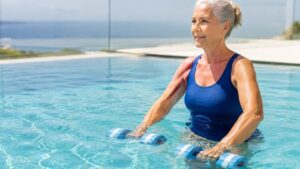
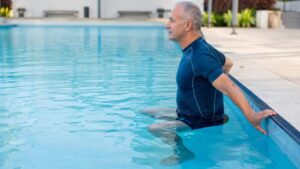
Start Training in the Water
Free Resources
Improve your swimming, build strength, or move with less impact using the water as your training space.
Choose a free resource below to get started.
Recommended Equipment
These aquatic fitness tools help increase water resistance, improve stability, and create a more effective low-impact workout experience in the pool.
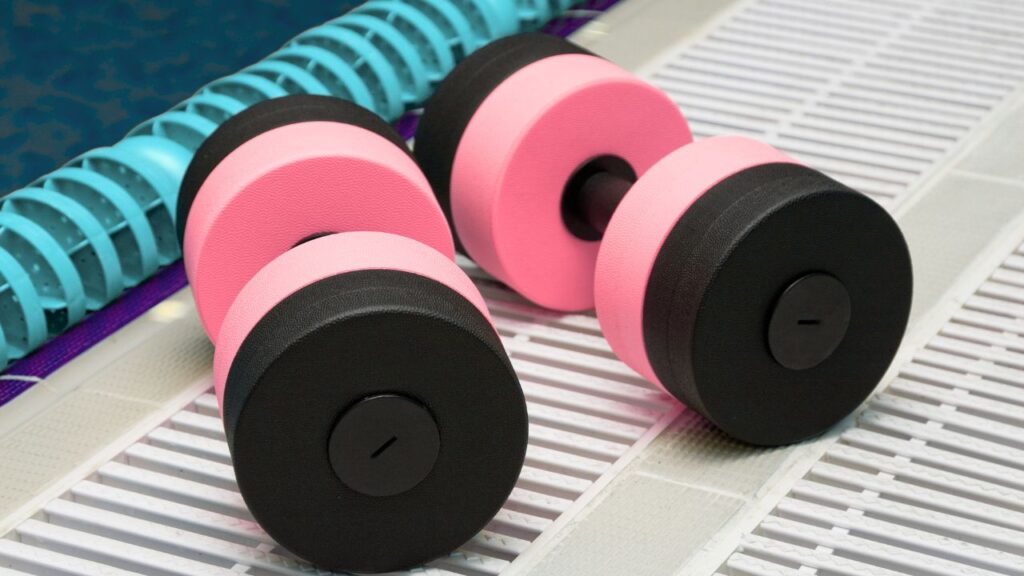
Aqua Dumbbells
Adds upper-body resistance to help improve strength, endurance, and overall workout intensity during aquatic fitness sessions.

Resistance Gloves
Creates additional water resistance for the arms and shoulders while helping improve movement control and muscle engagement.
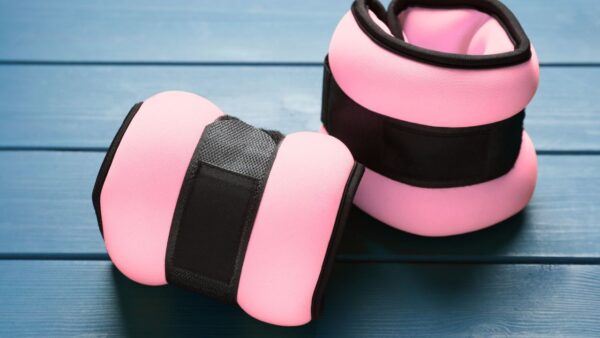
Aquatic Cuffs
Designed to increase resistance on both the arms and legs, helping create more advanced aquatic strength and conditioning workouts.

Flotation Belt
Supports deep-water exercises and helps maintain balance during suspended aquatic workouts without placing stress on the joints.
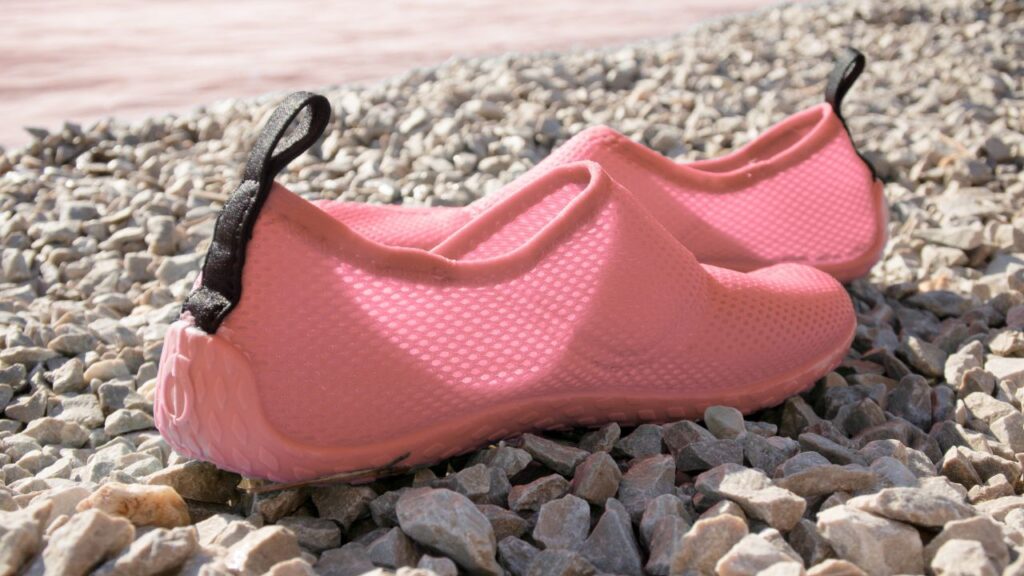
Water Shoes
Provides grip, stability, and foot protection for aquatic fitness classes, pool walking, and water-based exercise routines.
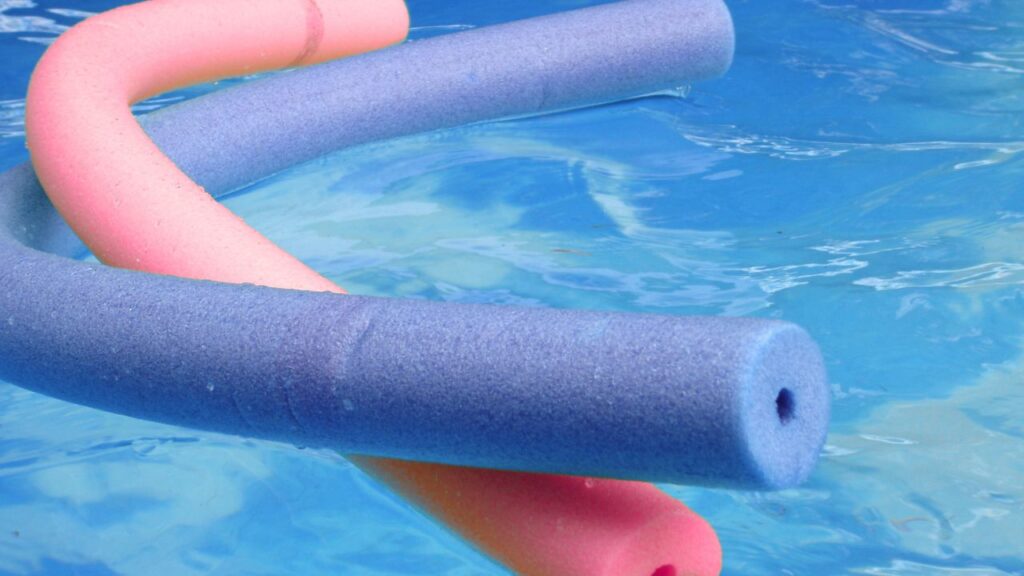
Pool Noodle
Provides flotation support for balance, core training, and low-impact aquatic exercises while helping improve comfort and stability in the water.
Disclosure: Links above are affiliate links, meaning Legendary Swimmers may earn a small commission at no additional cost to you.
Choose How You Prefer to Train in Water
Whether you are here to improve your swimming, build strength, or move with less impact, Legendary Swimmers gives you simple ways to use the water as your training space.
Start with one of our free resources below and choose the path that fits how you want to move in the water.