

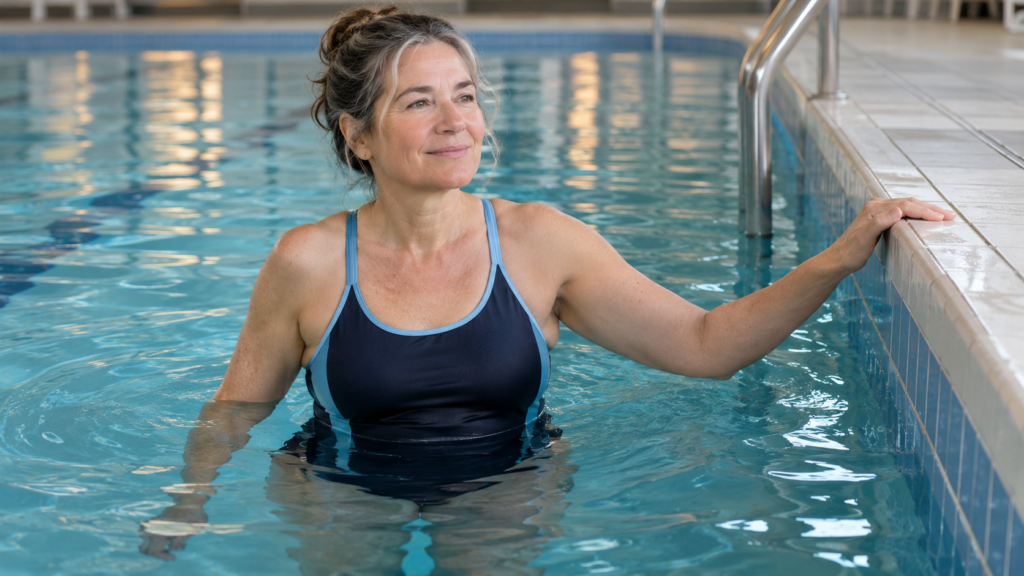
Arthritis symptoms can change from day to day. On some days, your usual movement may feel manageable; on others, stiffness, fatigue, or discomfort may make it harder. A difficult day does not mean you should force your usual workout. It can be a reason to pause, adjust, or ask a health care professional for guidance. To adjust exercise during an arthritis flare-up, consider changing the session’s pace, range of motion, or duration.
This article offers general ideas for adapting activity. It is not a personal exercise prescription or medical advice. The CDC recommends starting slowly, paying attention to how your body responds, and discussing severe or persistent symptoms with a health care provider. See the CDC’s physical activity guidance for arthritis.
Start With a Simple Check-In
Before a session, take a moment to notice how you feel. You might record your current comfort, energy, stiffness, and confidence with the planned movement. After the session, note what you did and how you felt later that day or the next day. These notes can help you describe patterns to your health care team; they do not diagnose a flare or tell you which exercise is medically right for you.
Ways to Scale a Workout
If you have already been cleared for activity and a movement feels harder than usual, consider changing one part of the session at a time:
- Shorten the session. Do fewer rounds or stop earlier.
- Slow the pace. Move with control and take longer recovery breaks.
- Use a smaller range. Keep the movement within a comfortable range rather than reaching farther.
- Reduce resistance. Leave out equipment or choose an easier variation.
- Use support. Stay near a stable pool wall or chair if support is appropriate and available.
- Choose another activity. If one movement feels wrong, stop it and consider a different option recommended by your care team.
Small adjustments can make a session different from your usual routine. They are options to discuss and personalize, not rules that fit everyone.
In the Pool: Keep the Movement Comfortable
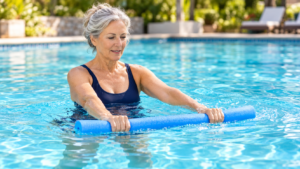
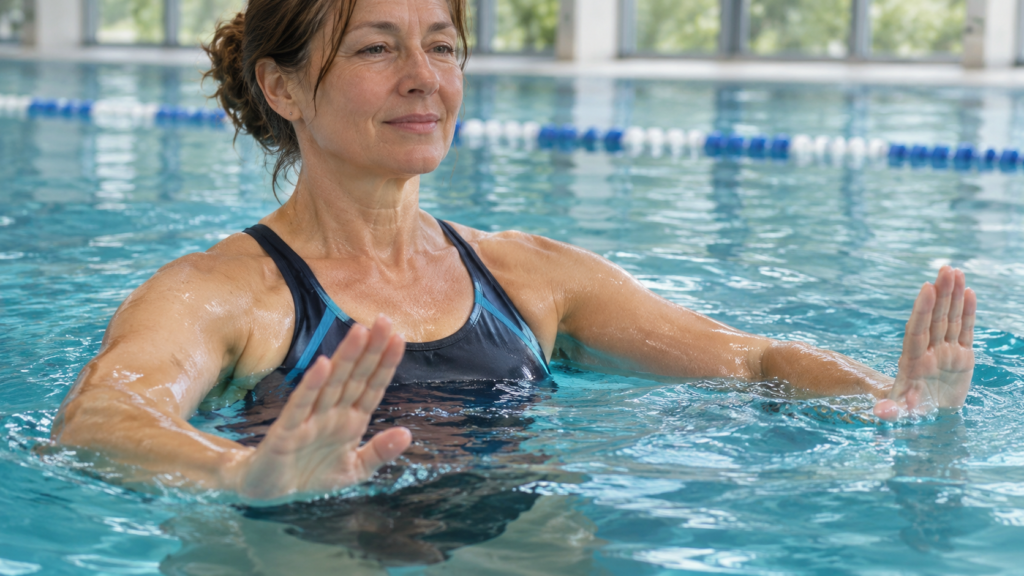
If water exercise is part of your approved activity plan, you might make a pool session easier by slowing down, reducing the size of an arm or leg movement, taking more breaks, or skipping resistance equipment. Water does not automatically make every movement suitable for every person. Choose a safe pool setting and use support if you need it.
For an overview of water movement ideas, see Water Exercises for Arthritis. For osteoarthritis research and context, read Aquatic Exercise for Osteoarthritis: What the Research Says.
When to Pause and Get Guidance
Do not try to push through sharp, constant, or worsening pain. The CDC advises contacting a health care provider about severe symptoms and lists signs such as sharp or constant pain, limping, or swelling that does not improve as reasons to seek guidance. Read the CDC page on pain during or after exercise.
If you are unsure whether a symptom is expected, pause and ask your health care provider or physical therapist. A certified exercise professional can help with exercise options within their scope, but cannot diagnose or replace medical advice.
A Steady Approach for Uneven Days
A useful routine has room for variation. Some sessions may be shorter; some days may call for a different activity or rest. Keep a record of what you tried and what felt manageable, and bring questions to your care team. The goal of this article is to help you think through options, not to tell you to exercise through pain.
This article is for general educational purposes only. It does not replace individualized medical advice, diagnosis, physical therapy, or treatment. Consult your health care professional before starting or changing an exercise routine, especially if symptoms are severe, new, or worsening.
Recommended Reads:
References
- Centers for Disease Control and Prevention: About Physical Activity and Arthritis
- Centers for Disease Control and Prevention: Pain During or After Exercise