
Stronger in the Water. Stronger in Life.
Why Water Exercises Challenge Your Core Differently
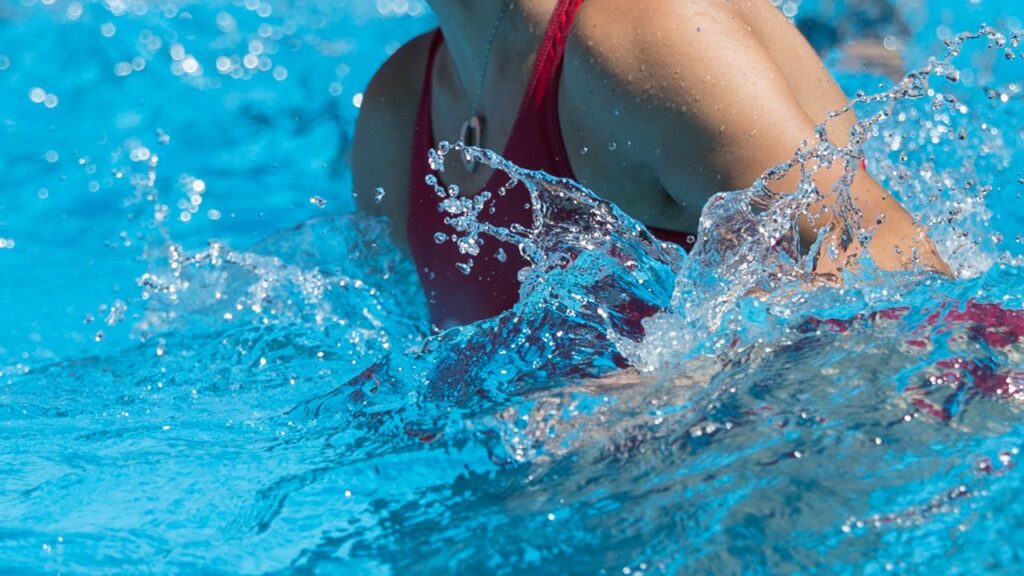
Core training in the water feels different for a reason.
Unlike land-based exercise, water constantly shifts around the body, creating resistance, instability, and pressure from every direction. Even simple aquatic movements require the body to stabilize, balance, and coordinate continuously.
In the water, the core is not only responsible for producing movement — it is constantly working to maintain alignment, posture, and control.
Whether you are swimming, floating, kicking, gliding, or performing aquatic fitness exercises, your deep stabilizing muscles are continuously responding to the changing environment around you.
This is one of the reasons water exercises can become such an effective way to improve:
- core stability
- posture control
- balance
- body awareness
- movement efficiency
- low-impact strength
All while reducing excessive stress on the joints.
For many people, aquatic movement becomes a unique way to build functional core strength that supports both exercise performance and everyday movement.
Why the Core Works Differently in Water
On land, gravity is the primary force the body must resist.
In water, resistance occurs in every direction.
This changes the role of the core completely.
Instead of only helping with bending or lifting, the core must constantly stabilize the body against:
- turbulence
- buoyancy
- shifting pressure
- drag
- rotational forces
- balance changes
Even standing still in water requires small muscular adjustments throughout the torso and hips.
This creates continuous activation of the deep stabilizing muscles that support posture and alignment.
Water also slows movement slightly compared to land. This gives the nervous system more time to process body position and refine movement patterns.
Over time, this can help improve:
- posture awareness
- balance control
- movement precision
- body alignment
- coordination
- controlled strength
This is one reason many people describe aquatic movement as feeling both challenging and supportive at the same time.
Related Reading:
- How Water Exercises Improve Stability, Coordination & Everyday Movement
- How Aquatic Exercises Boost Blood Circulation Naturally
The Role of Buoyancy and Resistance
Water creates a unique combination of support and resistance.
Buoyancy helps reduce impact on the joints while water resistance continuously challenges muscular control. Research commonly notes that movement through water creates approximately 12–14 times more resistance than movement through air.
The faster you move, the greater the resistance becomes.
Unlike traditional gym exercises where resistance often occurs in one direction, aquatic movement creates multidirectional resistance. This means the core remains active throughout movement rather than only during isolated repetitions.
Swimming itself is a great example of this.
Every stroke requires the body to stabilize against rotation, maintain alignment through the torso, and transfer power efficiently between the upper and lower body. Even gentle kicking drills can create significant core engagement because the body is constantly trying to maintain balance and streamline position in the water. Check out our HIIT workout in our 30-Minute Pool HIIT Workout for Strength, Fat Loss & Endurance.
For those further interested in more information of the benefits of swimming and water training, please visit out guides on:
The Science Behind Water Resistance Training: Why It Works
Physical and Mental Health Benefits of Swimming – 2026
Why Floating Exercises Increase Core Activation
Floating movements challenge the body differently because stability becomes less predictable.
Exercises such as:
- floating core crunches
- vertical kicking
- streamlined glides
- butterfly kick drills
- sculling movements
require the body to constantly adjust posture and balance.
Unlike sitting on a machine or lying on the floor, water removes many stable points of contact. This forces the deep stabilizing muscles to remain engaged for longer periods of time. The slower and more controlled the movement becomes, the more awareness the body develops. This is why controlled aquatic exercises often feel deceptively challenging despite being low impact.
For many people, water becomes an effective environment for learning how to move with greater precision and control.
For a deeper dive on the benefits of Water Aerobics, check out our guide on Low-Impact Water Aerobics: Boost Fitness with Aquatic Exercises.
Water Movement Supports Functional Strength
Functional strength is the ability to move efficiently during real-life activities.
Core stability plays an important role in helping support:
- posture
- balance
- walking mechanics
- lifting
- rotational movement
- stair climbing
- movement confidence
Many people focus only on building strength or cardio endurance, but movement quality matters just as much.
Aquatic exercise naturally combines:
- resistance
- coordination
- posture control
- balance
- stability
- mobility
within a single environment.
Because swimming and aquatic movement involve full-body coordination, the body learns to stabilize while moving dynamically rather than remaining fixed in place.
For older adults, swimmers, beginners, and people recovering from injury, this can become an especially valuable way to build strength while minimizing excessive joint stress.
Related Reading:
- Benefits of Pool Walking: Why Water Walking is Great for Your Health
- Swimming for Bone Health: Combat Osteoporosis with Water Exercise
One of the biggest differences people notice during aquatic exercise is the feeling of controlled resistance. Water naturally slows movement. This creates more time for the body to adjust posture, stabilize joints, and coordinate movement patterns.
Fast, uncontrolled momentum becomes more difficult in the pool.
Instead, water encourages:
- smoother movement
- controlled transitions
- balanced positioning
- body awareness
- intentional movement patterns
This is one reason aquatic training is commonly used in:
- rehabilitation settings
- low-impact fitness programs
- mobility training
- recovery programs
- movement-focused exercise
while still remaining challenging enough for athletes and experienced swimmers.
Final Thoughts
Core strength in the water is not only about building stronger abdominal muscles. It is about improving the body’s ability to stabilize, balance, coordinate, and control movement efficiently. Water challenges the body differently because resistance comes from every direction while buoyancy continuously changes how the body moves and stabilizes itself.
Whether through swimming, floating drills, aquatic fitness exercises, or controlled resistance movements, water training helps develop a form of strength that supports both performance and everyday movement.
In many ways, aquatic movement teaches the body how to move more intelligently.
And sometimes, controlled movement is one of the strongest forms of strength we can build.
Frequently Asked Questions:
1. Do water exercises strengthen the core?
Yes. Water exercises naturally challenge the core because the body must constantly stabilize against resistance, buoyancy, and changing water pressure. Many aquatic movements engage the deep stabilizing muscles throughout the torso and hips.
2. Why does my core feel more tired in the pool?
Water creates resistance in every direction, forcing the core to remain active for balance and posture control during movement. Even simple movements may require continuous stabilization. For more on the beneficial challenges of water exercises, check out our guide on Does Swimming Make You Tired? 7 Common Reasons.
3. Is swimming good for core strength?
Yes. Swimming requires the body to maintain alignment and transfer power efficiently between the upper and lower body. Many swim strokes naturally engage the core for stabilization and rotational control. If you are a beginner looking to use swim as a form of water exercise, check out our guide on Essential Swimming Techniques for Beginners: Complete Guide.
4. Are water exercises good for posture and balance?
Aquatic movement can help improve posture awareness, balance, coordination, and body control because the body must continuously adjust to changing resistance and buoyancy.
5. Are water core exercises low impact?
Yes. Water reduces stress on the joints through buoyancy while still providing resistance for muscular engagement. This makes aquatic core exercises a popular low-impact training option. For more on the benefits of low-impact exercises, check out our guide on Why Low-Impact Water Workouts Support Strength & Longevity.
References
Centers for Disease Control and Prevention (CDC). Physical Activity and Health Benefits:
https://www.cdc.gov/physical-activity-basics/benefits/index.html
Also useful: https://www.cdc.gov/physical-activity-basics/health-benefits/adults.html
Harvard Health Publishing. Advantages of water-based exercise:
https://www.health.harvard.edu/healthbeat/advantages-of-water-based-exercise
Harvard Health Publishing. What makes water workouts so worthwhile?:
https://www.health.harvard.edu/heart-health/what-makes-water-workouts-so-worthwhile
National Institutes of Health / PubMed. Aquatic exercise and functional capacity research:
https://pubmed.ncbi.nlm.nih.gov/33141078/
National Institutes of Health / PMC. Aqua aerobic therapy exercise for older adults:
https://pmc.ncbi.nlm.nih.gov/articles/PMC3820233/
Mayo Clinic. Balance exercises and healthy aging:
https://www.mayoclinic.org/healthy-lifestyle/fitness/in-depth/balance-exercises/art-20546836
Mayo Clinic. Aging: What to expect:
https://www.mayoclinic.org/healthy-lifestyle/healthy-aging/in-depth/aging/art-20046070
Arthritis Foundation. In the Swim: Aquatic Exercise for Arthritis:
https://www.arthritis.org/health-wellness/healthy-living/physical-activity/other-activities/water-exercise-benefits-for-arthritis
Arthritis Foundation. Hit the Pool to Relieve Joint Pain:
https://www.arthritis.org/health-wellness/healthy-living/physical-activity/other-activities/hit-the-pool
American Council on Exercise (ACE). Make a Splash with Water Fitness.
https://contentcdn.eacefitness.com/assets/education-resources/lifestyle/fitfacts/pdfs/fitfacts/itemid_2548.pdf
American Council on Exercise (ACE). Cardio Exercises for Active Agers.
https://www.acefitness.org/resources/pros/expert-articles/6553/cardio-exercises-for-active-agers/
Share:
More Posts
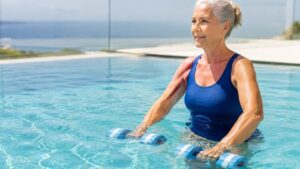
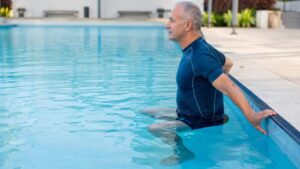
Start Training in the Water
Free Resources
Improve your swimming, build strength, or move with less impact using the water as your training space.
Choose a free resource below to get started.
Recommended Equipment
These aquatic fitness tools help increase water resistance, improve stability, and create a more effective low-impact workout experience in the pool.
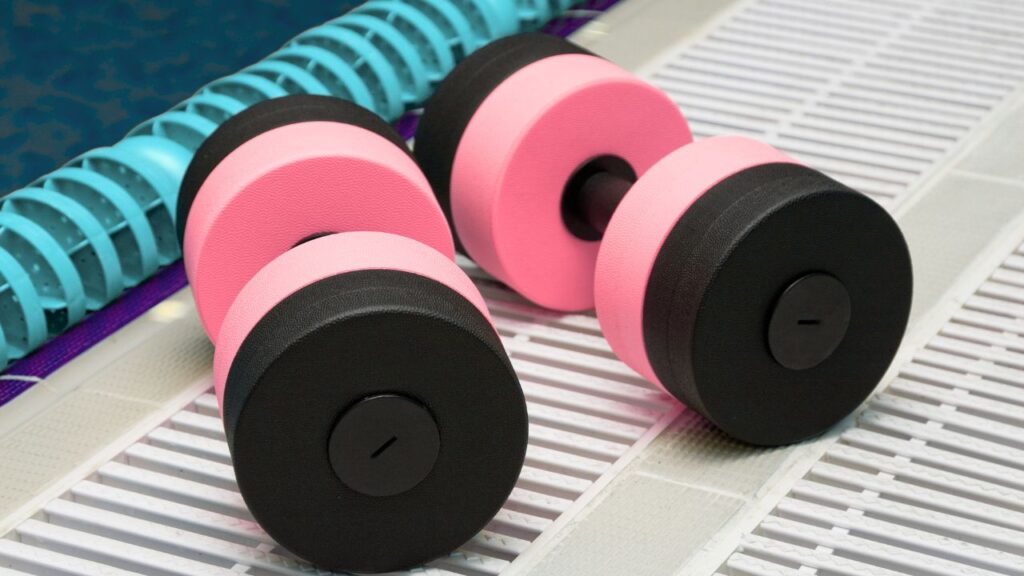
Aqua Dumbbells
Adds upper-body resistance to help improve strength, endurance, and overall workout intensity during aquatic fitness sessions.

Resistance Gloves
Creates additional water resistance for the arms and shoulders while helping improve movement control and muscle engagement.
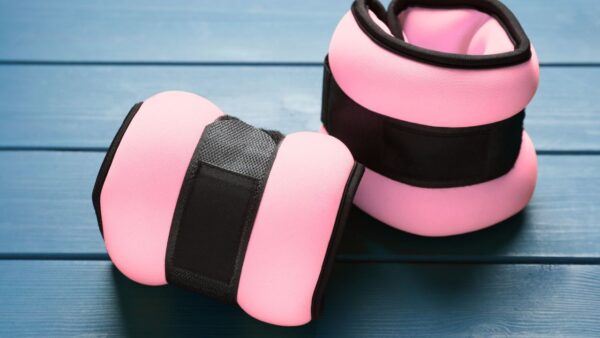
Aquatic Cuffs
Designed to increase resistance on both the arms and legs, helping create more advanced aquatic strength and conditioning workouts.

Flotation Belt
Supports deep-water exercises and helps maintain balance during suspended aquatic workouts without placing stress on the joints.
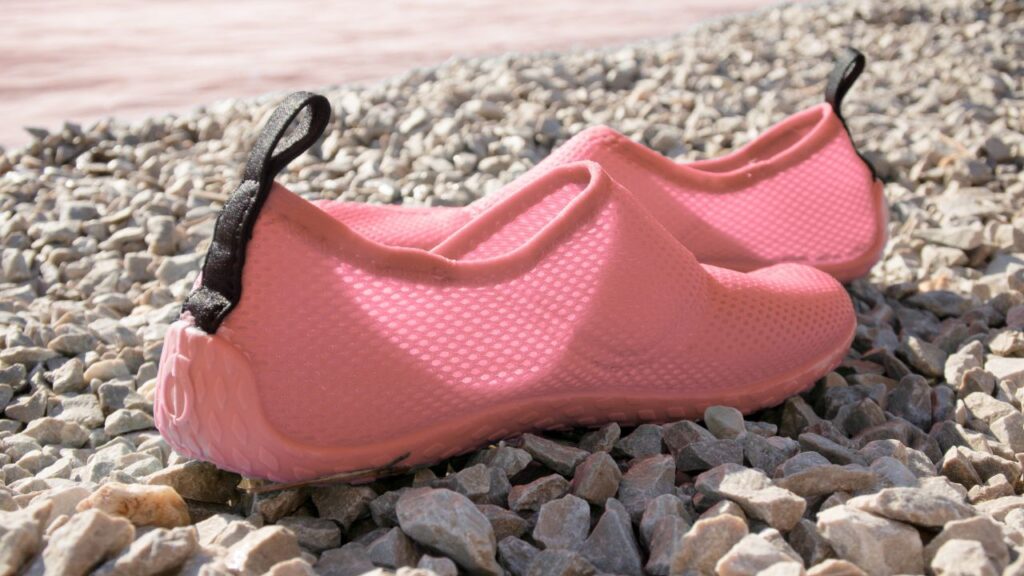
Water Shoes
Provides grip, stability, and foot protection for aquatic fitness classes, pool walking, and water-based exercise routines.
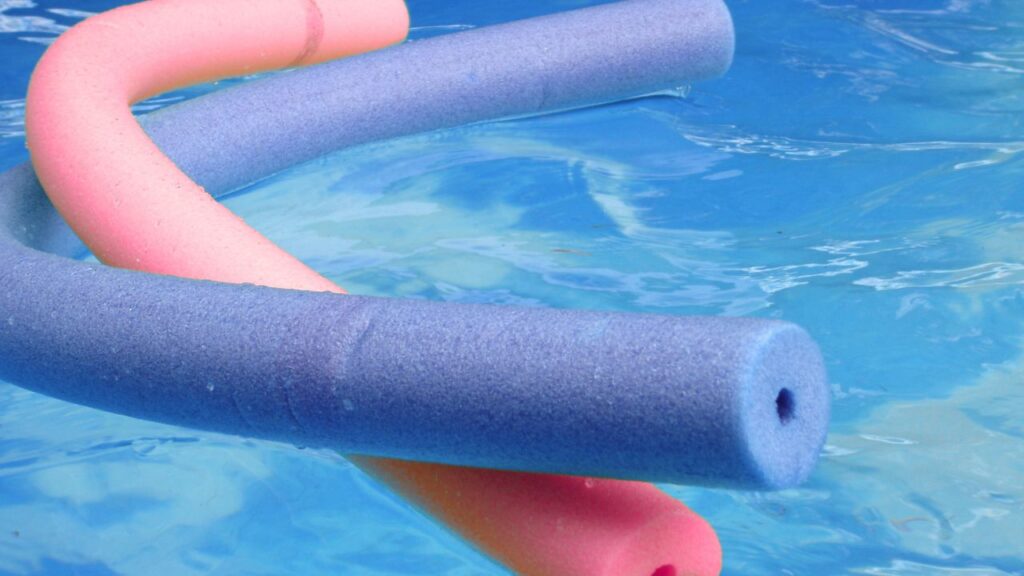
Pool Noodle
Provides flotation support for balance, core training, and low-impact aquatic exercises while helping improve comfort and stability in the water.
Disclosure: Links above are affiliate links, meaning Legendary Swimmers may earn a small commission at no additional cost to you.
Choose How You Prefer to Train in Water
Whether you are here to improve your swimming, build strength, or move with less impact, Legendary Swimmers gives you simple ways to use the water as your training space.
Start with one of our free resources below and choose the path that fits how you want to move in the water.