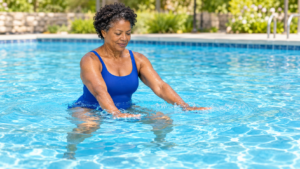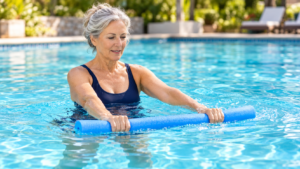

A pool can be a comfortable place for some people to move, but pool access is not always available. Travel, cost, weather, schedule, or personal preference can change what feels practical. A flexible activity plan can include water and land-based options, guided by your needs and your health care professional.
Exercise guidance for osteoarthritis includes several activity options. The American College of Rheumatology and Arthritis Foundation guideline discusses aquatic exercise alongside other exercise approaches; the best fit depends on the person and their circumstances. Read the guideline summary on PubMed.
Water and Land Offer Different Experiences
In the pool, buoyancy and water resistance change how movement feels. On land, walking, strength, balance, and flexibility activities offer different kinds of movement and loading. Neither setting is automatically right for everyone, and one does not have to replace the other.
The CDC lists water exercise among joint-friendly activities and encourages adults with arthritis to start gradually and choose activity that causes little or no pain. The guideline from your own care team matters most for your specific condition, medications, history, and abilities. Review CDC guidance on physical activity and arthritis.

Build a Flexible Plan Around Your Access
Instead of relying on a single setting, think through a few questions with your health care provider or physical therapist:
- Which activities are appropriate for me right now?
- What signs should tell me to stop or change the activity?
- Which movements can I do safely at home or in my community?
- What support, space, equipment, or supervision do I need?
Your options might include a pool session when access is convenient, a land-based activity your care team recommends, or a shorter movement break on a busy day. You do not have to make every session the same. The aim is to find choices that are practical and appropriate for you.
Keep the Land-Based Option Individual
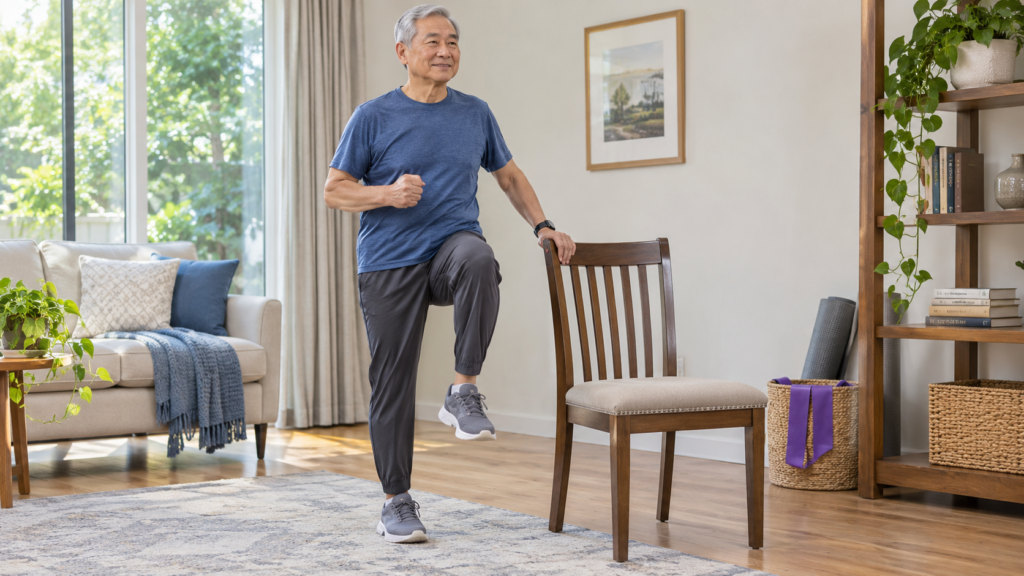
Land-based movement can include many formats, such as walking, chair-supported movement, resistance work, balance practice, or flexibility exercises. This list is not a prescription. Some movements may not be appropriate for a particular person, so ask a qualified health professional for guidance if you have concerns, a recent injury, or changing symptoms.
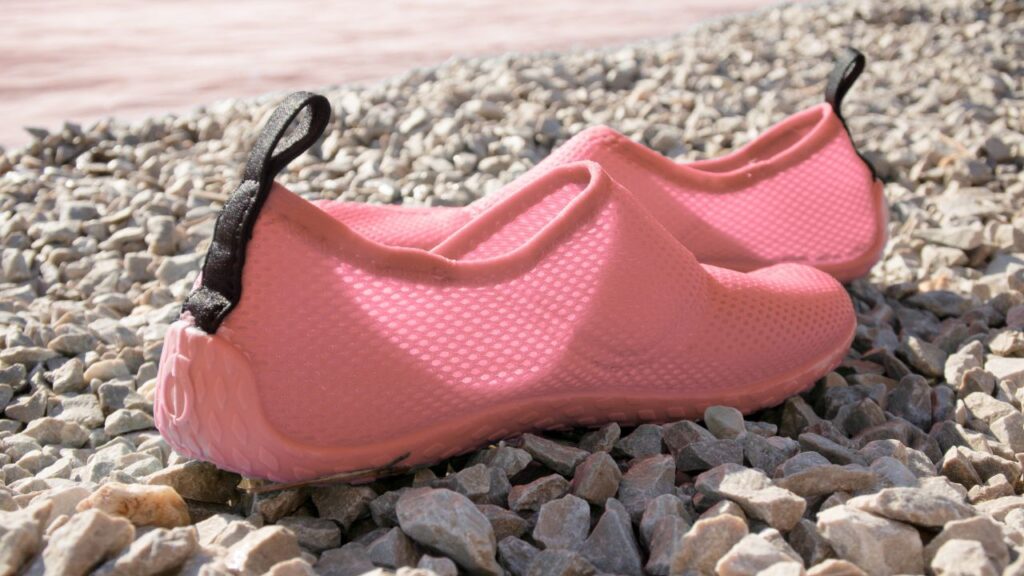
If you are building a routine at home, consider the space, footwear, support, and ease of getting up or down. A stable chair or counter may provide support for some activities, but do not use furniture that shifts or rolls. Stop if you feel unsafe or symptoms worsen.
How Water Workouts Can Fit In
When you do have pool access, choose movements that match your current plan and ability. You can read our overview of aquatic exercise for osteoarthritis and see practical pool options in Benefits of Pool Walking. These articles offer general information; they do not tell you which activity is right for your personal medical situation.
Make the Plan Easy to Revisit
A simple note can help you keep track of which activity you chose, how long you did it, and how you felt afterward. Bring recurring questions or changes in symptoms to your health care professional. If you are using a digital workout library, look for clear options and modifications, and make sure the content does not ask you to ignore pain or medical advice.
Exercise should fit the individual. This article is general education, not medical advice, diagnosis, or treatment. Speak with your health care professional before starting or changing a routine, especially if you have severe or changing symptoms or are unsure which activities are safe for you.
Recommended Reads: Aquatic Exercise for Osteoarthritis: What the Research Says · Benefits of Pool Walking: Why Water Walking Is Great for Your Health
References