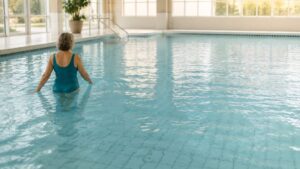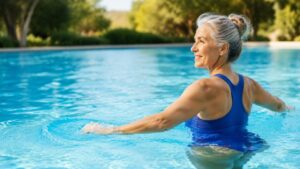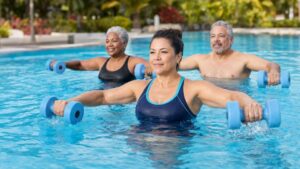
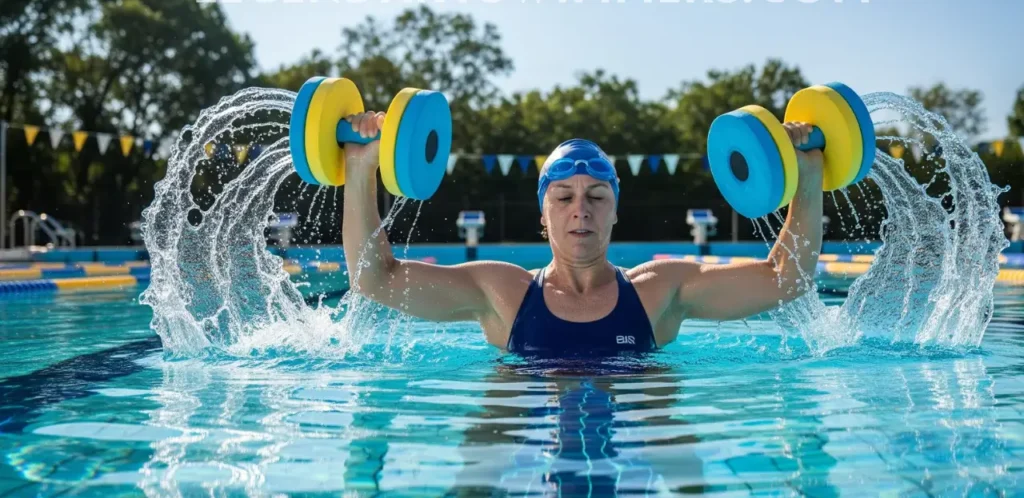
Water aerobics gives special upper body benefits that land exercises often do not. The water’s natural resistance gives a good muscle workout. Its buoyancy lowers the stress of bearing weight. This dual benefit reduces the strain on joints and connective tissue. Aquatic exercises build muscle endurance faster than regular workouts.
This guide explores 10 effective upper-body water workouts that build strength, improve mobility, and reduce joint strain. Ideal for seniors, beginners, and anyone seeking a low-impact way to tone arms, chest, and shoulders in the pool.
The CDC states that water fitness classes can help build muscle. They also improve heart health and keep joints lubricated. Exercising in chest-deep water creates hydrostatic pressure. This pressure improves blood flow and lowers inflammation. It is good for people with rheumatoid arthritis or chronic health problems.
In 2025, upper-body water workouts became a top rehab method for adults over 40.
For those interested in a guided Aquatic Fitness Workout structured by levels such as Basic, Intermediate and Advanced, check out our Free 15 minute Aquatic Fitness Workout.
Aquatic Equipment Essentials: Dumbbells, Kickboards, and Resistance Tubing

Choosing the right gear can turn simple pool exercises into full resistance workouts. These workouts target your upper body well. To maximize your pool time, consider these essential pieces of gear:
Core Equipment:
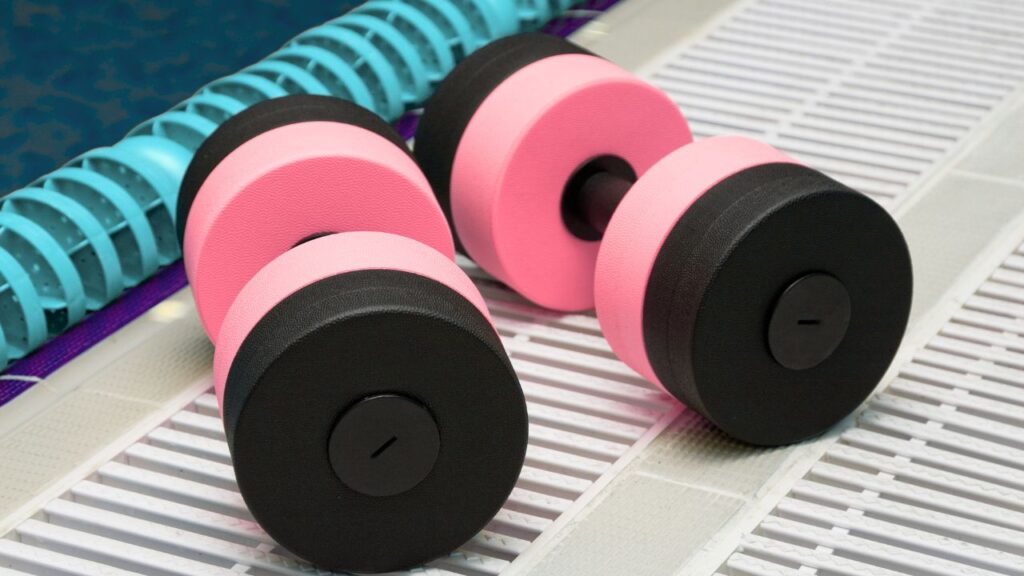
- Aquatic dumbbells: foam weights that provide buoyancy resistance
- Kickboards: Essential for chest presses and support exercises
- Resistance tubing: Elastic bands designed for underwater use
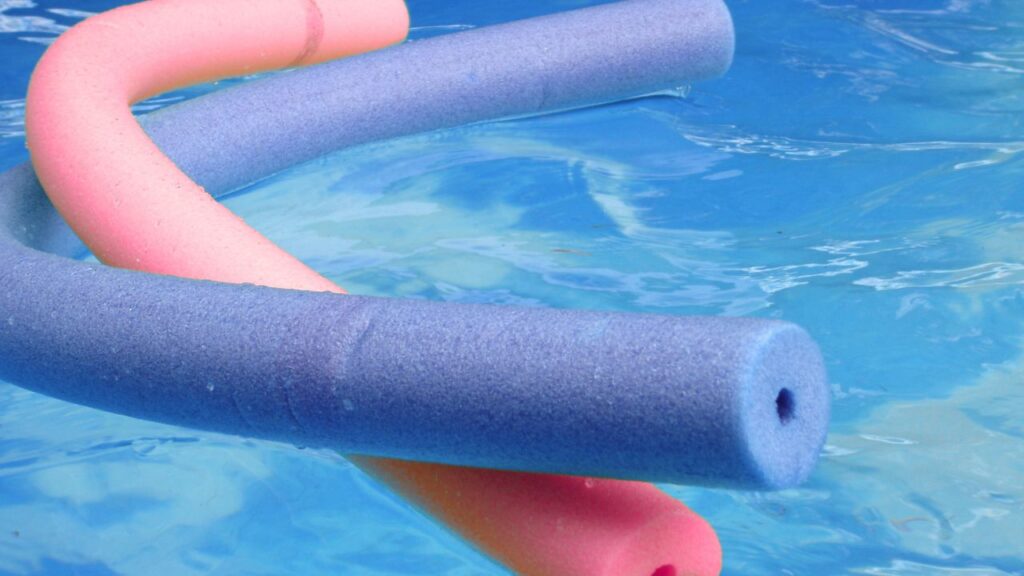
- Pool noodles: Versatile tools for stability and resistance
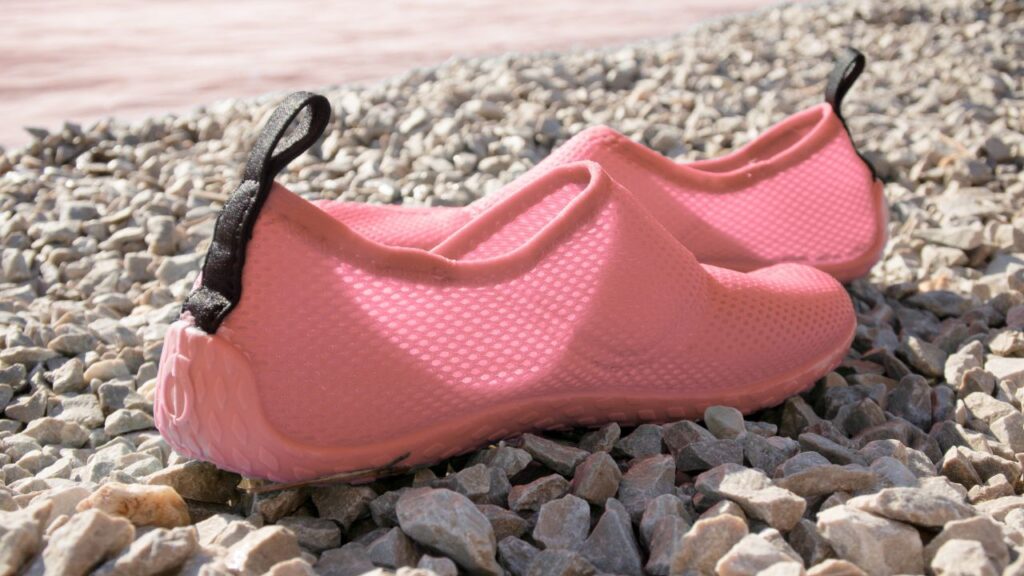
- Water shoes: Provide grip on the pool floor for safety
Optional Additions:
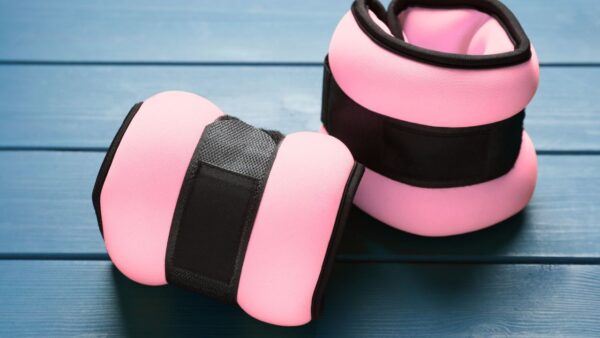
- Ankle weights: Add intensity to arm movements
- Resistance gloves: Increase water resistance during pulls and pushes
- Flotation device: Helpful for deep water exercises
- Hand paddles: Amplify resistance during swimming motions
For those interested in more information on the most recommended gear, check out our guide on Top Water Weights for Pool & Resistance Workouts (2026).
Related Reading:
Aqua Aerobics for Women Over 50
Bicep Curls: Building Arm Strength
Performing bicep curls in chest-deep water provides two significant benefits. It effectively targets the forearm muscles. This strengthens them and boosts their endurance and power. At the same time, it engages the core muscles, promoting better balance and stability as you execute the curls. This combined effect makes the exercise very useful for building functional strength. Functional strength helps you do daily tasks more easily and efficiently. Adding this exercise to your routine improves arm strength and core stability. This leads to better overall physical function.
Step-by-Step Technique:
- Stand with feet shoulder-width apart, holding aquatic dumbbells.
- Maintain your elbows close to your face throughout the movement.
- Slowly curl weights upward, fighting the water’s buoyancy.
- Pause at the top, then control the descent.
- Complete 12-15 repetitions for 2-3 sets.
Water resistance makes lifting and lowering tough. It offers a full workout that regular weights cannot match.
I’ve always done bicep curls in my swim strength training. Recently, I wondered if they might shorten the muscle and affect my streamlining. Some swimmers think curls aren’t needed. They help on pull days, especially when done lightly as an accessory. – User on r/Swimming
Tricep Extensions: Enhancing Muscle Tone
Tricep extensions in water work your arm’s back. They improve your upper body shape. Great for trimming arm flab and building strong, toned arms, this exercise gives quick results. Grab an aquatic dumbbell with both hands and raise it overhead in chest-deep water. Bend your elbows to decrease the burden behind your head. Then, extend your arms to return to the start. The water’s resistance makes the exercise better for building muscle strength.
Pro Tip: Keep your upper arms still during the movement. This helps activate your triceps and avoids shoulder strain.
Single Arm Row: Boosting Endurance
Single-arm rows strengthen your back muscles and enhance posture while boosting muscular endurance. This exercise mirrors everyday actions like pulling open heavy doors or lifting items. Position yourself facing the pool wall, gripping the edge with one hand for stability. With your free hand, pull against the water, drawing your arm back towards your ribcage while engaging your shoulder blade. The water’s natural resistance causes constant tension during exercise.
Muscles Targeted: The latissimus dorsi, rhomboids, rear deltoids, and biceps all work together. This exercise strengthens the entire upper body.
Punch-Pulls: Power and Precision
Punch-pulls combine cardio exercise and upper-body strength training. This active movement raises your heart rate, giving good cardio benefits. It also builds explosive power and strength in your arms and shoulders.
Execution Technique:
- Start with arms extended forward at shoulder height
- unexpectedly punch one arm ahead at the same time as pulling the opposite back
- alternate arm in a rhythmic sample for 30-60 seconds
- Focus on generating maximum water displacement with each movement
This exercise burns significant calories while improving coordination and full-body workout efficiency.
Kickboard Chest Press: Engaging the Chest Muscles
The kickboard chest press works your chest muscles and improves stability training. This exercise builds functional chest strength. It’s important for pushing actions. Hold a kickboard against your chest with both hands. Then, push it out through the water. The buoyancy will provide a special form of resistance. This action engages your chest muscles throughout the motion. Go back to the starting position. Manage your motion and withstand the kickboard’s upward push.
Protection word: preserve your shoulders, lower back, and middle tight.allows preventing a decrease in stress at the same time as being urgent.
Lateral Arm Raises: Toning the Shoulders
Lateral raises in water are great for building shoulder strength. They also lower the risk of impingement that often comes with regular weights. This exercise builds well-rounded shoulder muscles. It also improves joint stability.
Proper Form:
- Stand in chest-deep water with your fingers at your sides.
- Hold aquatic dumbbells or use water resistance alone.
- Raise arms out to the sides until they reach the water’s surface.
- Control the descent, fighting the water’s buoyancy.
- Complete 10-12 repetitions with perfect form.
The water’s natural resistance keeps tension steady. This makes the exercise great for building shoulder strength and endurance.
Chest Fly: A Chest and Shoulder Workout
Water flies provide a special workout. They target both the chest and shoulder muscles at the same time. This exercise improves flexibility and builds useful upper-body strength. Start with your palms wide at shoulder height. Then, pull them together in front of your chest through the water. The hydrostatic pressure acts as resistance, promoting muscle growth in both directions. This motion enables damage recovery and eases joint pain.
Resistance gloves and hand paddles boost surface area. This adds drag and makes your workouts more productive.
Don’t wear wrist weights when swimming. Buy some paddles. “Those will safely add resistance…” Zorro640, r/Swimming. This tip shows how paddles are better than wrist weights. It also backs up our gear advice.
Modified Backstroke: Full Upper Body Integration
The modified backstroke works many muscle groups. It also gives a good heart workout. This swimming exercise improves coordination and builds useful strength patterns.
Movement Pattern:
- Float on your back using a flotation vest if needed
- Alternate arm strokes in a rhythmic backstroke motion
- Focus on full arm extension and proper catch technique
- Maintain steady breathing throughout the exercise
- keep for 2-three mins or till fatigue units in
This exercise boosts your upper body strength. It also helps your heart and lungs.
Cooling Down: Stretching Techniques in Water
Cooling down is key after any workout. It helps prevent muscle soreness later. It also helps keep the flexibility you gained during your hard workout. Water buoyancy gives a special benefit. It makes stretching exercises more effective and comfortable than on land. The gentle support of the water helps you move smoothly. It cuts down the risk of strain, making your cool-down more beneficial.
Essential Cool-Down Stretches:
- Arm circles to maintain shoulder mobility
- Cross-body shoulder stretches using the pool wall for support
- Gentle neck rolls to release tension
- Chest stretches against the pool’s wall
- Deep breathing exercises to lower the heart rate
Cool down for 5 to 10 minutes. This enables your body to recover and prepare for your subsequent aquatic workout.
Tips for Maximizing Your Water Aerobics Workout
Remaining consistent and employing proper technique are more crucial than focusing on intensity when it comes to pool workouts. Here are some expert-supported strategies to enhance and maximize your results:
Workout Optimization:
- Exercise in chest-deep water for optimal resistance
- Maintain proper form over speed or repetitions
- Vary your routine every 4-6 weeks to prevent plateaus
- Consider joining water-based fitness classes for motivation
- Work with a fitness instructor initially to learn proper technique
Equipment Selection:
Choose resistance devices appropriate for your fitness level. Beginners should begin with simple water resistance. Once comfortable, they can add equipment like ankle weights or resistance bands.
Tips to Maximize Your Routine
- Start slow and increase resistance as you progress
- Use aquatic gear (gloves, dumbbells, resistance paddles)
- Focus on form and core engagement
- Don’t skip cool-downs
Recommended by instructors across U.S. and Canadian rehab clinics for seniors and people with joint issues.
Ready to take your pool sessions to the next level? Bookmark this routine, or share it with someone who needs joint-friendly strength training.
FAQ
How can I flatten my belly in the pool?
To flatten your stomach, do water exercises. Try flutter kicks, leg raises, and water crunches. These exercises target the core muscles and help burn fat while being easy on the joints.
Is water exercise better than walking?
Water exercise gives more resistance and works more muscle groups. This way, it offers a complete body workout. It’s easier on the joints. It’s great for people with joint issues or anyone wanting a low-impact option to walking.
Will swimming build the upper body?
Yes, swimming is excellent for building upper-body strength. It works the arms, shoulders, and chest. You use strokes like freestyle, breaststroke, and backstroke. This gives you both resistance and endurance training.
Is swimming a good upper-body workout?
Yes, swimming is an effective upper-body workout. Water resistance tones and builds muscular tissues within the arms, shoulders, and chest. It also boosts overall strength and endurance.
Will swimming increase upper-body strength?
Swimming builds upper-body strength. It works the hands, shoulders, and lower back via steady motion and water resistance. It helps muscle growth and increases endurance, especially when done regularly.
Related Reading:
Top Water Weights for Pool & Resistance Workouts (2025)